
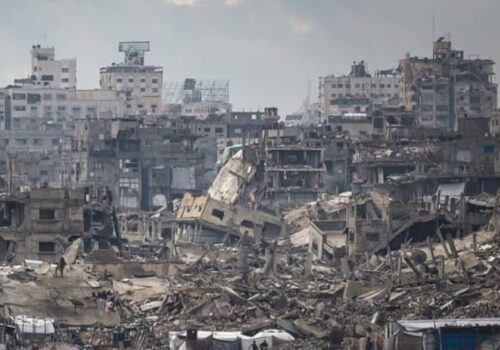
Israel’s ongoing assault on the Gaza Strip has raised the cumulative death toll to 71,769 Palestinians killed and 171,483 injured since the beginning of the genocide on October 7, 2023.
The figures continue to rise as rescue teams struggle to reach large numbers of victims trapped under destroyed homes and in streets targeted by Israeli bombardment.
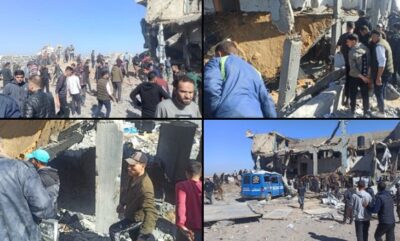 Israeli warplanes struck the Sheikh Radwan Police Station in the western part of Gaza City, killing seven people.
The dead include four individuals who were being held inside the facility and three members of the women’s police force.
Medical teams reported that several people remain missing, and rescue crews have been unable to reach parts of the site due to the ongoing bombardment in the surrounding neighborhood.
The Israeli army also issued new evacuation orders in Gaza City, forcing more families to flee yet again amid ongoing bombardment.
In addition, Israeli fighter jets bombarded the administration building of the Gheith camp, which is used by displaced families in Mawasi Khan Younis in southern Gaza.
Before the latest bombing, medical officials reported on Saturday that 12 Palestinians were killed, and 49 injured, earlier Saturday.
The actual toll is believed to be higher, as emergency and civil defense crews remain unable to access several devastated areas due to ongoing Israeli military bombings, deployment, unexploded ordnance, and the collapse of key roads and infrastructure.
Since the “ceasefire” was announced on October 11, 2025, the number of Palestinians killed has risen to 509, while the number of injured has reached 1,405.
Rescue teams have also recovered 715 bodies from beneath the rubble during this period, many of them decomposed or unidentified due to prolonged exposure and the collapse of morgue capacity across the Strip.
Health authorities noted that 85 additional fatalities were recently added to the cumulative death toll after their identities were verified and formally approved by the “Martyrs’ Data Verification Committee” between January 23 and January 30, 2026.
People in #Gaza continue to endure extreme hardship. Many have been forcibly displaced multiple times and only have limited access to essential services.
Winter has made living conditions even worse.
Humanitarian assistance remains the primary means of survival for large parts… pic.twitter.com/Sz56r7LdwI
— UNRWA (@UNRWA) January 31, 2026
These cases reflect the ongoing process of identifying remains recovered from mass graves, collapsed buildings, and makeshift burial sites created during periods of intense bombardment.
The updated figures align with recent assessments by international humanitarian organizations, which have repeatedly warned that Gaza’s real death toll is likely significantly higher than the officially recorded numbers due to thousands of missing persons still unaccounted for.
United Nations agencies and independent researchers have emphasized that the collapse of Gaza’s civil registry, the destruction of hospitals, and the inability of families to report deaths have created substantial gaps in documentation.
Humanitarian groups also warn that indirect deaths, including those caused by starvation, dehydration, untreated injuries, and the spread of disease amid the near‑total collapse of Gaza’s healthcare system, remain largely uncounted.
Aid organizations describe the situation as one of the worst humanitarian catastrophes in the modern era, with more than 80% of Gaza’s population displaced, entire neighborhoods erased, and critical infrastructure rendered inoperable.
Medical workers, civil defense teams, and humanitarian agencies continue to operate under extreme conditions, facing shortages of fuel, medical supplies, and heavy equipment needed to clear rubble and reach trapped survivors.
The Ministry of Health has repeatedly appealed for international intervention to ensure safe access for rescue teams and the delivery of urgently needed medical and humanitarian aid.
