
Israeli strikes continued across the Gaza Strip on Saturday, with new casualties reported in the northern and central regions as humanitarian agencies warned that the enclave’s medical and civilian infrastructure is nearing total collapse.
The latest attacks come amid intensifying bombardment, deepening displacement, and the continued failure of emergency crews to reach large numbers of victims trapped under the rubble.
Al‑Jazeera’s correspondents in Gaza reported renewed Israeli airstrikes in Beit Lahia in the northern Gaza Strip and Deir al‑Balah in the central region, where several Palestinians were killed and others wounded.
Medical teams confirmed that three Palestinians were killed in Beit Lahia, while a drone strike on a tent sheltering displaced families south of Deir al‑Balah left multiple civilians injured, some critically.
In the central Gaza Strip, Israeli armored vehicles opened fire near the Mazari roundabout, southeast of the Bureij refugee camp, injuring a child.
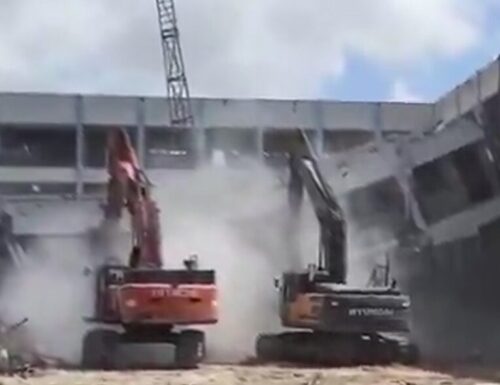
In addition, Israeli forces demolished one of the last remaining schools in Gaza, deliberately wiping out what remained of the territory’s education system — and they did so under what was described as a “ceasefire.
Earlier at dawn, seven Palestinians, including a journalist and a child, were killed when Israeli forces struck a civilian gathering in the Bureij refugee camp; a seventh later died in a separate strike on Beit Lahia.
Al‑Jazeera Arabic reported additional artillery shelling and tank fire east of Gaza City and near Bani Suheila near Khan Youns, in the southern Gaza Strip, where drone strikes earlier in the day wounded several displaced Palestinians.
In a statement, the Palestinian Ministry of Health in the Gaza Strip reported on Saturday that eleven Palestinians were killed and twenty-six others injured over the past 48 hours as a result of ongoing Israeli attacks across the devastated enclave.
The Ministry of Health said the overall death toll from the Israeli assault has risen to 72,328 Palestinians killed and 172,184 injured since October 7, 2023. The Ministry added that 11 Palestinians were killed and 26 injured in the past 48 hours alone.
It warned that the real toll is significantly higher, as many victims remain under collapsed buildings and in areas emergency crews cannot reach due to destroyed roads, fuel shortages, and ongoing bombardment.
Humanitarian agencies issued new warnings on Saturday about the accelerating collapse of Gaza’s health system.
Displaced Palestinians in Gaza live in tents and face rats as Israel blocks pesticides. Last week, a one-month-old infant, Adam Al-Ustaz, was bitten inside his tent and survived poisoning. pic.twitter.com/BZTWtGRi7D
— Quds News Network (@QudsNen) April 11, 2026
UNRWA said its shelters are operating far beyond capacity, with tens of thousands of displaced families lacking clean water, sanitation, and basic supplies.
The agency reported that several of its remaining operational facilities in central and southern Gaza have come under fire in recent days, further limiting its ability to deliver aid.
At Nasser Medical Complex, one of Gaza’s largest hospitals, one of the main generators was forced to shut down due to the lack of essential operating oils.
The child Abdullah Abu Hasira (3 years old), from Gaza, is facing a life-threatening condition due to chronic respiratory distress and air accumulation around the lungs. Amid the lack of treatment, his father is urgently appealing for his transfer abroad to receive the necessary… pic.twitter.com/9qVwvjg1Kk
— TIMES OF GAZA (@Timesofgaza) April 11, 2026
Hospital officials said they have switched to smaller, low‑capacity generators to keep critical departments running for limited hours but warned that these emergency measures are not sustainable. Technical teams said the facility is “hours to days away” from a complete power failure without immediate resupply.
The World Health Organization reiterated that Gaza’s health system is “beyond collapse,” noting that only a handful of hospitals remain partially functional, with severe shortages of surgical supplies, antibiotics, anesthesia, and fuel.
WHO teams attempting to deliver medical supplies to northern Gaza reported that access remains “extremely dangerous and unpredictable,” with several convoys forced to turn back due to shelling.
The UN Office for the Coordination of Humanitarian Affairs (OCHA) said that more than 1.9 million Palestinians—over 85 percent of Gaza’s population—remain displaced, many of them multiple times.
OCHA added that large areas of northern Gaza are now “uninhabitable,” with entire neighborhoods flattened and basic services destroyed.
Humanitarian officials warned that the combination of ongoing bombardment, the collapse of medical services, and the near‑total breakdown of water and sanitation systems is creating conditions for mass casualties beyond those caused directly by airstrikes.
Aid groups said the spread of disease, untreated wounds, and lack of clean water is already contributing to rising deaths, particularly among children and the elderly.
The Ministry of Health said casualty figures will continue to rise as long as emergency crews are prevented from reaching bombed areas and as long as the blockade on medical supplies, fuel, and equipment remains in place.
