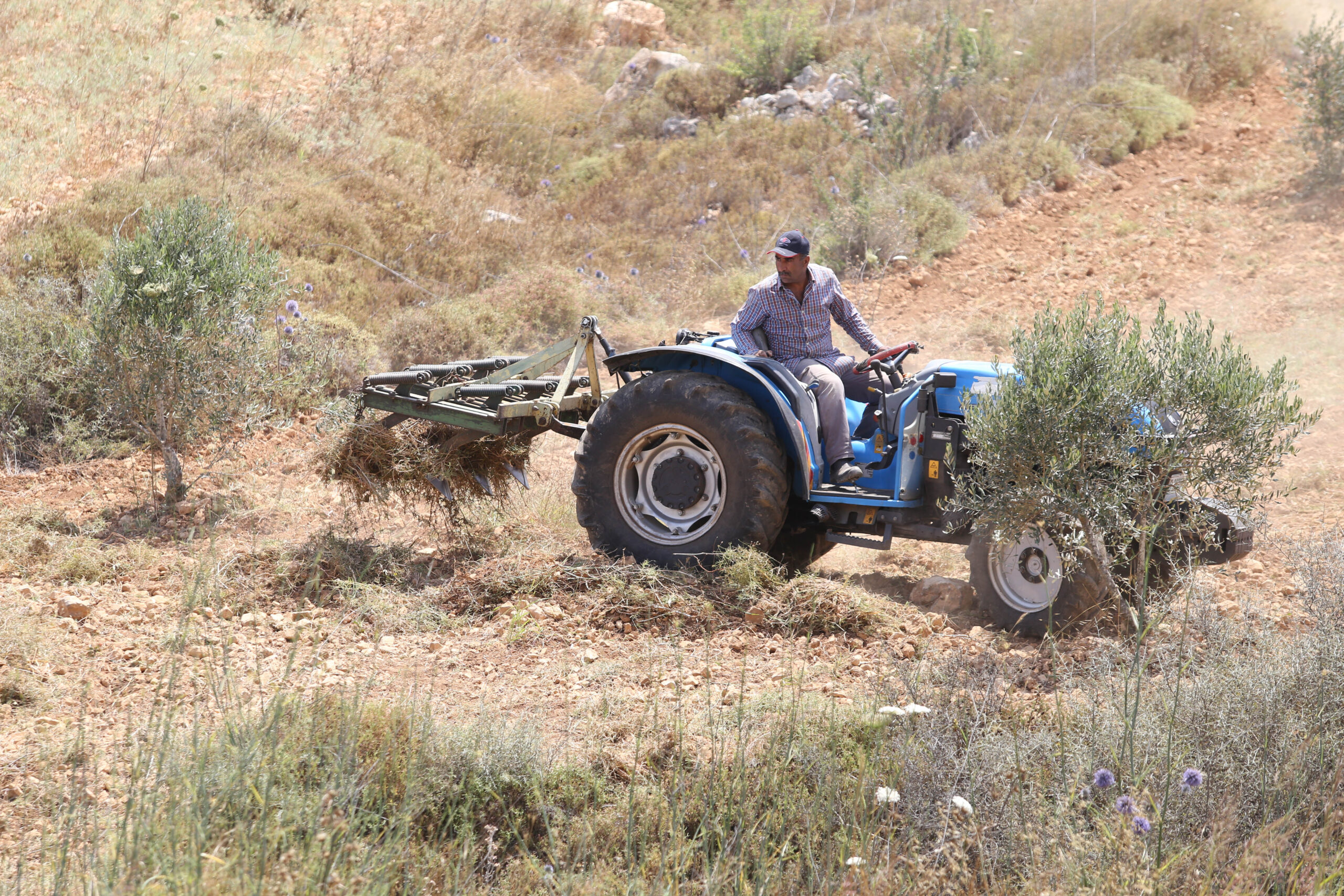
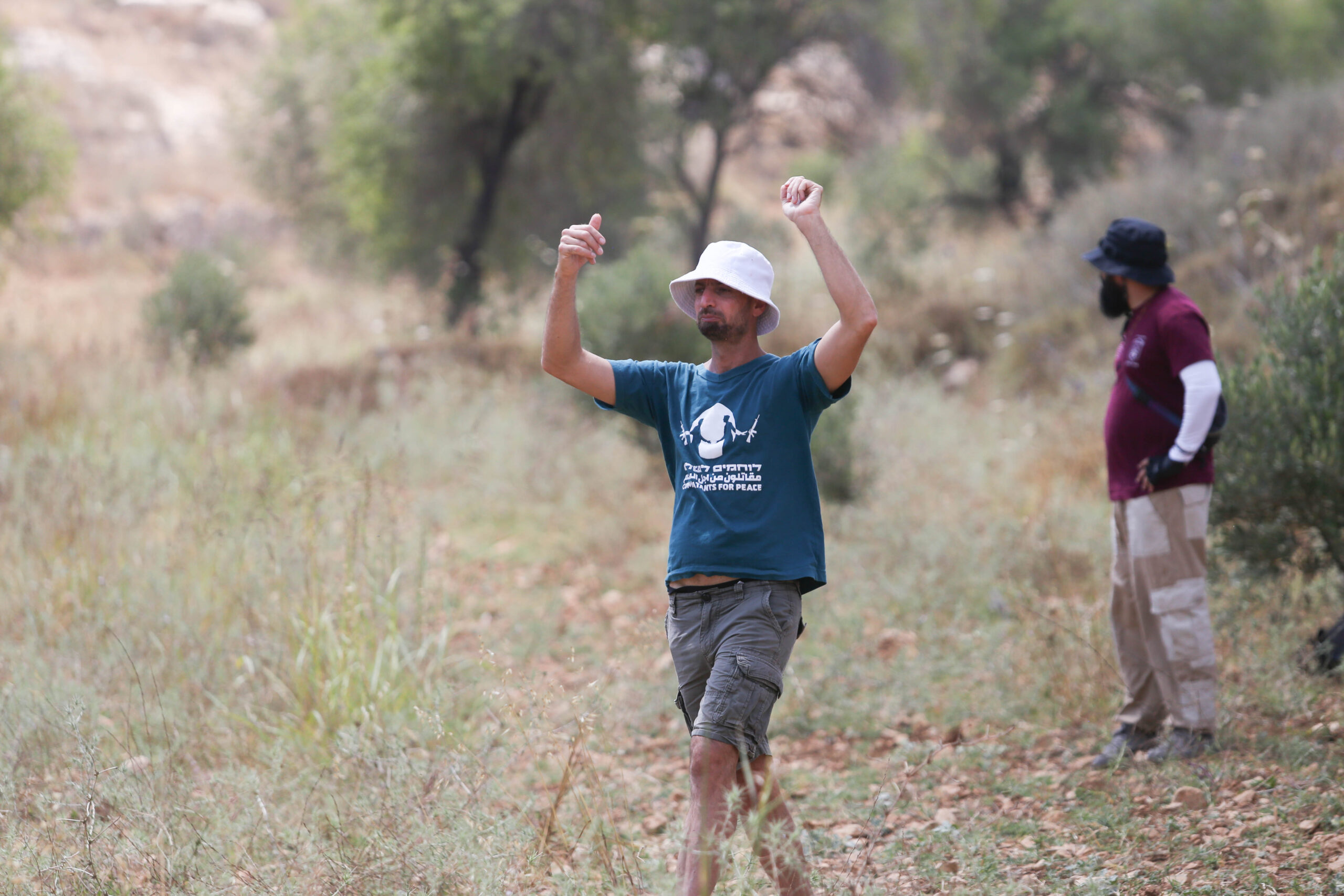
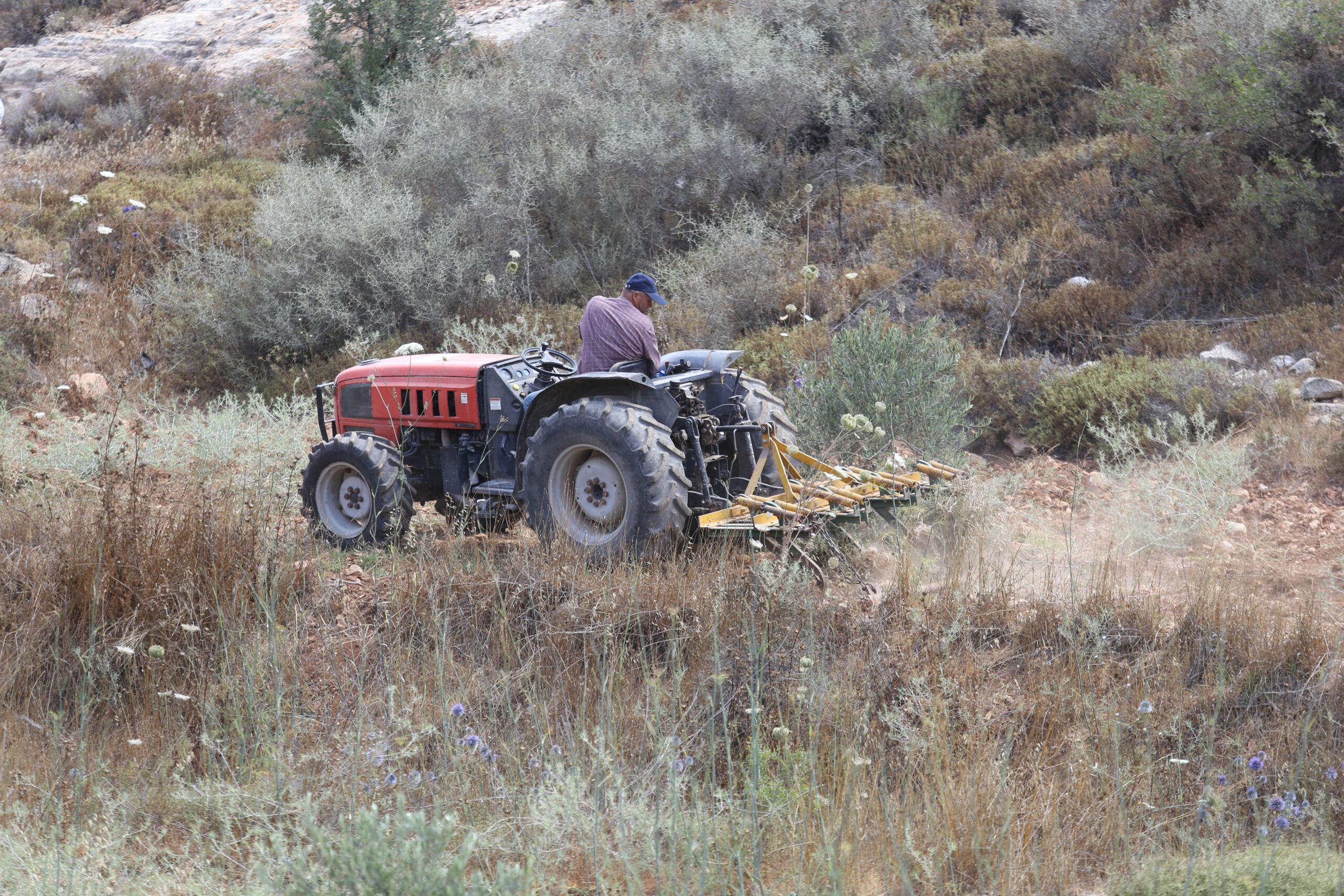
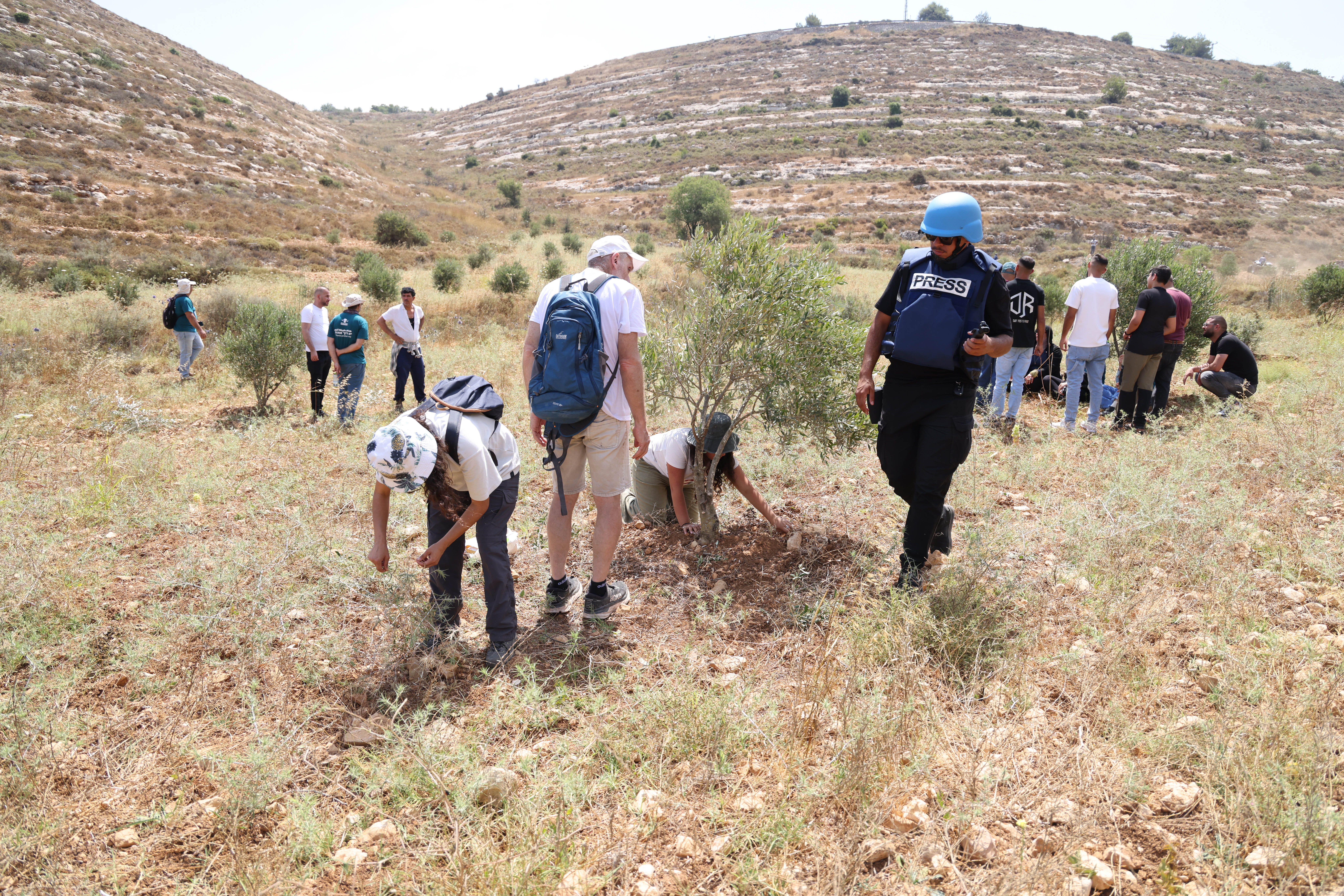
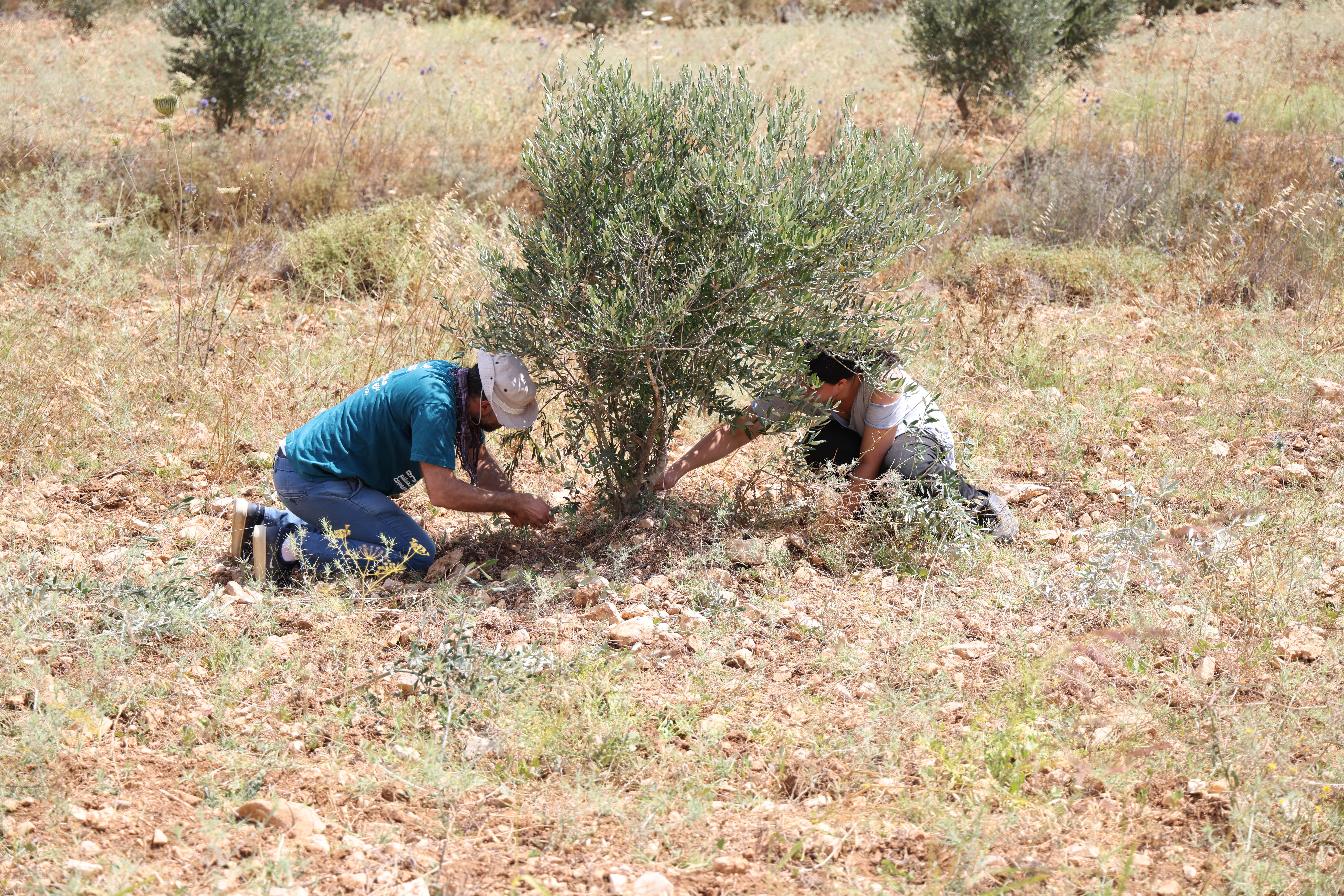
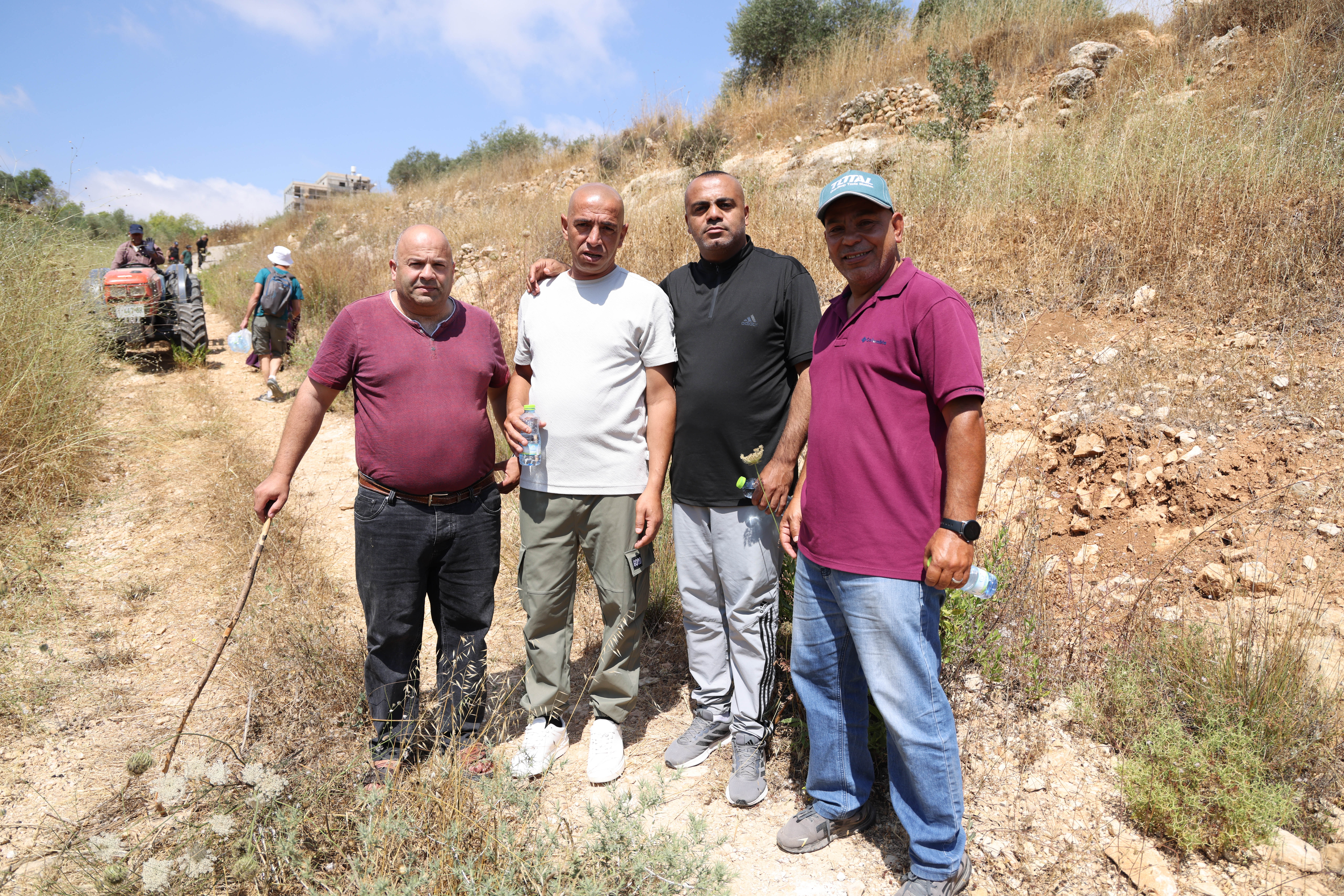
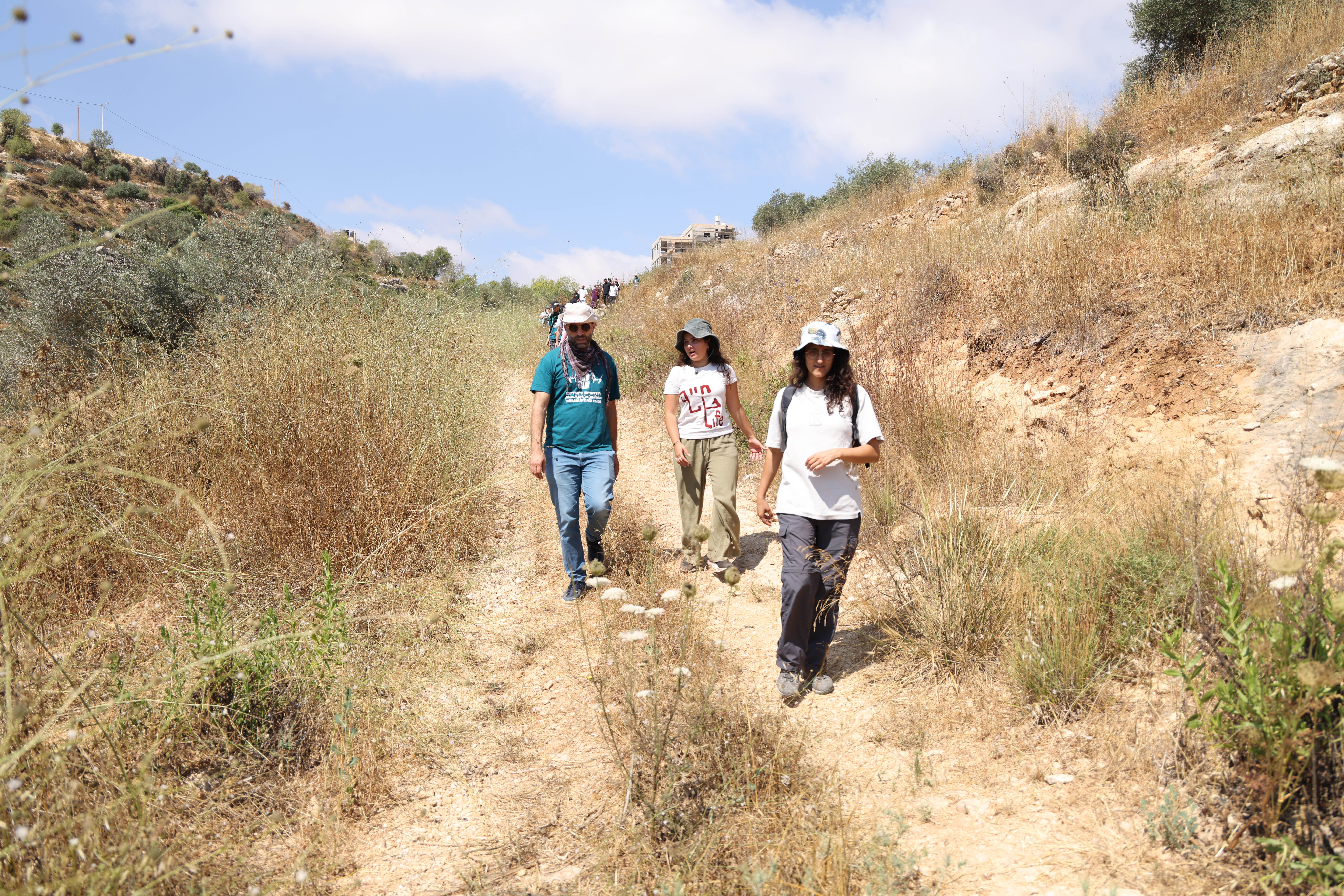
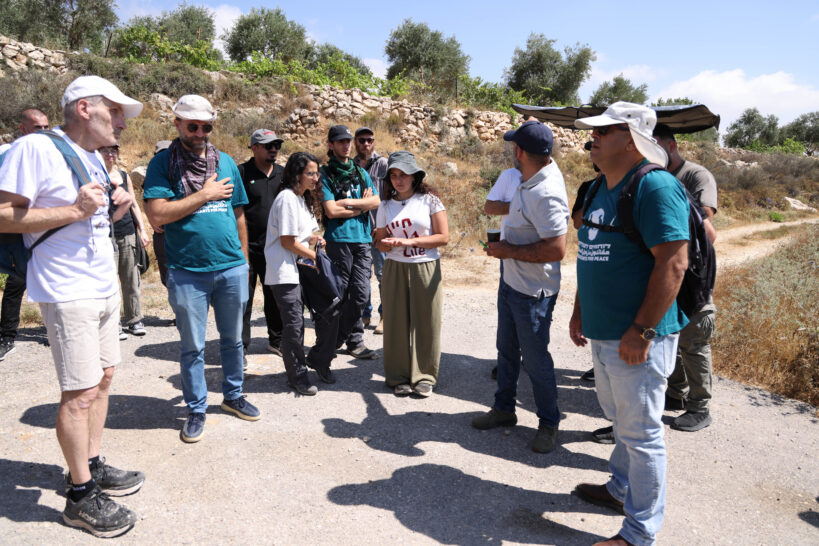
Activists from the “Combatants for Peace” movement organized on Saturday a day of solidarity to accompany landowners in the village of Sinjil, north of Ramallah, and enable them to access their lands, which are threatened by settler attacks. During the day, farmers were able to plow a portion of their land, prune their olive trees, and tend to them, in a step aimed at bolstering their resilience and strengthening their presence on their land.
Todays action comes amidst escalating settler attacks on the village’s lands, which are surrounded by several settlements and outposts, most notably “Shilo, Ma’ale Levona, Givat Harel, and Harasha”.
The area witnesses frequent attacks by settlers, carried out under the protection of the Israeli occupation army, aimed at preventing farmers from accessing their lands and displacing them to pave the way for seizing the land and expanding the settlement project.
The Mayor of Sinjil, Dr. Moataz Tawafsha, stated that since the beginning of the war on Gaza, farmers in the town have been subjected to continuous attacks whenever they attempt to access their lands in the threatened areas. He added:
“These assaults include physical attacks and gunfire by settlers. Furthermore, citizens face arrest or are shot at by the occupation forces under the pretexts of what is called wartime law and emergency regulations.”
Tawafsha expressed his gratitude to the “Combatants for Peace” movement for participating in the event, emphasizing that the voluntary work included plowing and rehabilitating the lands, which contributes to investing in and preserving them in the coming period.
For his part, Mahmoud Fayyad, an activist with the “Combatants for Peace” movement, said:
“We came today, Palestinian and Israeli activists, to strengthen the resilience of the landowners in Sinjil, whose lands are threatened with confiscation. The owners of these lands have been denied access for nearly three years, and our presence today is a message of solidarity and support for their right to their land.”
Local residents confirm that for more than three years, settlers have been trying to impose a new reality by preventing farmers from accessing their lands, especially those near settlements and pastoral outposts, depriving dozens of families of their primary source of livelihood.
Furthermore, according to the Sinjil Municipality, the occupation authorities continue to raze large areas of the town’s land to pave new settler roads and establish pastoral outposts at the expense of private citizen-owned property. Meanwhile, olive groves—particularly ancient trees—are subjected to cutting, uprooting, and crop theft by settlers, all under the protection of the occupation forces.