
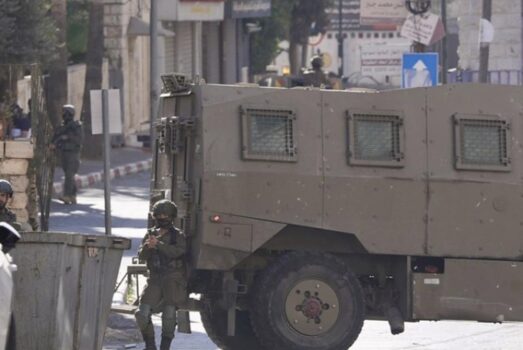
Israeli occupation forces and illegal paramilitary colonizers carried out a series of coordinated assaults across the occupied West Bank, targeting civilians, agricultural lands, and livestock.
The Palestinian Red Crescent Society (PRCS) reported that its medical teams transferred five citizens from Tammun, south of Tubas in the northeastern West Bank, to its field clinic after Israeli forces released them following abduction and physical assault.
In Hebron, in the southern West Bank, Israeli soldiers stationed at a military roadblock near Ethna assaulted a young man attempting to cross, leaving him with wounds and bruises that required hospitalization at Dura Governmental Hospital.
In the Southern Hebron Hills, soldiers abducted Mohammad Hamdan al-Hreini from Susiya, confiscating his vehicle as he tried to transport his mother to a hospital.
Another citizen, Fadel Hamamda, was also abducted in al-Mufaqarah. Farmers were barred from reaching or cultivating their lands, tightening restrictions on rural communities.
Israeli colonizers from the illegal “Susiya” colony infiltrated the home of Khalil al-Hreini in Wadi ar-Rakhim and stole two donkeys.
Later the same day, colonizers stole two cows belonging to farmer Abdul-Fattah Mohammad Zidan in Wadi Qana, northwest of Salfit.
Activists described the thefts as part of a systematic campaign to pressure farmers into abandoning their lands, paving the way for colonialist expansion.
Wadi Qana, one of Salfit’s most fertile agricultural areas, has faced relentless colonizer attacks on farmers and their property.
On Thursday at dawn, Israeli paramilitary colonizers burnt the Al-Falah Mosque in Biddya, west of Salfit. The attackers infiltrated the mosque’s perimeter, ignited parts of the building, and scrawled racist slogans on the walls of a nearby Palestinian home.
In Jenin, in the northern West Bank, Israeli occupation authorities issued a military order to uproot 59 dunams of forested land in the town of Zabbouba under the pretext of “security.”
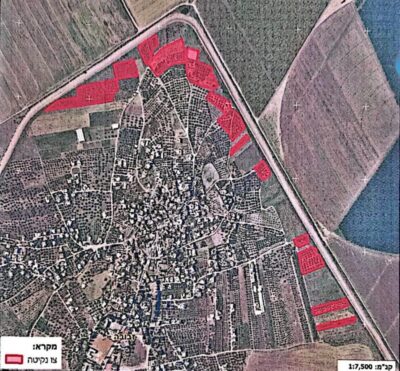 The Wall & Colonization Resistance Commission condemned the order, numbered N.K/55/25, as a blatant assault on Palestinian agriculture.
Officials noted that such orders have intensified in recent months, often justified as “protecting roads used by colonizers,” while in reality stripping Palestinians of their livelihoods and reinforcing apartheid policies.
These incidents reflect the ongoing escalation of violence across the occupied West Bank. More than a thousand Palestinians have been killed, thousands injured, and tens of thousands abducted over the past two years.
Olive groves, homes, mosques, and livestock have been systematically targeted. International organizations, including the United Nations and the Organization of Islamic Cooperation, have warned that such actions constitute grave breaches of international law.
Local councils and Palestinian ministries are urging urgent international intervention to protect civilians, sanctities, and agricultural lands. Without enforcement of international legal obligations, residents fear that attacks will continue unchecked, deepening the cycle of impunity and erasure of Palestinian presence.
