
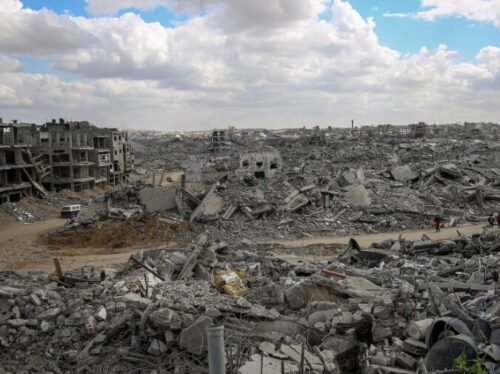
Israeli occupation forces continued their violations across the Gaza Strip on Saturday, with renewed shelling, gunfire, and demolition operations reported in several areas despite the declared “ceasefire.”
Artillery units again targeted the eastern neighborhoods of Khan Younis in southern Gaza, while explosions linked to demolition charges were heard in northern and central areas.
Field reporters noted that artillery fire persisted along zones adjacent to Israeli deployment lines, placing displaced families in constant danger.
Israeli tanks also fired shells and rounds of live ammunition at areas in the eastern part of the Al-Bureij refugee camp, in central Gaza.
One Fatality In Gaza
Israeli soldiers fired artillery shells and live rounds at areas, east of the Shuja’iyya neighborhood, in Gaza city.
Medical sources said one Palestinian, Faraj Al-Haj Salem, was killed by live rounds near the entrance to the neighborhood.
Health System in Freefall
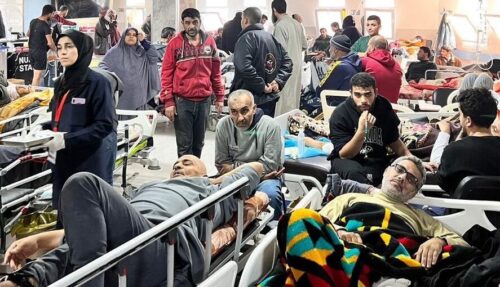 Medical teams in Gaza warned that thousands of patients and wounded civilians now face an unknown fate as the health system collapses under siege, bombardment, and the depletion of essential supplies.
The few hospitals that remain partially functional have become, in the words of one medical official, “forced waiting stations for the dying,” unable to provide even basic treatment.
Doctors described the situation as a “health genocide,” noting that the destruction of medical infrastructure has made daily care nearly impossible.
Essential stocks have reached catastrophic lows: almost half of all essential medicines are completely unavailable, two‑thirds of medical consumables have run out, and most laboratory and blood‑bank materials no longer exist.
Cancer treatment, hematology services, surgeries, intensive care, and primary care are among the most severely affected.
Medical teams say the limited quantities of medicine entering Gaza fall far short of what is required to sustain critical services, stressing that temporary emergency measures cannot restore the system without sustained access to supplies and the rebuilding of hospital capacity.
Mounting Ceasefire Violations
Since the “ceasefire” took effect on October 11, 2025, Israeli forces have carried out more than 1,500 violations, resulting in over 2,000 Palestinians killed or wounded.
These figures align with reporting from multiple outlets documenting repeated Israeli strikes, demolitions, and live‑fire incidents despite the “truce.”
Al‑Jazeera reported that Israeli attacks in recent days killed more than twenty Palestinians in separate strikes, noting that “the so‑called ceasefire has not stopped the bombardment.”
Arabs48 also highlighted continued Israeli incursions and artillery fire across central and southern Gaza, describing the situation as “a collapse of any meaningful ceasefire framework.”
International coverage has echoed these assessments, with several global outlets reporting that hundreds of Palestinians have been killed since the ceasefire began, most of them women and children.
Since October 7, 2023, the Palestinian Ministry of Health in Gaza reports that at least 71,824 Palestinians have been killed in Israeli attacks, while 171,608 others have been injured.
These figures continue to rise as civil defense teams recover bodies from destroyed neighborhoods and as hospitals struggle to treat the wounded amid the collapse of the health system.
Since the “ceasefire” announced on October 10–11, 2025, Israeli forces have carried out more than 1,500 violations across the Gaza Strip, killing more than 520 Palestinians and injuring well over 1,400.
Humanitarian Access Remains Restricted
Despite limited openings of the Rafah crossing, humanitarian access remains tightly restricted. Only small numbers of patients and returnees have been allowed through, and several medical evacuations were cancelled after new Israeli strikes.
Aid agencies warn that without sustained, unhindered access for medical evacuations, fuel, and supplies, the remaining health infrastructure will continue to collapse.
