
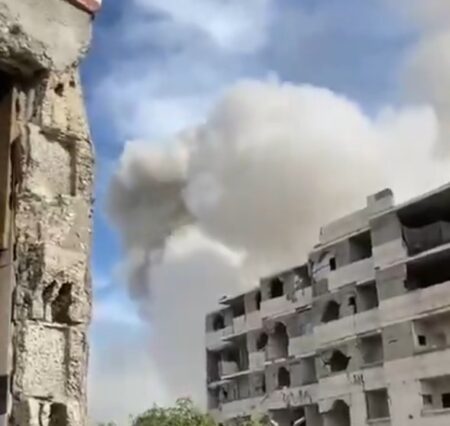
Two Palestinians were killed and another wounded on Sunday morning after Israeli occupation forces opened fire in separate areas of Khan Younis in the southern part of the devastated and besieged Gaza Strip.
Fisherman Abdul Rahman Abdul‑Hadi al‑Qann was shot and killed by Israeli naval forces while working off the coast of Khan Younis, according to medical sources.
They added that another fisherman was injured in the same incident and transferred to a local hospital for treatment.
Shortly afterward, Fadi Najeeb Salah was killed by Israeli fire in the al‑Mawasi area west of Khan Younis.
The killings came as the Israeli army carried out widespread demolitions and controlled explosions across multiple areas of the Gaza Strip.
In addition, an Israeli drone breached the “Yellow Line” and deployed explosive canisters over civilian homes east of the Tuffah neighborhood in Gaza City.
Residents reported a massive blast shaking Gaza City, while military units continued to destroy residential blocks and civilian structures in eastern Gaza City, northern Gaza, and the eastern outskirts of Khan Younis and Rafah, in continued breaches of the “ceasefire agreement” announced in October.
Medical sources in Gaza reported that three Palestinians were killed and 13 were injured over the past 48 hours. Several victims remain under the rubble or in areas inaccessible to emergency teams due to ongoing military activity and restrictions on movement.
The Ministry of Health announced that the overall death toll from Israel’s assault on Gaza has risen to 71,386, with 171,264 injured since October 7, 2023.
Since the start of the “ceasefire” on October 11, 2025, the ministry has documented 420 Palestinians killed and 1,184 injured.
Civil defense teams have recovered 684 bodies from destroyed neighborhoods during this period, though many remain unretrieved due to continued bombardment and the collapse of rescue capacity.
Residents across Gaza report that the combination of ongoing military operations, blocked access for emergency crews, and the destruction of civilian infrastructure has deepened the humanitarian crisis, leaving entire districts without basic services or safe access routes.
