
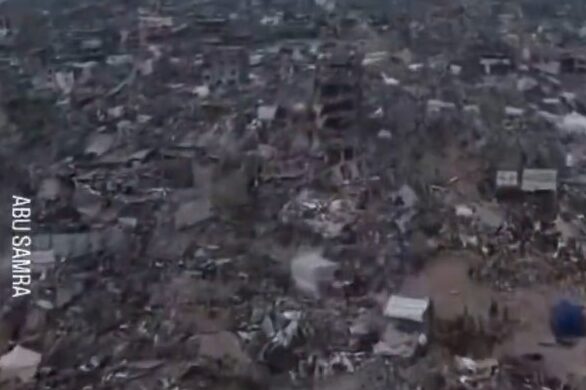
Israeli attacks on the Gaza Strip continued on Thursday despite the declared “ceasefire” framework, with the Ministry of Health reporting new fatalities, fresh injuries, and growing concern over victims still trapped beneath destroyed buildings.
The latest figures highlight the ongoing pattern of Israeli fire and bombardment that has persisted for months, steadily increasing the death toll and deepening the humanitarian crisis across the devastated enclave.
Despite the “ceasefire” terms, Israeli forces have continued to strike residential areas, agricultural lands, and civilian infrastructure across the Strip.
Local authorities documented new damage to homes in northern and central Gaza, along with repeated incidents of live fire targeting civilians near the coastal road and eastern border areas.
Aid groups say these ongoing attacks have prevented rescue teams from reaching entire neighborhoods, leaving families without assistance, and delaying the recovery of bodies.
The Ministry of Health said that hospitals in Gaza received the bodies of three Palestinians and one injured person over the past 24 hours.
It noted that these numbers reflect only those who reached medical facilities, while an unknown number of victims remain under the rubble and in areas where ambulances and civil defense crews cannot safely operate due to continued Israeli fire and the destruction of roads and infrastructure.
Since the “ceasefire” took effect on October 11, 2025, Israeli attacks have killed 636 Palestinians and injured 1,704 others.
Rescue teams have also recovered 753 bodies from beneath collapsed homes and buildings during this period.
The ministry emphasized that the ongoing Israeli‑American war on Iran has further restricted humanitarian access, with repeated closures of border crossings and intensified military activity around the so‑called “yellow line,” where Israeli forces continue to fire on civilians attempting to move through the area.
The cumulative toll since the start of the genocide in Gaza on October 7, 2023, has now reached 72,120 Palestinians killed and 171,802 injured.
Health officials say the majority of the victims are women and children and warn that the collapse of Gaza’s health system—combined with severe shortages of fuel, medicine, and medical equipment—continues to endanger thousands of wounded and chronically ill patients.
Humanitarian agencies report that the closure of the Rafah and Kerem Shalom (Karem Abu Salem) crossings in recent days has halted medical evacuations, blocked the entry of essential supplies, and forced aid organizations to ration dwindling fuel stocks.
Hospitals, desalination plants, and bakeries have reduced operations, while solid waste collection has largely stopped.
In some areas, families have access to only minimal amounts of drinking water, and prices of basic goods continue to rise.
The Ministry of Health renewed its call for international pressure to ensure safe access for ambulances and civil defense crews, the reopening of border crossings, and the immediate entry of medical and humanitarian supplies.
It warned that without a genuine halt to Israeli military operations and a sustained effort to restore basic services, the death toll will continue to rise even in the absence of large‑scale bombardments.
