
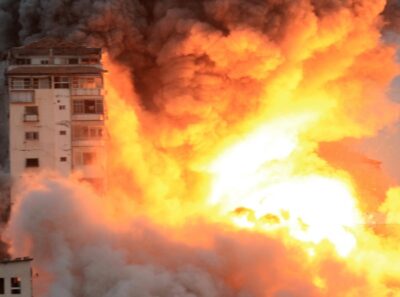
On Wednesday, November 12, Israeli occupation forces carried out a series of coordinated attacks across the Gaza Strip, in direct violation of the ceasefire agreement brokered last month. The assaults targeted both northern and southern regions, intensifying the humanitarian crisis and further destabilizing civilian life.
In the early morning hours, Israeli engineering units detonated explosives east of Khan Younis, in southern Gaza.
The operation triggered massive blasts, with local sources reporting sustained aerial surveillance by warplanes and reconnaissance drones over southern Gaza.
Shortly afterward, Israeli aircraft launched three separate airstrikes in the north. The attacks struck areas northeast of Beit Lahia and the vicinity of Gaza’s education district, again accompanied by heavy aerial presence.
These strikes targeted zones within the so-called “yellow line,” a buffer area previously designated for de-escalation as part of the mediated “ceasefire” deal.
Simultaneously, Israeli naval forces opened intense gunfire into the open sea off Gaza’s southern coast. This maritime aggression marks yet another breach of the ceasefire, which was supposed to halt hostilities and allow humanitarian relief to reach besieged communities.
According to Gaza’s Government Media Office, Israeli forces have committed hundreds of violations since the ceasefire’s announcement. These include:
- Demolitions of civilian infrastructure
- Airstrikes on residential and public areas
- Ground incursions beyond the buffer zone
- Arbitrary abductions and sniper fire targeting civilians
- Naval aggression disrupting fishing and coastal livelihoods
The cumulative impact of these violations has left Gaza’s population in a state of constant fear and deprivation. Hospitals are overwhelmed, aid deliveries remain restricted, and reconstruction efforts are paralyzed. Despite international mediation efforts, no meaningful accountability has been enforced.
The situation in Gaza continues to deteriorate, with residents enduring daily trauma under the shadow of drones, warplanes, and naval fire.
The ceasefire, in practice, has become a cover for continued aggression—leaving civilians exposed and unprotected.
On Tuesday, hospitals across the devastated Gaza Strip have received the bodies of three slain Palestinians and one injured individual over the past 24 hours, the Palestinian Health Ministry has reported.
As of November 12, 2025, at least 242 Palestinians have been killed and 622 injured in Gaza since the “ceasefire” was declared—underscoring the scale of Israeli violations and the collapse of international enforcement mechanisms.
The Ministry of Health called on all international and humanitarian organizations, as well as health and rehabilitation institutions, to intensify their efforts and expand emergency interventions to meet the growing needs of the wounded and ensure access to essential care in line with the scale of the catastrophe unfolding in Gaza.
Since October 7, 2023, the humanitarian toll has reached staggering levels. At least 69,182 Palestinians have been killed, with the majority of victims being children and women. The number of injured has climbed to 170,694, overwhelming Gaza’s already devastated healthcare system.
These figures reflect not only the scale of destruction but also the deliberate targeting of densely populated civilian areas, including homes, schools, shelters, and medical facilities.
