
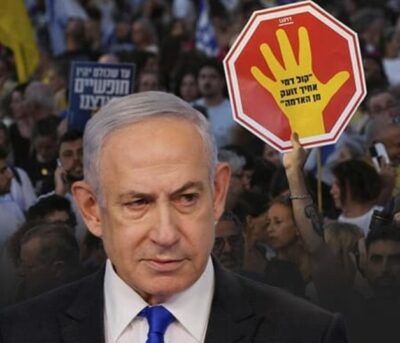
Israeli Prime Minister Benjamin Netanyahu has grown increasingly dismissive of a proposed partial prisoner exchange with Hamas, despite the group’s recent acceptance of the deal. While he has not formally rejected the offer, Netanyahu has indicated that a limited agreement would “undermine Israel’s broader military and political objectives.”
According to senior Israeli officials, Netanyahu believes that a temporary ceasefire followed by renewed combat would be difficult to sustain.
He views the planned military takeover of Gaza City as “a strategic asset—one that could pressure Hamas into accepting a comprehensive deal on Israel’s terms.”
These conditions include the dismantling of Hamas’s military infrastructure, the disarmament of Gaza, the exclusion of Hamas from any future governance, and the removal of its leadership from the territory.
|UNRWA Chief: Gaza’s Children Facing Tripled Malnutrition Rates|
Netanyahu has publicly stated that Hamas is under immense pressure, and its willingness to engage in a partial deal reflects its concern over Israel’s advance toward Gaza City.
His office recently outlined five principles for ending the genocide: the elimination of Hamas’s weapons, the unconditional return of all hostages, the protection of civilians, full Israeli security control over Gaza, and the establishment of a new civilian administration that excludes both Hamas and the Palestinian Authority.
Controversy has also emerged over the military’s naming of the Gaza offensive as “Gideon’s Chariots II.” Some ministers criticized the designation, suggesting it was intended to downplay the scale of the offensive and mislead the cabinet. Israeli military officials maintain that the plan is detailed but not a full occupation.
|Wednesday in Gaza: 94+ Killed by Israel, Mass Expulsion Continues|
Meanwhile, public pressure is mounting. Demonstrations have erupted across the country, with families of Israeli captives and civil society groups demanding a deal to bring captives home. A nationwide strike has been launched, halting operations in municipalities, universities, and private companies.
U.S. President Donald Trump has voiced opposition to any partial agreement, calling instead for the complete dismantling of Hamas’s presence in Gaza. Reports suggest that Hamas’s recent shift toward compromise may have been influenced by strong messages from Washington.
Behind closed doors, Israeli leaders continue to debate whether Hamas can be forced into surrender. While Netanyahu has not officially ruled out the partial deal, he remains focused on securing a full agreement that aligns with Israel’s long-term strategic goals and preserves its ability to resume military operations if necessary.
