
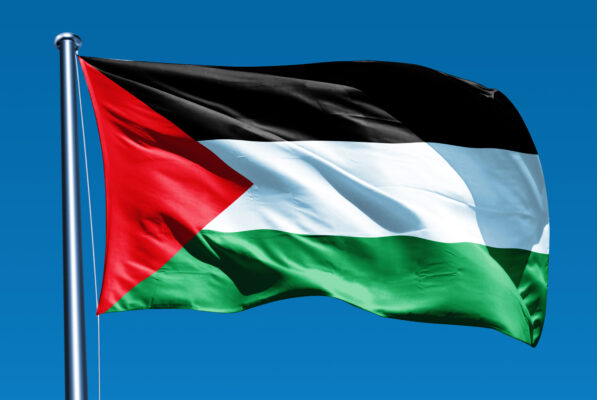
By Bilal Gheith Kiswani, Published in Arabic by WAFA News: A growing bloc of Western nations, including the United Kingdom, France, Australia, Canada, Portugal, Belgium, Malta, Luxembourg, Andorra, and Monaco, has formally recognized the State of Palestine, joining more than three-quarters of UN member states.
The move reflects mounting international support for a two-state solution and comes amid a campaign of genocide in Gaza, alongside Israel’s continued military aggression and colonialist expansion in the occupied West Bank, including East Jerusalem.
With this latest wave of recognitions, 159 out of 193 UN member states now formally acknowledge Palestinian statehood. More countries are expected to follow suit during this week’s UN General Assembly.
The list of recognizing states includes major global powers such as Russia, China, India, Turkey, South Africa, Brazil, Sweden, Mexico, Poland, and the Vatican, as well as key European supporters like Norway, Ireland, Spain, Slovenia, and Portugal.
🇵🇸 🇺🇳 “Let’s be clear: statehood for the Palestinians is a right not a reward.” pic.twitter.com/UpPMxkSg95
— State of Palestine (@Palestine_UN) September 22, 2025
Algeria was the first to recognize Palestine on November 15, 1988, minutes after the late President Yasser Arafat declared independence in Algiers.
Dozens of countries followed in the months that followed, with renewed waves in 2010–2011 and again in response to the ongoing genocide in Gaza since October 7, 2023, which has displaced Gaza’s population and killed tens of thousands.
Legal and Diplomatic Impact
Assistant Foreign Minister Ambassador Omar Awadallah emphasized that recognition is a binding diplomatic act, not a symbolic gesture.
“It affirms the Palestinian people’s right to sovereignty, representation, borders, and governance,” he said.
🇵🇸 🇬🇧 “I stand before you today, beneath the emblem of the United Nations, to confirm the historic decision of the British Government to recognize the State of Palestine.” pic.twitter.com/10h1zQSWKS
— State of Palestine (@Palestine_UN) September 22, 2025
Palestinian missions in recognizing countries will now operate as full embassies, with diplomatic immunity and expanded legal authority. This includes the ability to pursue war crimes accountability under local laws.
🇵🇸 🇩🇰 “ The keys to recognition of the Palestine State should no longer lie in the hands of the Israeli government.” pic.twitter.com/R5ur2f9OoX
— State of Palestine (@Palestine_UN) September 22, 2025
Awadallah noted that the timing of this recognition wave sends a clear message: these nations reject genocide and affirm Palestine’s right to exist. He added that Palestine is ready to host embassies from newly recognizing states, ideally in East Jerusalem, but temporarily in Ramallah until full independence is achieved.
Economic and Institutional Development
Recognition is expected to strengthen economic ties and help stabilize the Palestinian government, which faces financial siege and attempts to undermine its capacity. It also opens the door to institutional development, allowing Palestine to benefit from the expertise of countries with advanced infrastructure and governance systems.
🇵🇸 🇦🇩 “The Government of Andorra approved the recognition of the State of Palestine.” pic.twitter.com/AbUdRmg1Zt
— State of Palestine (@Palestine_UN) September 22, 2025
Awadallah said the momentum aligns with the 2024 advisory opinion of the International Court of Justice, which called for increased international pressure to end the Israeli occupation. He expressed confidence that more countries will follow suit, describing recognition as a prerequisite for a just and lasting peace.
Remaining Holdouts
About 35 countries still do not recognize Palestine, including the United States, Germany, Italy, South Korea, Japan, Singapore, Cameroon, Panama, New Zealand, and most of Oceania.
Israel remains firmly opposed, with Prime Minister Benjamin Netanyahu declaring: “There will be no Palestinian state. Israel will continue building settlements in the West Bank.”
Awadallah concluded by urging nations to embrace the Saudi-French initiative as a pathway to peace, stability, and regional security through the implementation of the two-state solution.
