
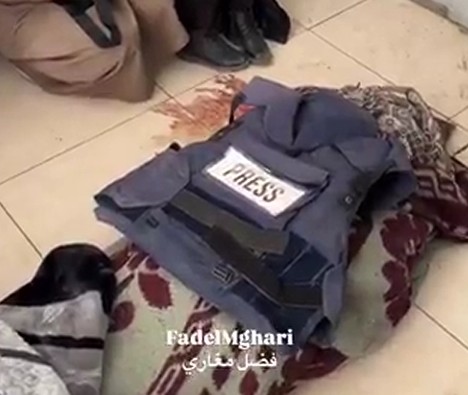
Seven Palestinians were killed and seventeen others wounded across the Gaza Strip in the past 24 hours as Israeli forces continued to bombard multiple areas of the besieged enclave, the Palestinian Ministry of Health confirmed.
The renewed attacks come as Gaza’s borders remain effectively sealed, including the continued closure of the Rafah crossing in the southernmost part of the Strip, deepening an already catastrophic humanitarian crisis for more than two million residents.
Medical sources reported that Emad Filfil, 30, was killed on Monday evening when an Israeli quadcopter drone dropped an explosive device on dispalced civilians near Kashko Street in the Zeitoun neighborhood, southeast of Gaza City. Several others were injured in the same attack.
Local media outlets said three Palestinians were killed and around twenty others wounded when Israeli artillery shelled tents sheltering displaced families in the As‑Sawarha area, southwest of the Nuseirat refugee camp in central Gaza.
Three coffins in one photo: a journalist, a mother, and a child.
They were among displaced families in tents when Israeli artillery struck Al-Sawariha, central Gaza, killing:
• Amal Mohammed Shamali, 46, journalist
• Nour Saleh Al-Shallafah, 30
• Salsabeel Anwar Faraj, 12… pic.twitter.com/1IEmjCFU95— Ramy Abdu| رامي عبده (@RamAbdu) March 9, 2026
Witnesses described scenes of panic as the bombardment ignited several tents, forcing residents to pull the wounded from burning debris while civil defense crews struggled to reach the area due to ongoing shelling, destroyed roads, and a severe lack of fuel.
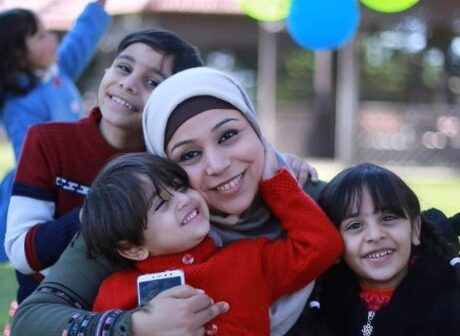 The attack followed the killing of journalist Amal Mohammad Shamali, 46, a correspondent for Qatar Radio, who was killed on March 8—International Women’s Day—when Israeli forces struck tents housing displaced families in Zawayda in central Gaza.
Her death drew widespread grief and condemnation, with colleagues and media organizations noting that she is among hundreds of journalists killed since the beginning of the assault, in what press‑freedom groups describe as the deadliest period for journalists in modern history.
Amal was among displaced families in tents when Israeli artillery struck the Sawarha area, in central Gaza, killing her, in addition to Nour Saleh Al-Shallafah, 30 and Salsabeel Anwar Faraj, 12.
In a separate strike, medical teams in Gaza City reported the killing of three Palestinians after an Israeli drone targeted a group of civilians in the Ansar area west of the city.
The Israeli military later claimed it had targeted two Hamas fighters allegedly preparing a sniper attack in northern Gaza, though it provided no evidence or further details. Israeli artillery also fired multiple shells at several areas in the eastern part of Gaza City.
The humanitarian situation continues to deteriorate as Gaza’s borders remain closed. The Rafah Border Crossing with Egypt—Gaza’s only gateway to the outside world—has been shut for ten consecutive days after briefly reopening for limited humanitarian cases on February 2.
Al‑Jazeera, Ma’an News, Quds News, and other regional outlets report that thousands of patients, students, and foreign‑residency holders remain stranded, unable to leave for medical treatment or to resume their studies abroad.
Egypt has stated that the crossing cannot operate normally due to the presence of Israeli forces on the Palestinian side, while humanitarian agencies warn that the closure is cutting off critical aid flows.
Nineteen‑year‑old student Fadi Emad told local reporters he had been preparing to travel to continue his education overseas. “I thought I was finally close to achieving my dream and building my future,” he said. “The closure destroyed me psychologically.”
Humanitarian organizations warn that the blockade is preventing the entry of food, medicine, and fuel needed to operate hospitals, water systems, and Gaza’s remaining power sources.
The Kerem Shalom crossing—Israel’s primary commercial entry point—has also faced repeated closures and restrictions, severely limiting the number of aid trucks entering the Strip.
The maritime blockade remains fully enforced, preventing any sea‑based delivery of supplies. The UN has warned that Gaza is facing “near‑total isolation,” with aid deliveries far below the minimum required to sustain the population.
Conditions in northern Gaza are particularly dire. UN agencies report widespread hunger, with families grinding animal feed or eating leaves due to the lack of flour and basic food supplies.
Entire neighborhoods have been flattened, and many residents have been unable to evacuate due to ongoing bombardment and the destruction of roads.
Civil defense crews continue to operate under extreme conditions, with little fuel, no heavy machinery, and limited protective equipment.
Many victims remain trapped under rubble or in areas inaccessible to ambulances due to destroyed infrastructure and continued shelling. Communications blackouts, which occur frequently, further hinder rescue operations.
A funeral has been held in Gaza for a 12-year-old girl and two women, including a journalist.
They were killed by Israeli tank shelling which hit a tent encampment for displaced families, according to health officials.
The attack also left at least 10 people injured, including… pic.twitter.com/fnmRk4OwuB
— Channel 4 News (@Channel4News) March 9, 2026
The daily statistical report on Israeli violations noted that since the declared “ceasefire” on October 11, 2025, a total of 648 Palestinians have been killed, including 199 children, 83 women, and 22 elderly people—representing roughly 46 percent of all fatalities.
The number of wounded since the ceasefire stands at 1,728, while civil defense crews have recovered 755 bodies from destroyed buildings and public areas.
In the past 24 hours alone, hospitals in Gaza received seven new fatalities and seventeen injuries. Officials warn that the true toll is likely higher, as many victims remain under rubble or in areas rescue teams cannot reach.
Since the beginning of the Israeli assault on Gaza on October 7, 2023, the cumulative death toll has reached at least 72,133, with 171,826 wounded—most of them children, women, and elderly people—alongside hundreds of journalists, medics, and humanitarian workers.
UN agencies say the scale of destruction, displacement, and civilian casualties is unprecedented in the region’s modern history.
