
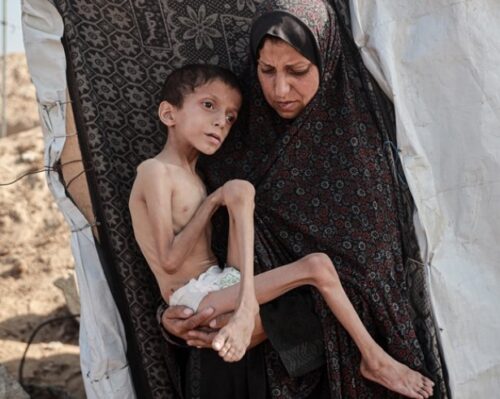
The United Nations warned Monday that the humanitarian situation in the Gaza Strip “remains critical,” as severe winter weather destroyed shelters, acute malnutrition surged, and the death toll from Israel’s ongoing assault continued to rise.
Medical authorities in Gaza report 71,419 Palestinians killed and 171,318 injured since October 07, 2023, alongside mounting deaths from exposure, collapsed buildings, and the breakdown of essential services.
Update: A Palestinian child died on Tuesday morning in Deir al‑Balah, in central Gaza, due to severe cold amid the catastrophic humanitarian conditions facing residents, especially the displaced.
At the same time, Israeli occupation forces continued to violate the ceasefire agreement. Troops carried out three demolitions targeting homes and structures southeast of Gaza City, while Israeli artillery shelled the eastern areas of the al‑Bureij refugee camp, and military vehicles opened heavy machine‑gun fire toward eastern Khan Younis.
Israeli warplanes also launched intense airstrikes on the eastern parts of Deir al‑Balah in central Gaza, marking a new escalation that further deepens the suffering of residents and displaced families as humanitarian conditions continue to deteriorate.
UN: 1.1 million people in urgent need:
UN spokesperson Stéphane Dujarric said staff from the UN Office for the Coordination of Humanitarian Affairs (OCHA) have warned that harsh winter conditions are undermining already fragile shelter conditions across the Strip.
According to the UN:
- 1.1 million Palestinians remain in urgent need of humanitarian assistance.
Heavy rain has damaged or destroyed most existing shelters.
- Progress in meeting shelter needs is “at risk” due to severe weather.
Dujarric added that UN humanitarian partners screened more than 76,000 children last month, identifying approximately 4,900 cases of acute malnutrition, bringing the total number of acute malnutrition cases recorded in 2025 to nearly 95,000.
Rising deaths from collapsed buildings and exposure:
Local medical sources reported that four Palestinians were killed in Gaza City after storm winds caused previously bomb‑damaged structures to collapse. The victims included:
- 15‑year‑old Rimas Bilal Hammouda was killed when part of the “Organza Hall” building collapsed.
- 33‑year‑old Wafa’ Shreir was killed when a damaged wall collapsed near Thawra Street.
Health officials also confirmed the deaths of:
- A seven‑day‑old infant.
- A four‑year‑old child.
Both died from extreme cold, bringing the number of children who have died from exposure this winter to six.
Seven killed, four injured in the past 24 hours:
Hospitals in Gaza reported:
- 7 Palestinians killed in the past 24 hours
- 5 bodies recovered from rubble
- 4 injuries
- Additional victims remain trapped under debris, unreachable due to destroyed roads, fuel shortages, and Israeli restrictions
Since the “ceasefire” declared on 11 October 2025, the cumulative toll has risen to:
- 442 killed
- 1,240 injured
- 697 bodies recovered from collapsed buildings
forces continued to carry out:
- Strikes and shelling in multiple areas
- Drone attacks targeting civilian zones
- Demolitions and bulldozing in already devastated neighborhoods
- Restrictions on movement, preventing rescue teams from reaching victims
<any of the newly recovered bodies were found in areas previously inaccessible due to ongoing military activity.
Health officials warn of viral outbreaks:
Gaza’s health authorities issued an urgent warning about the spread of suspected mutated strains of influenza and coronavirus, citing:
- Widespread immune collapse due to hunger and malnutrition.
- Lack of vaccines and antiviral medications.
- Overcrowded shelters and unheated tents.
- Hospitals are operating at over 150% capacity.
Al‑Jazeera reported Monday that Gaza’s hospitals face “unprecedented pressure,” with severe shortages of antibiotics, vaccines, and basic medical supplies.
Calls for urgent international intervention:
Health officials and humanitarian agencies called for immediate action to:
- Provide vaccines and antiviral medications.
- Deliver winterized shelters, blankets, and heating equipment.
- Support overwhelmed hospitals.
- Prevent further spread of respiratory infections.
- Address acute malnutrition among children.
Aid organizations say the crisis is worsening rapidly as Israel continues to restrict the entry of essential supplies, including medical equipment, tents, and fuel.
