
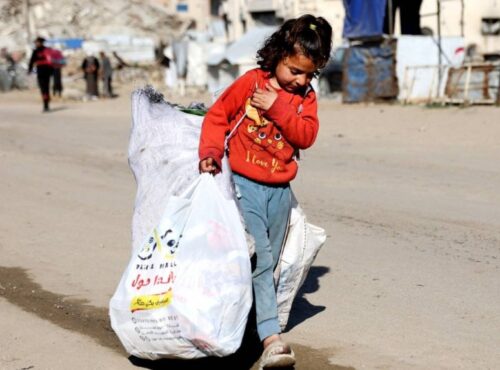
After more than two years of continuous Israeli bombardment, displacement, and loss, UN agencies warn that Palestine is facing an unprecedented mental‑health emergency, with more than one million children in Gaza now requiring psychological and social support and 96 percent reporting that they feel death is imminent.
Sima Alami, Adolescents and Youth Program Officer at the UN Population Fund (UNFPA), told UN News in an interview published on 19 March 2026 that the scale of distress among Gaza’s children “reflects the depth of fear and daily shock they are living through.”
According to UNFPA data she cited, adolescents and youth are similarly affected: 61 percent exhibit symptoms associated with post‑traumatic stress, 38 percent experience depression, and 41 percent report anxiety.
“Alarmingly, one in five adults thinks about suicide almost daily,” she said, describing the situation as a “large‑scale mental‑health emergency.”
Girls face particularly acute risks. Child marriage — previously in decline — has surged again as families struggle with displacement, poverty, and insecurity.
Rates had fallen from 25.5 percent in 2009 to 11 percent in 2022, but a recent UNFPA assessment found that 71 percent of respondents in Gaza now report increased pressure to marry off girls under 18.
In a short monitoring period, more than 400 marriage licenses were issued for girls aged 14 to 16, a figure researchers believe understates the true scale.
“Some families see marriage as a survival strategy,” Alami explained, noting that others view it as a form of protection in overcrowded shelters or a way to ease economic hardship.
In 2025, roughly 10 percent of newly registered pregnancies in Gaza were among adolescent girls — a sharp rise from pre‑war levels.
Access to healthcare has simultaneously collapsed: only 15 percent of Gaza’s health facilities can currently provide emergency obstetric and newborn care.
Child marriage also exposes girls to violence. UNFPA data indicates that 63 percent of girls married early have experienced physical, psychological, or sexual violence.
Reports point to rising divorce rates and severe psychological distress among married minors, with more than 100 documented cases of suicide or attempted suicide among survivors of violence. “Child marriage is a form of gender‑based violence,” Alami emphasized.
While Gaza remains the center of the crisis, conditions in the occupied West Bank are also deteriorating. Escalating Israeli military invasions and attacks by illegal paramilitary Israeli colonizers have displaced families, particularly in refugee camps, while movement restrictions and the closure of military roadblocks have disrupted daily life and forced school closures.
“Children and youth are living under constant pressure,” Alami said. “They face fear of invasions, movement restrictions, and uncertainty about livelihoods and access to services. This creates chronic anxiety and a persistent sense of insecurity.” These pressures, she warned, may have long‑term consequences that extend into adulthood.
In response, UNFPA has expanded its support network. Over the past three years, the agency has reopened and supported more than 35 safe spaces for women and girls, providing case management and multisectoral responses to gender‑based violence. More than 120,000 hygiene kits have been distributed, and over 15 multipurpose youth centers operate across Palestine, including 11 dedicated to girls.
“These centers provide psychosocial support, education, life‑skills training, and help strengthen community engagement and a sense of belonging,” Alami said, noting that young people are not only beneficiaries but “active partners” in designing and implementing initiatives.
Services include group activities, psychological first aid, individual consultations, and a digital helpline known as “Youth Window,” which offers remote support to marginalized youth.
Yet the challenges remain immense: displacement, limited resources, and harsh conditions — particularly in Gaza, where some safe spaces operate in tents exposed to severe weather — continue to hinder operations.
“Many families prioritize survival over mental health,” Alami said, underscoring the need for integrated responses that link psychosocial support with food, healthcare, and education.
Source: UN News interview with UNFPA official Sima Alami
https://news.un.org/en/story/2026/03/1167166
