
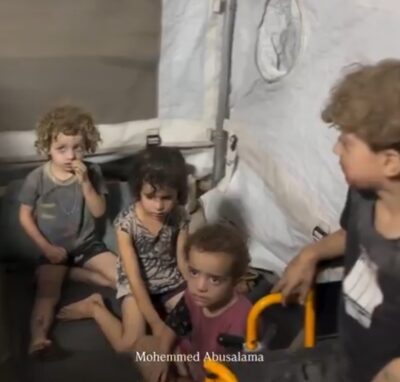
Catherine Russell, Executive Director of UNICEF, issued a grave warning in an interview with CBS News, describing the humanitarian catastrophe facing Palestinian children in Gaza as a “terrible famine.”
She called on the international community to stop debating and start delivering food, stating bluntly: “We need to stop talking and get food in.”
Russell emphasized that children in Gaza are enduring prolonged periods without adequate nutrition, with many so severely malnourished they lack the energy even to cry. “They are just lying there,” she said, “without the strength to respond.”
According to UNICEF’s data, approximately 28 children die every single day in Gaza, equivalent to an entire classroom, since the beginning of the genocide.
These deaths are not isolated tragedies but part of a systemic collapse in access to food, water, medical care, and shelter.
Russell’s remarks reflect growing alarm among humanitarian agencies over the deliberate obstruction of aid and the weaponization of starvation.
Gaza’s children, already traumatized by relentless bombardment and displacement, are now facing death by hunger in what UNICEF and other organizations have described as a man-made famine.
This crisis is unfolding in full view of the world. The blockade on food and humanitarian supplies, compounded by the destruction of infrastructure and the targeting of aid convoys, has left Gaza’s population, especially its children, trapped in conditions that violate every principle of international humanitarian law.
UNICEF’s call is unequivocal: food must be allowed in immediately. Every hour of delay costs lives. The international community must act not only with urgency but with accountability, ensuring that the rights and survival of Palestinian children are no longer sacrificed to political impunity.
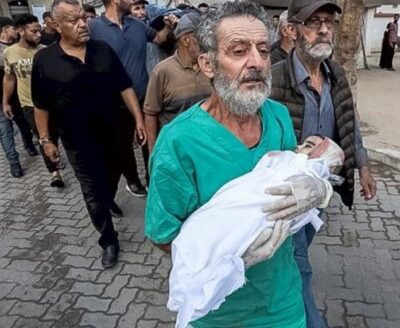 Since October 7, 2023, the Israeli military has killed at least 62,686 Palestinians in Gaza and wounded 157,951 others. Among the dead are 115 children who died from starvation alone, part of a broader toll of 289 famine-related deaths.
Women and children are estimated to comprise more than half of all fatalities. Thousands remain missing, with recovery efforts ongoing across devastated areas of Gaza.
A joint investigation published earlier this week found that at least 83 percent of those killed are civilians, with only a small fraction identified as combatants.
This aligns with the Palestinian Health Ministry’s breakdown, which continues to report disproportionate civilian casualties amid the collapse of essential services and the deliberate targeting of densely populated areas.
