
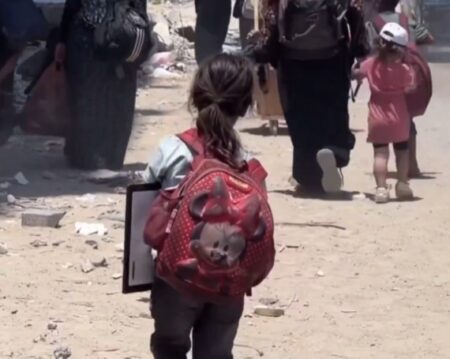
The United Nations Relief and Works Agency for Palestine Refugees (UNRWA) warned Friday that tens of thousands of Palestinians in Gaza are being forced into repeated displacement under increasingly dire humanitarian conditions.
The agency described the situation as catastrophic, with families uprooted multiple times due to relentless Israeli bombardment and the collapse of basic infrastructure.
In a statement posted on X (formerly Twitter), UNRWA said the cost of repeated displacement—both human and material—is staggering.
“Access to food, clean water, and safety remains severely limited,” the agency noted, adding that many displaced families are sheltering in rubble-strewn streets, makeshift tents, or overcrowded UN facilities that lack adequate sanitation and medical supplies.
The agency renewed its urgent call for an immediate ceasefire and unimpeded humanitarian access, stressing that aid convoys must be allowed to enter Gaza safely and consistently.
“The suffering of civilians must end,” UNRWA said, urging all parties to uphold international humanitarian law and protect civilians from further harm.
According to the latest figures from the Palestinian Ministry of Health and humanitarian monitors, more than 1.9 million people—over 85% of Gaza’s population—have been displaced since the war began in October 2023.
Many have been forced to flee multiple times, often under fire, with no safe zone available. Entire neighborhoods have been flattened, and essential services such as hospitals, water networks, and power stations have been systematically targeted or rendered inoperable.
UNRWA reports that its shelters operate far beyond capacity, with some facilities housing over 10,000 people each. The agency has also warned of rising disease outbreaks, including hepatitis, respiratory infections, and severe diarrhea among children, due to overcrowding and lack of clean water.
The situation is compounded by famine-level food insecurity. Over 500,000 people are now living under Phase 5 conditions—the highest classification—marked by starvation, destitution, and death. At least 457 Palestinians, including 152 children, have died from hunger and malnutrition, and humanitarian agencies fear the toll will rise sharply without immediate intervention.
UNRWA’s appeal comes amid renewed international pressure to implement a ceasefire and allow sustained humanitarian relief.
While Hamas has conditionally accepted a U.S.-brokered ceasefire proposal, Israeli forces continue to intensify their attacks across Gaza, further complicating aid delivery and civilian protection.
The agency emphasized that without a political resolution and guaranteed humanitarian corridors, the cycle of displacement and suffering will continue. “We are witnessing the collapse of an entire society,” one UN official said. “This is not just a humanitarian emergency—it is a moral failure of global proportions.”
