
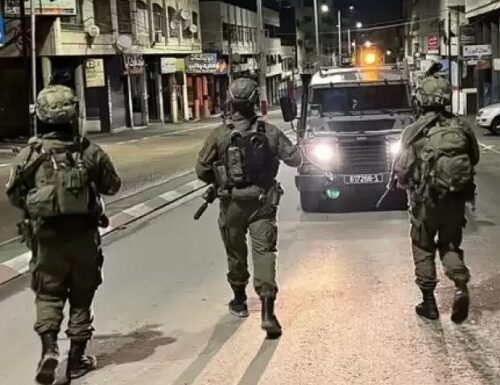
Israeli occupation forces carried out extensive invasions across the occupied West Bank and occupied Jerusalem on Tuesday, breaking into homes, installing military roadblocks, and abducting Palestinians in multiple districts. The invasions triggered repeated protests, heavy firing of tear gas, and a rapid escalation of tension that spread simultaneously across most governorates.
The largest military operations were documented in Ramallah in the central West Bank, Hebron in the southern West Bank, and Jenin in the northern West Bank, where residents reported intensified military presence, new roadblocks, and ongoing confrontations. The invasions formed part of a broader pattern of escalating field activity across the region.
In Jenin and surrounding areas in the northern West Bank, Israeli forces invaded the towns of Meithalun and Sanur with additional reinforcements, while the town of Silat al‑Harithiya experienced similar incidents. Residents described a heavy military footprint and persistent tension throughout the district.
Also in Jenin, an illegal paramilitary Israeli colonizer drove into the town of Silet ath‑Thaher and chased students and staff at the local boys’ school, causing several children to suffer anxiety attacks.
In Nablus in the northern West Bank, soldiers invaded the village of Salem, broke into homes, and abducted a young man, Walid Hani Jabr Ishtayyeh, after ransacking his family’s property and confiscating a drone.
Protests also erupted when the army invaded the town of Qusra, where soldiers fired tear gas and sound bombs at residents.
I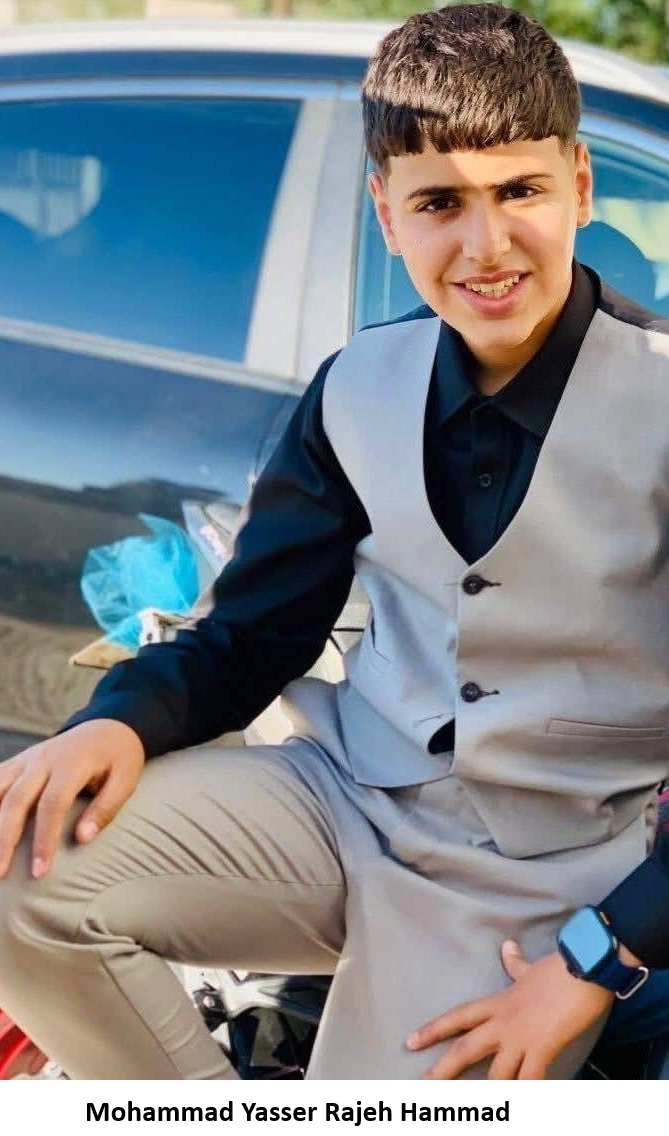 n Tulkarem in the northwestern West Bank, the army invaded the towns of Attil and Deir al‑Ghusoon, installed a military roadblock, and interrogated residents while inspecting their identity cards.
In Qalqilia in the northwestern West Bank, soldiers invaded Kufur Qaddum and conducted military patrols inside residential areas.
In occupied Jerusalem, Israeli forces invaded the town of Hizma, north of the city, and carried out searches and identity checks, adding to the growing tension across the Jerusalem district.
In Ramallah in the central West Bank, Israeli forces abducted two Palestinian minors from the town of Silwad, including an injured teen, Mohammad Yasser Rajeh Hammad, who was taken on crutches after soldiers assaulted his brother, in addition to Ezzedine Mohammad Hamed after breaking into and searching his family’s home.
The soldiers also abducted a third teen, Ammar Ahmad Mu’alla, during an invasion of his family’s of the al‑Am’ari Refugee Camp in al‑Bireh.
Soldiers further invaded the village of al‑Mughayyer, installed a military roadblock at its western entrance, and abducted a young man, Qasem Marwan Abu ‘Aliya.
In Kafr Malek, the army fired large numbers of tear gas and sound bombs, while a military observation post near Silwad caught fire after being targeted by Palestinian youths.
Additional invasions were reported in Abu Falah, Kafr Malik, and Silwad, where soldiers abducted Abdul Aziz Faqou’i.
In Bethlehem in the southern West Bank, Israeli forces invaded the village of Umm Salamuna, broke into several homes, and subjected residents to harsh field interrogations.
The homes targeted belonged to Ahed Mahmoud Taqatqa, village council head Mahmoud Abd Taqatqa, Fuad Yassin Taqatqa, Anwar Hussein Taqatqa, Ali Mohyeddin Taqatqa, and Amir Anwar Taqatqa. No abductions were reported.
In Hebron in the southern West Bank, protests erupted in the town of Sa’ir as soldiers fired tear gas at residents.
The army also invaded areas in Doura and the al‑Karentina neighborhood, where soldiers broke into a home and converted it into a military post.
In the Masafer Yatta area south of Hebron, Israeli forces invaded the village of Susiya and abducted a resident, Nasser Nawaj’a.
In Doura, soldiers also abducted a Palestinian security officer, Dia Abdul‑Rahman Darwish, from his home.
The widespread invasions, home break‑ins, and abductions mark another escalation in Israeli military operations across the occupied West Bank, contributing to rising tension and ongoing confrontations in multiple districts.
