
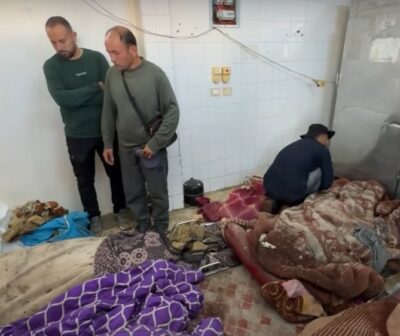
On Wednesday evening, the 19th day of the declared “ceasefire” in Gaza, Israeli warplanes launched new airstrikes on the northern part of the Strip, killing two Palestinians in Beit Lahia’s al-Salatin neighborhood. Medical sources at al-Shifa Hospital confirmed the deaths, marking yet another breach of the truce.
In total, at least 113 Palestinians were killed in the past 24 hours, including 46 children and 20 women, and more than 534 others were injured.
The strikes targeted homes, displacement tents, and public roads. Of the fatalities, 44 occurred in northern Gaza, 46 in central areas, and 20 in the south. Israeli forces also wired and detonated residential buildings in eastern Gaza City.
The Israeli military claimed the renewed offensive was in response to alleged attacks by Palestinian fighters on Israeli soldiers.
Hamas denied involvement, accusing Israel of fabricating pretexts to justify escalation and calling on international mediators to intervene.
Separately, the Israeli army announced the death of a reserve soldier following an attack on a military unit in Rafah on Tuesday. Hamas stated it had no connection to the incident and urged ceasefire guarantors to pressure Israel to halt its violations.
Israeli media reported that Israel is preparing to receive the remains of captives, although no formal notification has been received from the International Committee of the Red Cross.
A senior Hamas official told Al Jazeera that the Israeli occupation is obstructing search efforts and spreading false claims about delays by the resistance, accusing Israel of using these narratives to justify further aggression.
United Nations Secretary-General António Guterres condemned the Israeli airstrikes and resulting civilian deaths, calling the attacks a violation of the ceasefire and a threat to international humanitarian law.
In a statement issued by his spokesperson, Guterres urged all parties to uphold their commitments and protect civilian lives.
Caroline Willemen, project coordinator for Médecins Sans Frontières (Doctors Without Borders) in Gaza, stated that Israel continues to weaponize humanitarian aid as part of its military strategy.
She emphasized that the humanitarian situation remains dire, with no meaningful improvement in access to clean water or shelter.
Navi Pillay:
“The State of #Israel is responsible for the commission of 4 genocidal acts in #Gaza with the specific intent to destroy Palestinians in Gaza. We also found that Israeli President, Prime Minister and former Defense Minister have incited the commission of genocide.” pic.twitter.com/ZdhHTQqZcL
— United Nations Geneva (@UNGeneva) October 29, 2025
Despite international efforts, basic necessities remain critically lacking, and the blockade continues to prevent the delivery of essential supplies.
In a move emblematic of its erratic approach to ceasefire enforcement, the Israeli army announced a formal return to the ceasefire on Wednesday morning—just hours after unleashing a wave of airstrikes and artillery fire across the besieged enclave.
Heartbreaking successful rescue mission carried out by the bare hands of civil defence teams following Israeli bombing of a house in Gaza last night pic.twitter.com/EVyMdiBE9H
— Motasem A Dalloul (@AbujomaaGaza) October 30, 2025
The overnight bombardment killed at least 100 Palestinians, including 24 children, and wounded dozens more. Hospitals are overwhelmed, treating patients with shrapnel wounds and internal bleeding, while families across Gaza held funerals for loved ones.
The director of the Medical Relief Society in Gaza warned of a catastrophic collapse in chronic disease care.
More than 350,000 diabetic patients currently lack access to medical follow-up, and Gaza has lost 40% of its kidney patients due to the shutdown of dialysis services and the absence of life-saving medications.
These figures reflect the devastating impact of Israel’s blockade and repeated attacks on Gaza’s healthcare infrastructure.
Despite the ceasefire remaining officially in effect, today’s attacks represent one of the deadliest violations since the truce began.
Mediators including the U.S. and Qatar insist the agreement is still in place, but the scale of destruction and civilian casualties has drawn widespread condemnation.
As of October 29, 2025, Gaza’s Health Ministry reports a cumulative toll of 68,527 Palestinians killed and 170,395 injured since October 7, 2023. These figures include thousands of children, women, journalists, and humanitarian workers.
