
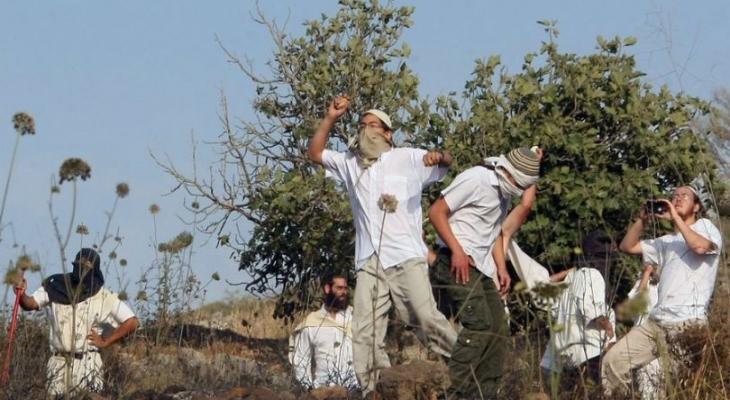
The Colonization & Wall Resistance Commission reported 158 assaults against olive harvesters carried out by Israeli occupation forces and settlers across the occupied West Bank since the beginning of October 2025.
On Saturday, October 25th, under heavy protection of Israeli soldiers, Israeli settlers attacked Palestinians picking their olive in the lands of Nahalin, west of Bethlehem.
Also Saturday, Israeli occupation forces prevented Palestinians from accessing their lands and harvesting olives in the town of Sa’ir, east of Hebron.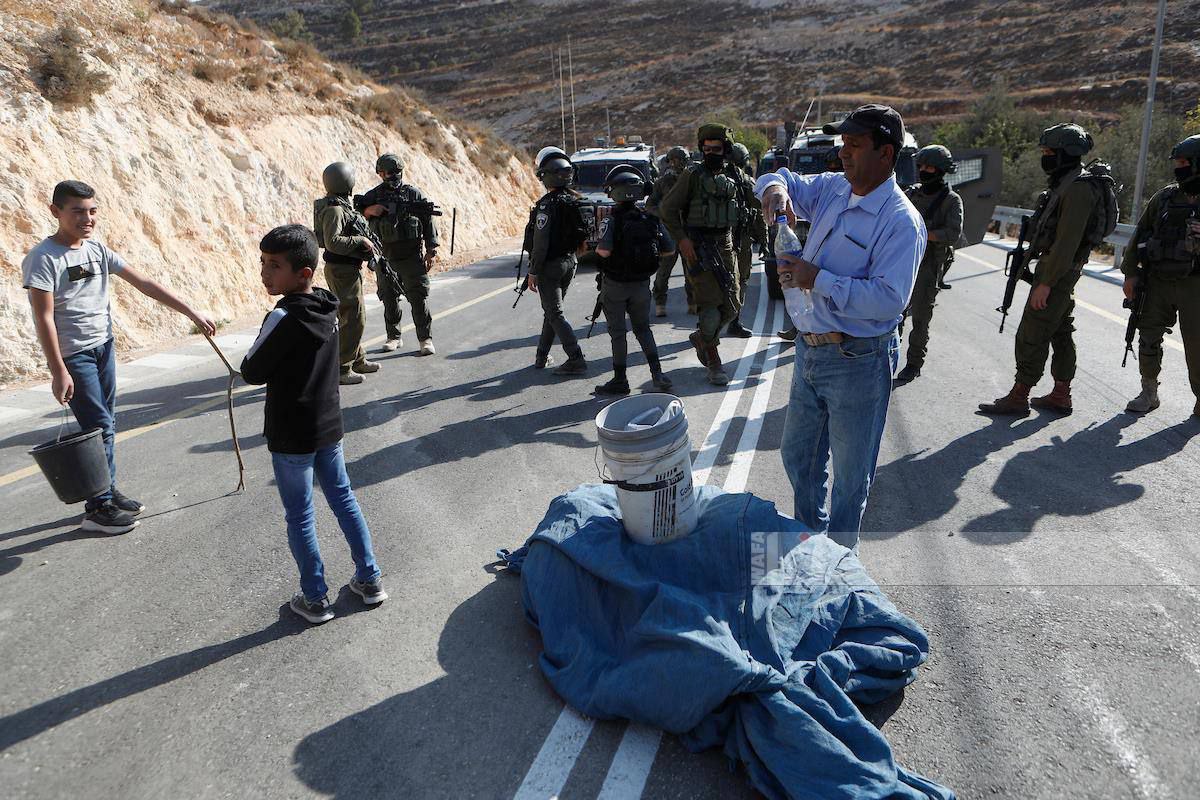
Israeli settlers attacked Palestinian farmers harvesting their olives in the Wadi Abbas area, northwest of Salfit, in the occupied West Bank.
Israeli settlers attacked the olive harvest and trees from the land belonging to the Palestinians family Al-Natsha in the Tel Rumeida area in Hebron, occupied West Bank.
The UN human rights office (OHCHR) in the Occupied Palestinian Territory has warned of an alarming rise in violence and restrictions by Israeli settlers and security forces against Palestinian farmers, as the crucial olive harvest season gets underway.
Ajith Sunghay said on October 21 that “settler violence has skyrocketed in scale and frequency, with the acquiescence, support, and in many cases participation, of Israeli security forces – and always with impunity.”
In the first half of 2025 alone, there were 757 settler attacks causing casualties or property damage — a 13 per cent increase compared with the same period last year.
“Two weeks into the start of the 2025 harvest, we have already seen severe attacks by armed settlers against Palestinian men, women, children, and foreign solidarity activists,” he added.
According to OHCHR data, 96,000 dunums (around 9,600 hectares) of olive groves were left unharvested in 2023, leading to over $10 million in losses for Palestinian farmers — a trend that continued into 2024.
“Direct land destruction is also escalating,” Sunghay said. “Settlers have burnt groves, chain-sawed olive trees, and destroyed homes and agricultural infrastructure.”
He underscored the broader toll of the occupation, noting that since October 2023, more than 1,000 Palestinians have been killed by Israeli forces or settlers in the West Bank, while thousands have been displaced by attacks, movement restrictions and home demolitions.
“The olive here is never just a tree,” Sunghay reflected. “It is livelihood and lineage, resilience and economy, and a historic vein connecting Palestinians to the land.”
He said that up to 100,000 families depend on the olive harvest for their livelihoods, describing it as “the economic backbone of rural Palestinian communities.”
OHCHR, he said, is working with partners to strengthen monitoring, provide legal aid and maintain a protective presence for farmers and landowners.
Mr. Sunghay warned that the surge in settler violence is occurring “against the backdrop of an accelerated Israeli land grab,” with officials “openly declaring their intent to annex the whole of the West Bank.”
He reiterated that Israel “has a legal obligation to end the occupation and reverse the annexation,” and urged member states to “exercise maximum pressure to protect civilians, halt and reverse these policies, and ensure accountability for decades of violations.”
“And yes,” he concluded, “it begins with the olives.”
