
In a rare diplomatic development, the United States has initiated official contact with Hamas, its first in decades, during ongoing ceasefire negotiations centered in Doha, marking a notable shift in U.S. stances.
Adam Boehler, serving as President Trump’s envoy for hostage affairs, met with Hamas officials to discuss the release of American-Israeli hostages and explore terms for a broader truce.
The meetings, confirmed by both sides, signal a marked shift in Washington’s involvement and the structure of regional diplomacy.
Despite the historic nature of this engagement, Israel and Hamas remain in indirect talks mediated by Qatar, Egypt, and the U.S.
While the parties do not interact directly, the negotiation channels have grown more dynamic and transparent. U.S. officials have taken on a more central role, contributing to the momentum seen in recent sessions.
The scope of these discussions, as reported by regional media outlets, goes beyond tactical exchanges.
Israeli negotiators are also reportedly operating under expanded authority to consider proposals that safeguard strategic interests while offering a foundation for potential de-escalation.
Central issues on the table include ceasefire logistics, territorial control, and the future of civilian hostages and detainees.
A major point of contention is Hamas’s demand for the release of high-profile Palestinian detainees, many of whom have spent decades in Israeli prisons.
Referred to as “the keys,” these individuals include senior political leaders serving multiple life sentences. Israel continues to resist this demand, which has complicated efforts to formalize a permanent ceasefire.
Palestinian negotiators continue to press for the release of several prominent political detainees held in Israeli prisons, chief among them Marwan Barghouti, whose case has come to symbolize broader demands for political recognition and reconciliation. Barghouti, a senior figure in Fateh movement, is currently serving five life sentences and an additional forty years.
According to the Israeli daily Yedioth Ahronoth, Palestinian sources confirmed that Hamas is unwilling to drop Barghouti’s name from the list of proposed releases. However, Israeli officials have stated that he has not been formally included in the current round of negotiations.
Barghouti enjoys broad public support in the West Bank and is seen by many Palestinians as a viable successor to Mahmoud Abbas. His political standing and personal symbolism evoke comparisons to the late Yasser Arafat, particularly in terms of charisma, resolve, and nationalist appeal.
Yedioth Ahronoth notes that one possible scenario involves Marwan’s deportation to Qatar or a third country.
Palestinian sources say that even from abroad, Barghouti could wield significant influence over Palestinian institutions.
One source asserted, “Barghouti could sit at the helm of the Palestine Liberation Organization from Doha. He’s the only figure capable of unifying the people. He reminds everyone of Arafat—his wisdom, determination, and presence.”
U.S. diplomats have assured Israeli hostage families that progress is possible. Envoy Steven Witkoff is expected to arrive in Doha to guide the next phase of talks, and his involvement is seen as pivotal to closing remaining gaps.
On the ground, Hamas has cautiously welcomed updated Israeli proposals, particularly revised territorial maps indicating a broader Israeli military withdrawal from the Morag corridor in southern Gaza.
Though Hamas views the changes as constructive, the group maintains that many critical details are unresolved and that the talks are still at an early stage.
The Morag corridor itself remains a sticking point. Israel considers the area crucial for maintaining separation between Rafah and Khan Younis, while Hamas insists on full withdrawal to ensure territorial continuity.
Recent signals from Israeli leadership suggest that Prime Minister Netanyahu may be open to adjusting the army’s deployment there.
According to officials familiar with the current framework, the proposal includes a 60-day truce featuring phased hostage releases, first living captives, then the remains of those killed in previous operations.
Hamas has reportedly agreed to keep these handovers discreet, avoiding public ceremonies that could politicize the process.
While Hamas has accepted American guarantees linking the ceasefire to broader political negotiations, Israel has so far avoided any formal commitment to ending the war outright.
This ambiguity, coupled with unresolved points of contention, leaves the outcome uncertain, but the diplomatic groundwork now appears more active than at any previous point.
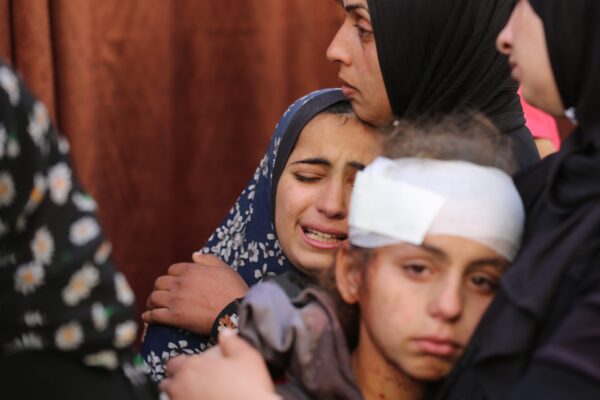
On Saturday, Day 653 of the ongoing genocide in Gaza, Day 124 since Israeli violated the mediated ceasefire agreement, the Israeli army continued the bombing and shelling of various parts of the devasted, starved and besieged Gaza Strip, killing at least 136 Palestinians, and wounding hundreds, including children and women.
The death toll from Israel’s ongoing genocide of the Palestinians in the Gaza Strip has climbed to 58,765, including at least 17,131 children, 10,190 women and 259 journalists, with 140,485 others injured, largely children, women and elderly, since October 7, 2023.
Among these figures, more than 7,938 Palestinians, including 1,533 children, 486 women, 247 elderly and 31 journalists, have been killed and at least 28,444 wounded since March 18, when Israel violated the mediated ceasefire agreement on March 18, 2025.
