
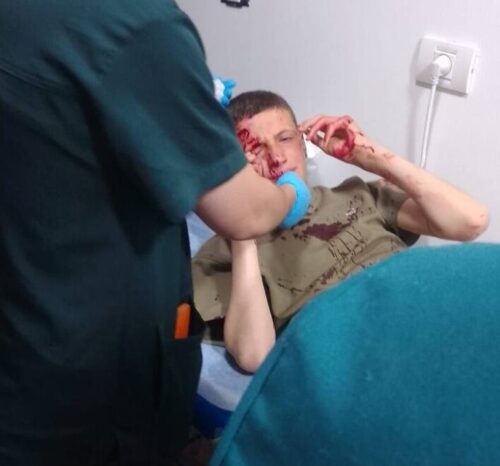
Three Palestinian children from the village of Abwein, northwest of Ramallah, were injured on Monday when illegal paramilitary Israeli colonizers attacked their father’s vehicle near the Shilo colony on the road linking Ramallah and Nablus.
A 14‑year‑old child sustained moderate head injuries after being struck with a stone, while his two siblings, aged six and two, suffered minor wounds from shattered glass, medical sources said.
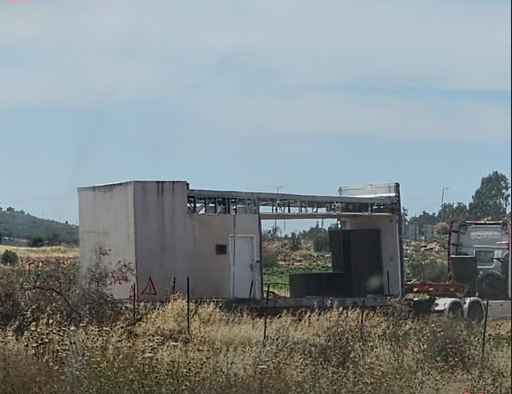
In Turmus Ayya, northeast of Ramallah in the central West Bank, colonizers installed several caravans and metal structures on privately owned Palestinian land that had been bulldozed and stripped of its olive trees in recent months.
 Local sources said the structures were placed in the Shuab area, near the home of the Abu Awad family, as part of ongoing efforts to impose new colonial facts on the ground and expand surrounding colonial outposts.
The targeted lands had previously been subjected to extensive bulldozing and the uprooting of hundreds of olive trees by Israeli forces.
The town continues to face escalating colonizer attacks aimed at seizing additional agricultural areas and restricting Palestinian access to their land.
Late on Monday evening, colonizers set fire to olive groves between Turmus Ayya and the nearby village of Abu Falah, also northeast of Ramallah.
Residents confronted the attackers and forced them to withdraw, but Israeli forces invaded the area, provided protection for the colonizers, and prevented Palestinian Civil Defense crews from reaching the burning groves.
 Communities across northeastern Ramallah have faced repeated invasions by Israeli forces alongside continuous colonizer assaults targeting farmland, olive trees, and property.
Over recent months, colonizer bulldozers have razed large tracts of land in the Turmus Ayya plain, uprooting hundreds of olive trees and carving new colonial roads to serve expanding outposts.
Colonizers also re‑established several herding outposts last year after they had been removed, in a continued effort to seize agricultural land and prevent Palestinian farmers from reaching their fields.
East of the villages of Taybeh and Rammun, also in the Ramallah district, colonizers continued their attacks on Palestinian farmland by driving herds of camels and sheep through olive groves, causing widespread damage to trees and crops.
Residents reported that colonizers invade the area almost daily, destroying agricultural property and preventing farmers from accessing their land.
A widely circulated video showed one colonizer breaking olive branches and feeding them to his herd, a direct assault on fruit‑bearing trees that sustain dozens of Palestinian families.
The eastern Ramallah region has seen a sharp rise in such “herding‑based” colonial expansion, which has become a tool for land seizure and the displacement of Palestinian farmers.
In the village of Douma, south of Nablus in the northern West Bank, colonizers set fire to agricultural land on Monday evening after blocking the western entrance to the village and preventing residents from passing.
The blaze damaged several olive trees before villagers attempted to reach the area to contain the fire. Douma has been subjected to repeated colonizer attacks, including arson, property destruction, and efforts to prevent residents from accessing their farmland.
Also on Monday evening, colonizers invaded the town of Beita, south of Nablus, entering the “Bir Qouza” and “al‑Harayeq” areas under the protection of Israeli soldiers.
The town has long been a focal point of colonizer attempts to seize hilltops and expand outposts, leading to frequent confrontations and ongoing threats to Palestinian residents and their land.
