
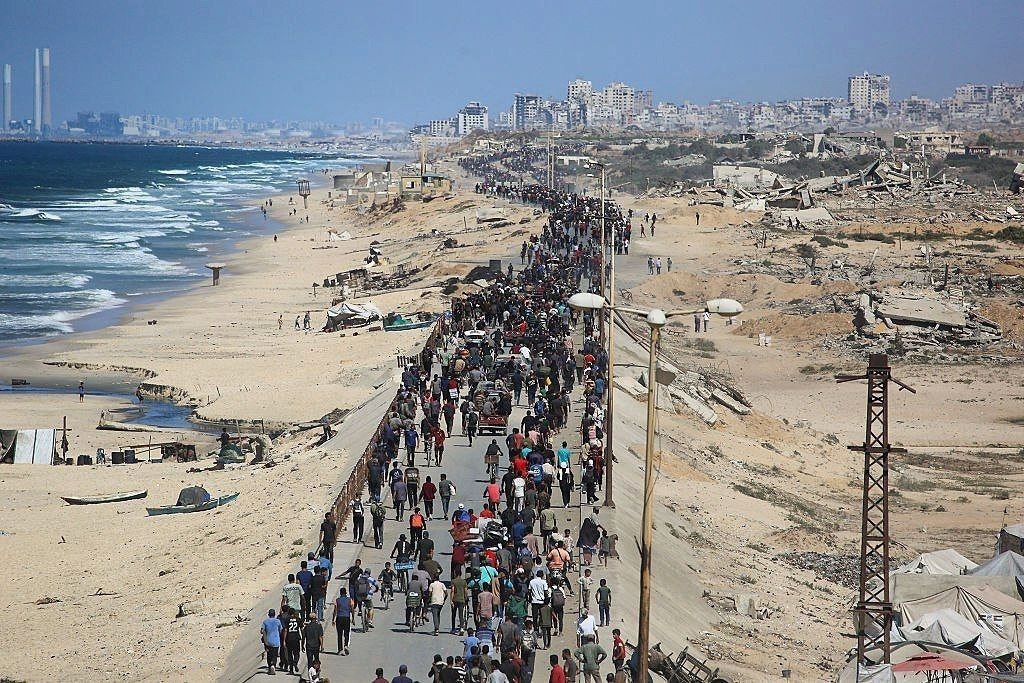
Tens of thousands of internally displaced Palestinian refugees have begun to return home to north and central Gaza, only to find that their homes have been completely obliterated by the Israeli military and turned into rubble.
The spokesperson for Civil Defense in Gaza reported that nearly half a million displaced Palestinian have returned to northern Gaza since the ceasefire took effect.
Despite their relief with the war ending, Gazans express their heartbreak over their homes and livelihoods that were destroyed by Israeli bombings and demolitions. With that, they still return to the rubble of their homes on foot.
Aerial footage documenting the extent of destruction caused by Israeli bombardment and demolitions in the Al-Katiba neighborhood northern Khan Younis, south of the Gaza Strip, after the withdrawal of Israeli occupation forces.
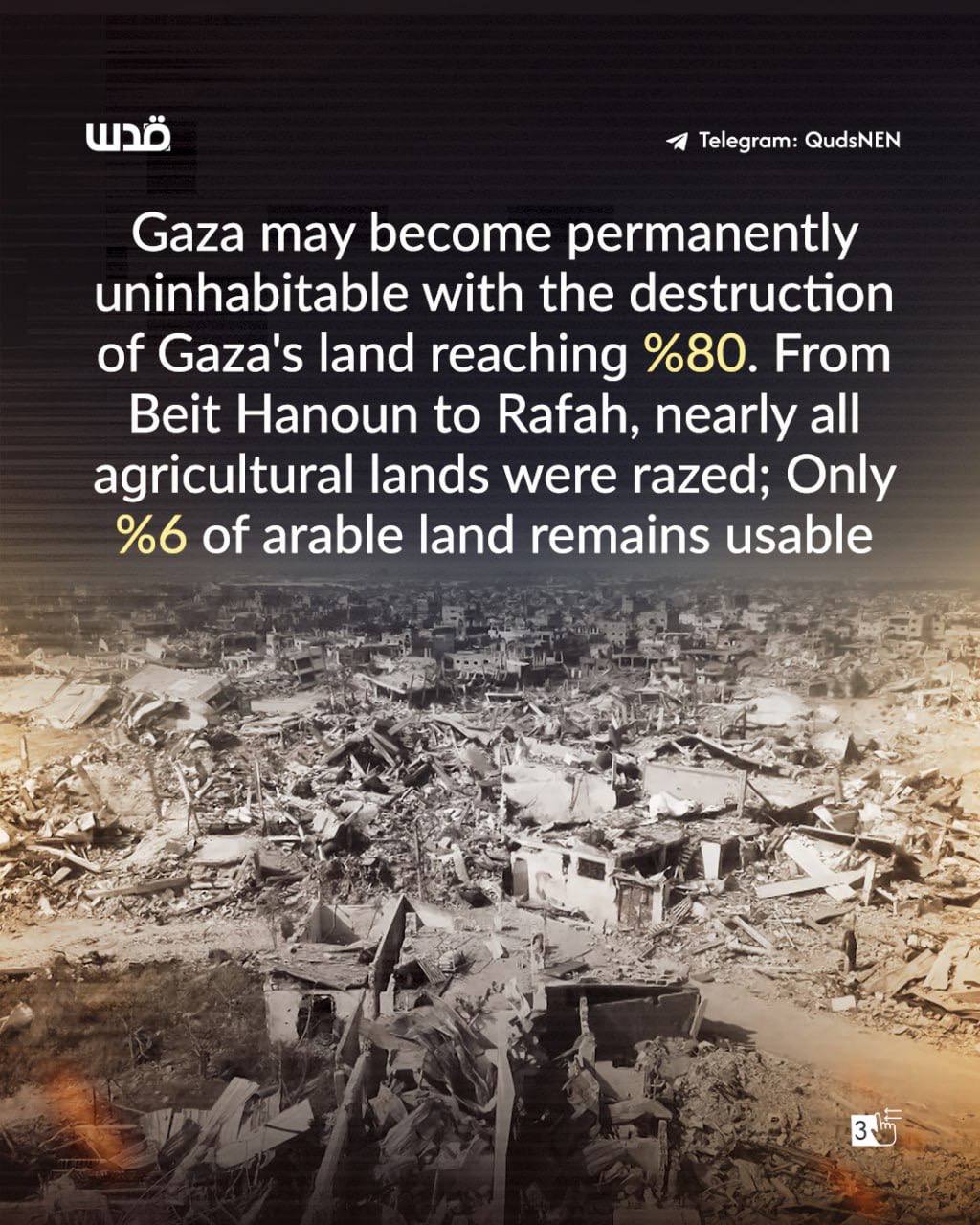
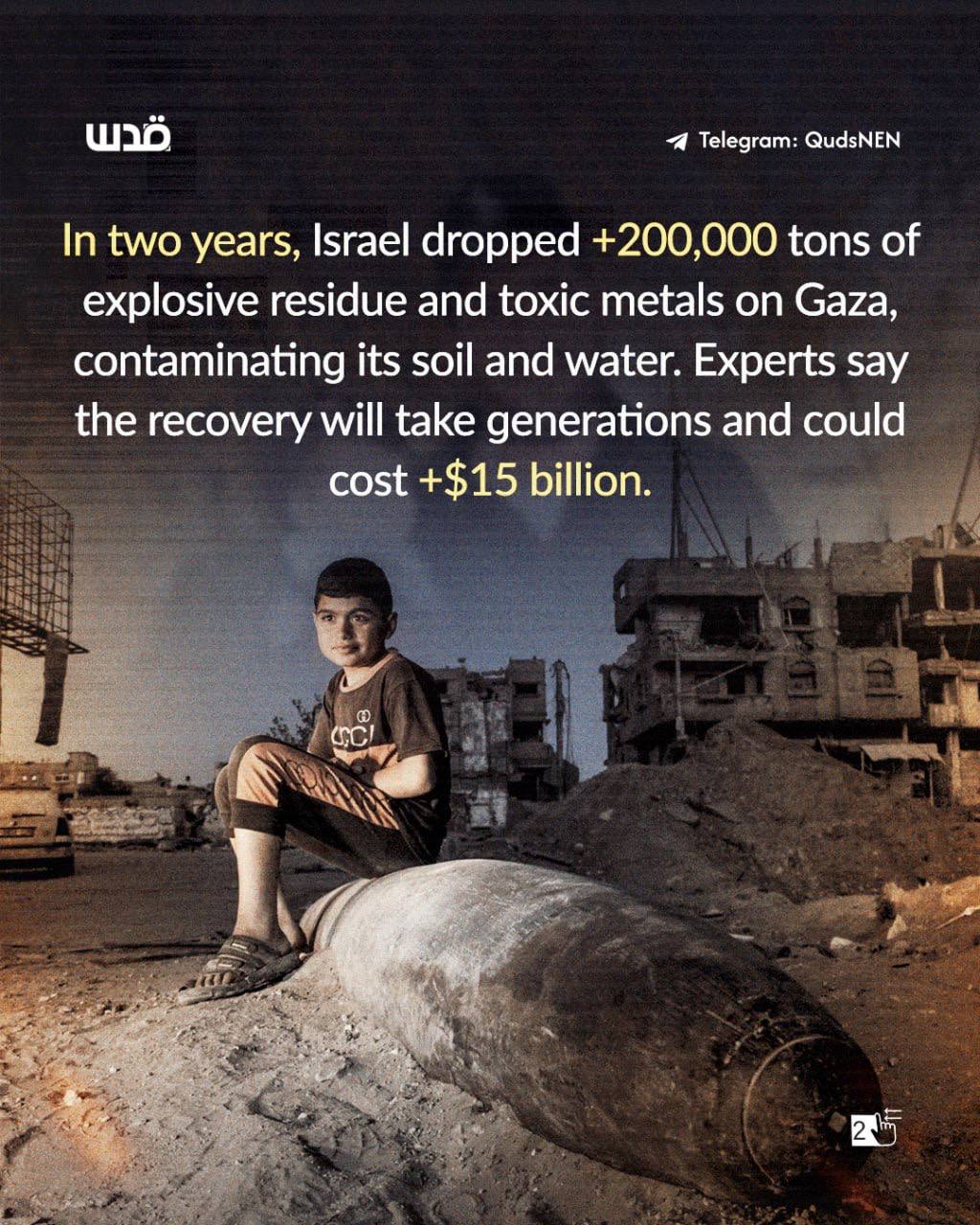
In Gaza, farmland once green with olives and strawberries now lies in ashes. The air reeks of burning plastic and toxic dust, the soil glows with unexploded metal, and the sea is slick with sewage.
After two years of relentless Israeli bombardment, Gaza is no longer just wounded; it is poisoned. What unfolded here is not only a humanitarian disaster, but an environmental genocide.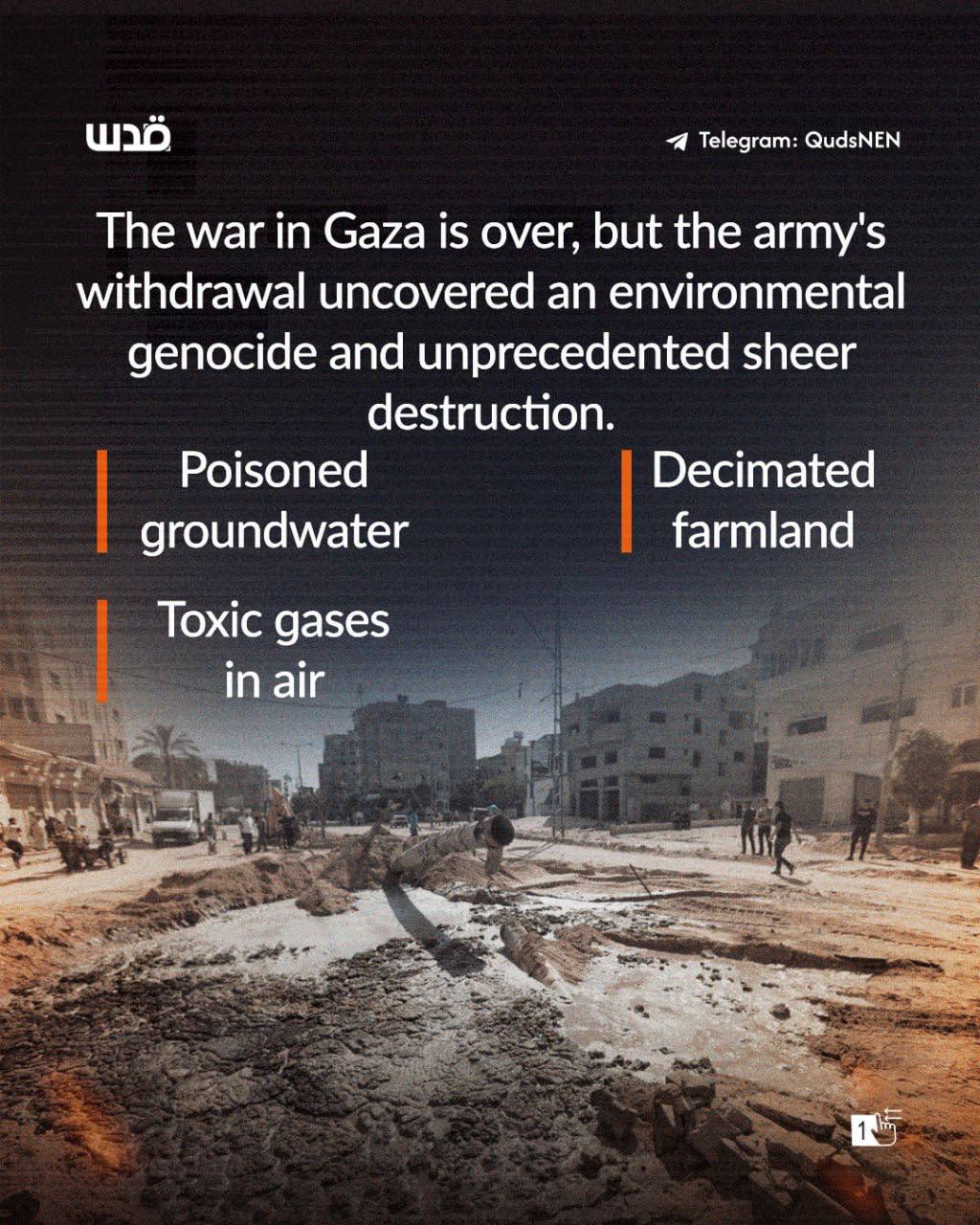
Clashes continue between Israeli-backed gangs and internal security forces in Gaza City.
During the genocide, Israel armed and supported multiple collaborator groups across Gaza to create chaos, loot aid, and kidnap or assassinate resistance members. During this week’s ceasefire agreement announcement, Israeli officials stated that they would abandon the gangs they funded, included the ‘Abu Shabab’ gang, to fend for themselves as Israeli forces withdrew from Gaza.
