
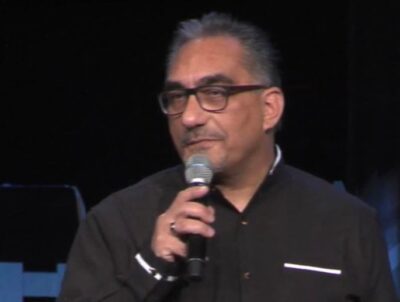
By Dr. Jack Sara – Come And See: Here in Jerusalem, Jesus’ name is not an idea but a living memory—spoken in prayers, whispered in grief, and held onto in hope. It is a land that has seen too much war, too much loss, and too many attempts to claim God for one side or another.
And so, when the name of Jesus is invoked in political speech, especially in ways that distort His life and message, it cannot go unanswered.
In a recent speech, Benjamin Netanyahu referenced Jesus in a way that places Him, implicitly, among figures like Genghis Khan, drawing on reflections associated with Will Durant.
The intention may have been to emphasize historical influence. But Jesus cannot be understood through the categories of conquest, power, or domination. To place Him alongside empire builders is not only historically careless—it is a profound theological misrepresentation.
The Lord Jesus changed the world, but not in the way conquerors do. He did not raise an army. He did not seize land. He did not rule by fear. He didn’t cause massive death and destruction and made thousands of children orphans.
The Lord Jesus walked among the poor, touched the untouchable, and proclaimed good news to those crushed under the weight of power.
His kingdom was never about control; it was about transformation. He spoke of a reign of God that lifts the humble and brings down the mighty—a truth already sung by Mary the mother of our Lord before His birth: “He has brought down rulers from their thrones but has lifted up the humble” (Luke 1:52). Elizabeth recognized that this child would carry God’s mercy into history, and long before them, This is the world Jesus inaugurates: not one built on domination, but one shaped by grace.
|Jerusalem Archbishop Rebukes Netanyahu’s Statements on Christianity|
In the Gospels, Jesus consistently rejects the logic of violence. When His followers expected Him to confront Rome with force, He refused. When one of His disciples drew a sword to defend Him, Jesus rebuked him: “All who take the sword will perish by the sword” (Matthew 26:52). And when He stood before the machinery of imperial power, He did not resist with violence, but with truth. Even on the cross—executed as a threat to political order—He prayed for His executioners: “Father, forgive them.” This is not the path of conquest. This is the path of sacrificial love.
It is precisely this distinction that is lost when Jesus is placed in the company of conquerors. Genghis Khan built an empire through destruction. Jesus refused the sword, embraced the cross, and transformed the world not by taking life, but by giving His own. His power is not the power to dominate, but the power to redeem.
But the concern does not end with political rhetoric. There are also voices—particularly among certain Western evangelical leaders—who have increasingly aligned the name of Jesus with the language of war.
They pray for victory in battle, for the defeat of enemies, even for the destruction of nations, as though such prayers reflect the heart of God. From here, in this land where bombs fall on homes, where churches and mosques alike stand in the shadow of violence, such theology is not only misguided—it is devastating.
To invoke Jesus in prayers that celebrate destruction is to betray His teaching. The One who commanded us to love our enemies cannot be used to justify their annihilation. The One who wept over Jerusalem cannot be turned into a symbol of triumph over suffering. The One who healed the ear of His enemy cannot be enlisted in the service of violence.
This is not faithfulness to Christ. It is the reshaping of Christ into the image of our fears and ambitions. And yet, this is precisely what we are witnessing when certain pastors/Christian leaders gather around political power—laying hands, offering prayers, and invoking divine favor not for repentance, justice, or humility, but for victory through domination.
When prayer becomes a tool to sanctify violence, it ceases to be Christian prayer. It becomes a performance of power clothed in religious language.
As a Palestinian Christian pastor, I do not write these words from a place of theory. I write as one who walks with people living under pressure, who listens to stories of fear and loss or even genocide, who longs for a future where our children can live without the shadow of war. And yet, in the midst of all this, I remain convinced that the way of Jesus is still the only way that leads to life.
It is a costly way. It calls us to love when it is easier to hate, to forgive when wounds are deep, to pursue justice without losing our humanity. It refuses both despair and domination. It calls the Church to be a witness—not to power, but to truth; not to violence, but to peace.
So let us be clear: Jesus is not a conqueror to be invoked in the service of political agendas. He is not a symbol to legitimize power or justify war. He is the crucified and risen Lord, who stands as a challenge to every system that exalts itself and as hope for every person crushed beneath it.
If we are to speak His name—here in the land where He walked—we must do so truthfully. So, Mr. Netanyahu don’t mention the name of Jesus in vain next time. Because in a world still shaped by violence, Jesus remains the only hope for the world.
