Five Palestinians were killed on Thursday by Israeli fire in separate violations across the Gaza Strip, while a three‑month‑old infant died from severe cold in Gaza City, underscoring the accelerating humanitarian collapse facing displaced families living without shelter, heating, or adequate aid.
Medical sources in Khan Younis said that Fadi Wael al‑Najjar was shot and killed east of the city after Israeli forces opened fire outside their deployment zones near the Bani Soheila roundabout.
In Gaza City, four Palestinians were killed in an Israeli artillery strike on the Zeitoun neighborhood, also outside the areas of Israeli deployment.
Medical teams confirmed that all four victims were civilians and that the strike hit a location where residents had sought temporary refuge from ongoing bombardment.
Separately, medical officials reported the death of three‑month‑old Ali Abu Zour, who succumbed to extreme cold in Gaza City.
His death raises to ten the number of children who have died from freezing temperatures since the start of winter, amid a near‑total absence of heating, fuel, and adequate shelter.
Health workers said the case reflects the acute risks facing displaced families living in fragile tents that offer little protection from the harsh weather sweeping the region.
These incidents follow a deadly Wednesday in which eleven Palestinians, including three journalists, were killed by Israeli gunfire and shelling across multiple parts of the Gaza Strip.
Emergency crews continue to face severe obstacles reaching affected areas due to the presence of Israeli forces, damaged roads, and the collapse of basic infrastructure.
Across the Gaza Strip, residents endure severe shortages of shelter, medical care, and heating, compounded by heavy rain, intense winds, and plunging temperatures.
Fuel scarcity has left families unable to warm their tents or operate basic heating devices, while humanitarian aid remains insufficient to meet even minimal needs.
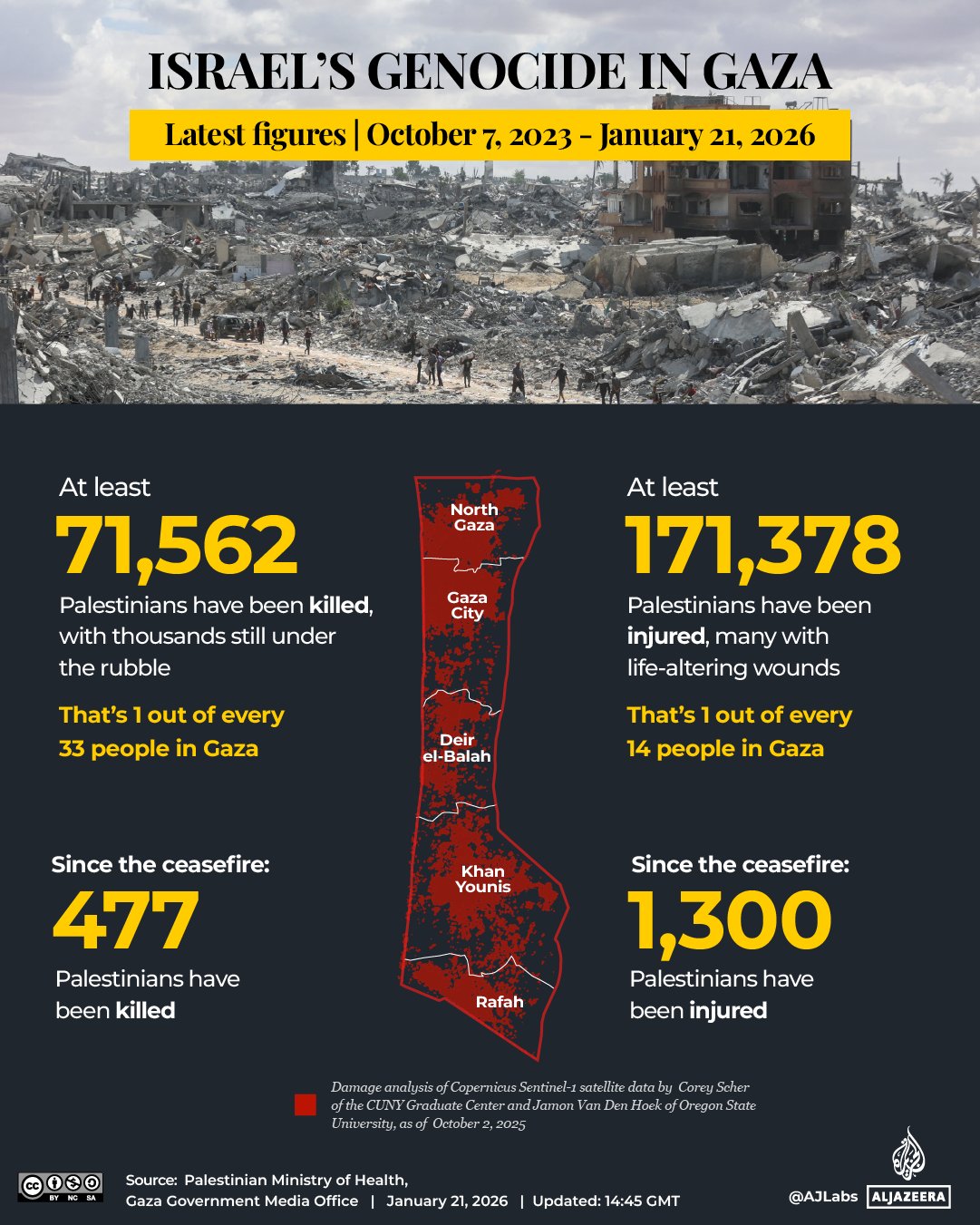
Since the “ceasefire” announced on October, 11, 2025, Israeli forces have carried out more than 1,300 violations, resulting in over 1,820 Palestinians killed or injured.
The number of Palestinians killed since the ceasefire began has risen to 477, with 1,301 injured, while 713 bodies have been recovered from beneath the rubble.
Despite the “ceasefire” framework, Israeli attacks have continued across multiple areas of the Gaza Strip.
Drone strikes and artillery fire have been reported in Gaza City, al‑Mawasi, Bureij, Rafah, and Deir al‑Balah. In recent days, civilians have been wounded by Israeli drone fire in Zeitoun and al‑Mawasi, while Israeli forces have opened fire on displaced Palestinians near Netzarim and shelled areas east of Jabalia and in the Tuffah neighborhood.
Additional attacks this week included strikes on homes in Deir al‑Balah that killed several civilians, including a teenager, and shootings in Beit Lahia and west of Khan Younis that killed a 16‑year‑old boy and a 62‑year‑old woman. A 10‑year‑old girl also died after being struck by an Israeli drone in northern Gaza.
Politically, the “ceasefire” has entered what mediators describe as a second phase focused on demilitarization, technocratic governance, and reconstruction.
This is not Hiroshima and Nagasaki, this is North Gaza. pic.twitter.com/LsYBty83OD
— Suppressed News. (@SuppressedNws) May 11, 2024
A 15‑member Palestinian technocratic committee has begun meeting in Cairo to prepare for assuming administrative responsibilities in Gaza under the oversight of an international body.
Hamas has welcomed the formation of the committee, though major uncertainties remain regarding Israel’s withdrawal, the disarmament clause, and the reopening of the Rafah crossing.
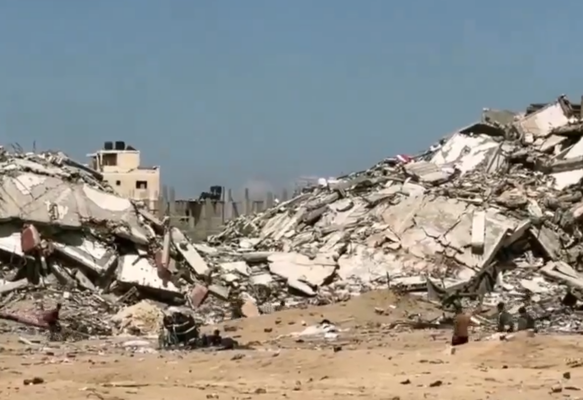
Israeli forces continue to occupy large areas behind what they call the “yellow line,” and have carried out extensive demolitions near these zones.
The cumulative toll in the Gaza Strip has risen to 71,562 Palestinians killed and 171,379 injured, most of them children, women, and the elderly, since 7 October 2023.