
On Wednesday, Israeli forces killed a 20-year old Palestinian man east of the city of Khan Yunis in the southern Gaza Strip. Wednesday marked the first day of Ramadan – a holy month of fasting and prayer in the Muslim calendar, and Israeli violations continued unabated.
Wafa news reported that the young man, Muhannad Jamal Al-Najjar (20 years old), was killed by Israeli occupation army gunfire near the Bani Suhaila roundabout, east of Khan Yunis.
The total number of Palestinians killed by Israeli forces in Gaza since the ceasefire on October 11, 2025 has risen to 604 killed and 1,618 wounded, while 726 bodies have been recovered.
Also Wednesday, Israeli tanks open fire towards the eastern areas of Al-Bureij refugee camp in the central Gaza Strip, with no casualties reported.
In the evening, Israeli occupation forces open fire towards Beit Lahia in the northern Gaza Strip.
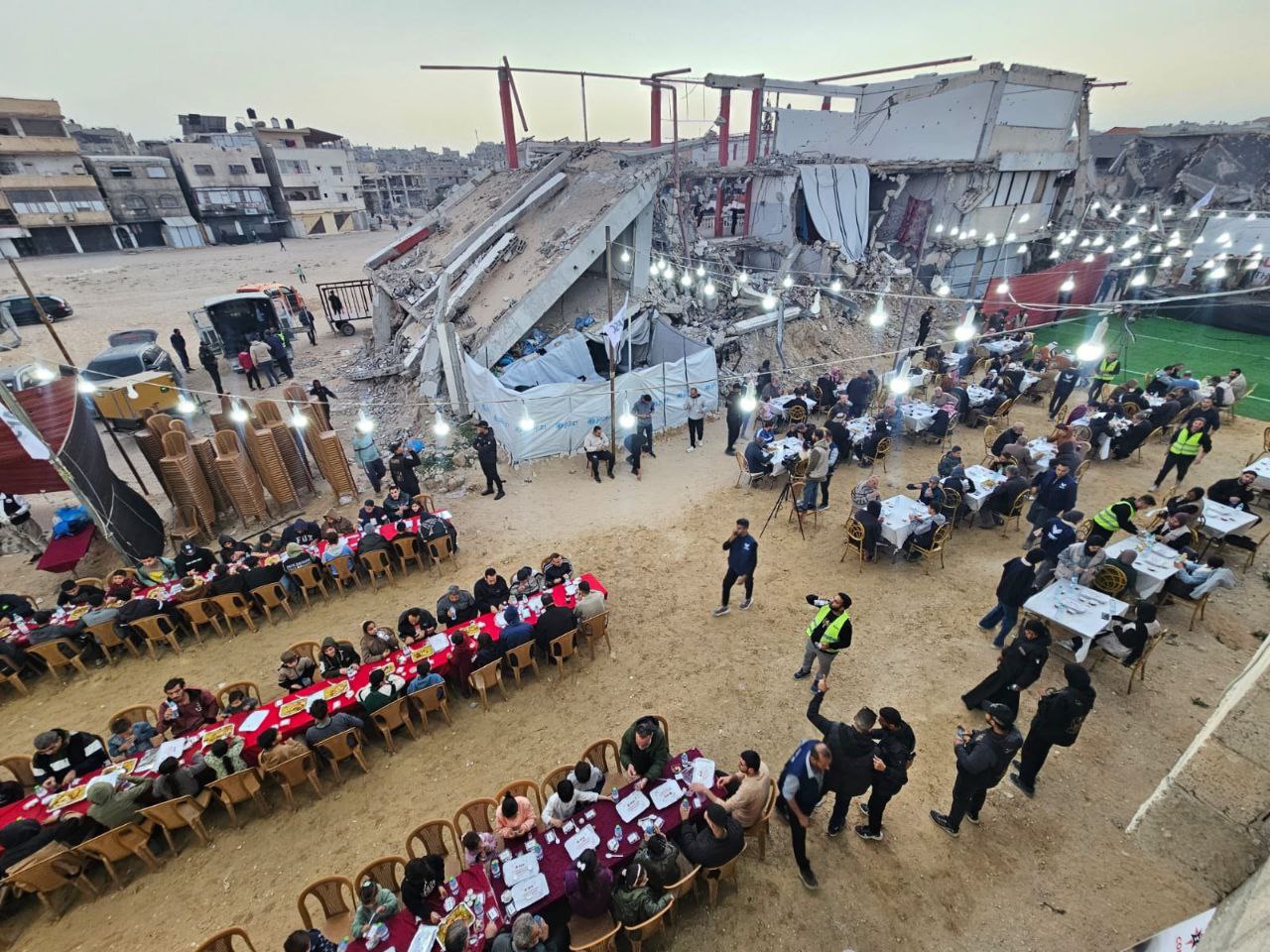
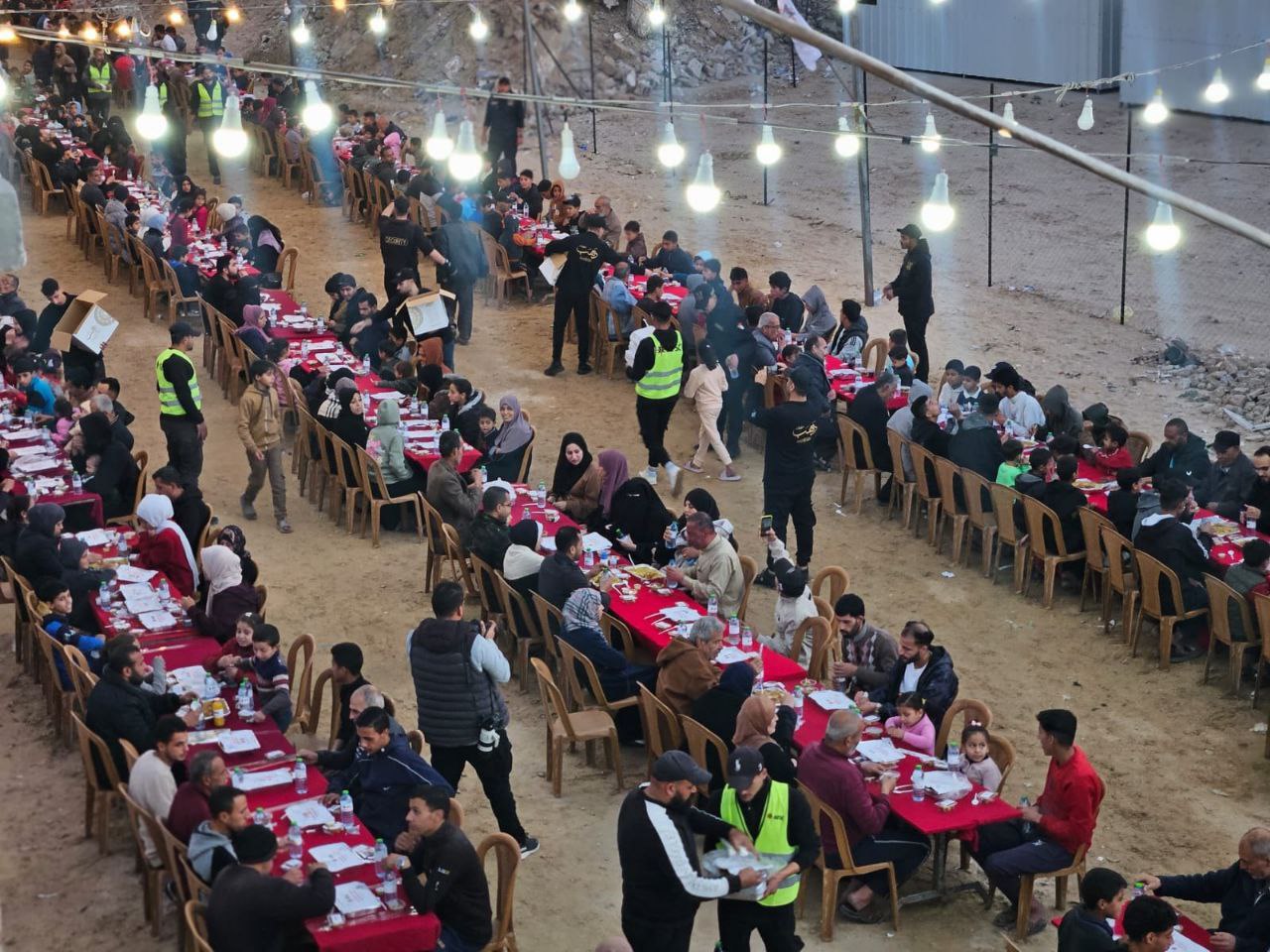
Community iftar meal in Khan Younis, Gaza:
On Wednesday, the Israeli military stopped the entry of vegetables into the Gaza Strip. Vegetables are essential for many of the foods prepared during Ramadan and are essential for maintaining health while fasting.
During the two yearlong genocide on Gaza, Israeli forces bombed every farm and agricultural processing center in Gaza, rendering it impossible for the people to grow their own food as they have done on this land for many centuries. Instead, they are now forced to rely on external food aid, which Israel is preventing from entering into Gaza.
Quds News reported on the impact of the so-called ‘Yellow Line’ that Israel is using to divide and take over more than half of the already tiny Gaza Strip:
Last week, just a few metres from yellow-painted concrete blocks which Israeli forces put to mark their latest redeployment line, Shimaa Ali was preparing breakfast for her four-member family: her husband, her two children Amer and Tala, and Zomorroda, their long-time pet cat.
Suddenly, they heard Israeli tanks approaching. Within seconds, the tanks began firing randomly and intensely at the buildings that remain after two years of genocide.
The children started screaming as the tanks had stationed themselves near their partially destroyed home, and bullets penetrated the walls and the plastic sheets the family had put up for protection.
“It was not the first time, nor will it be the last,” Shimaa told Quds News Network from their home in eastern Al-Maghazi camp in central Gaza. The house is located near the so-called “Yellow Line.”
“We live on the upper floor, but because of the Israeli attacks, the stairs were destroyed, so we have no proper way to reach the ground,” she explained.
When Israeli forces approached that day, the family was unable to flee. Neighbors eventually brought them a ladder so they could climb down and escape.
“Within a minute, the forces were near us, and within five minutes we were outside the house while Israeli bullets were about to hit us,” she said.
Shimaa described this as a “run for your life or die game — if you don’t run, or if you don’t have the time, you will be absolutely killed.”
The mother of two said the Israeli forces know the family is inside the house, yet they continue to target it.
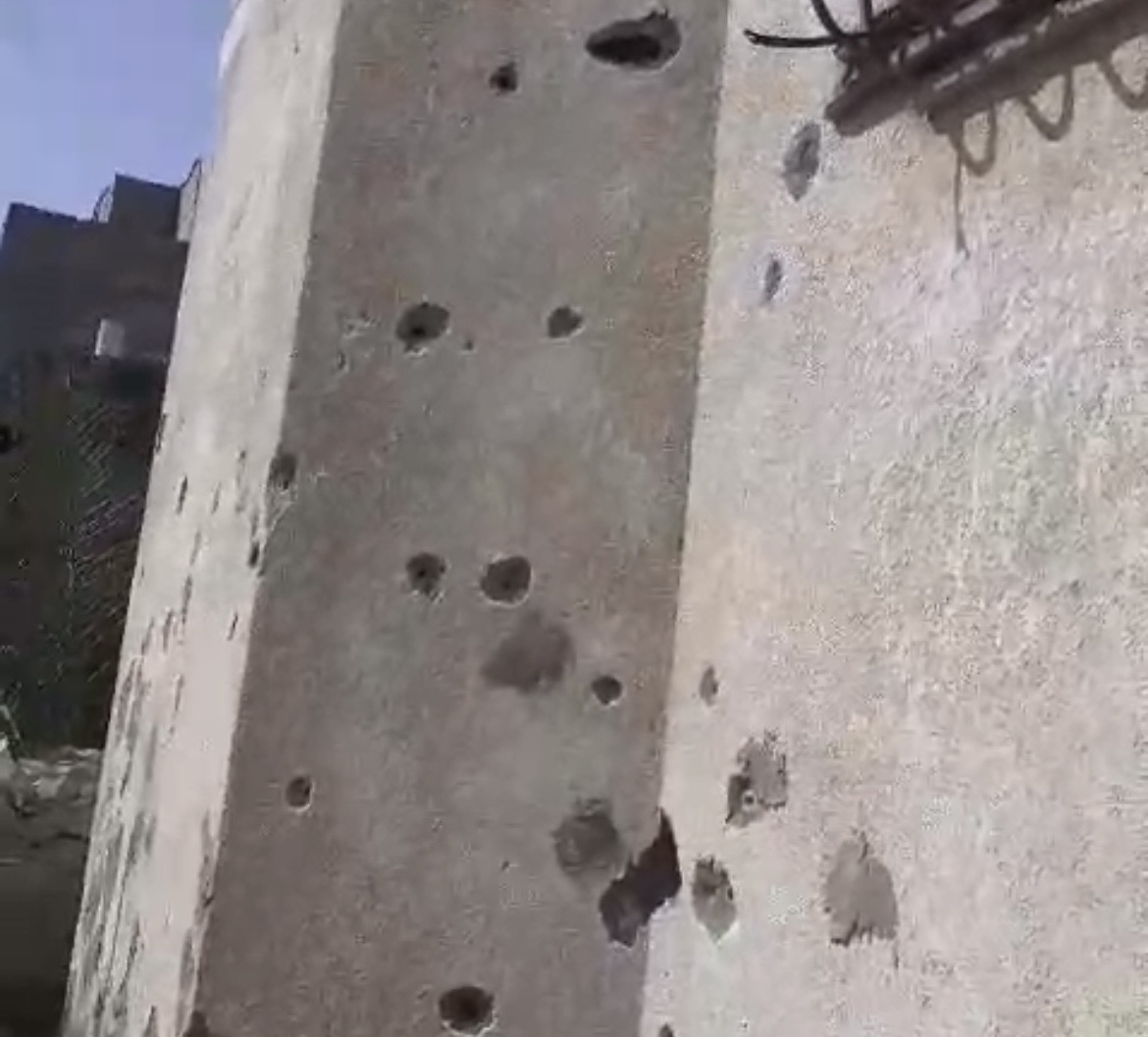
“When we leave the house, they stop shooting. When we are inside, they shoot intensively,” she said. “A quadcopter once came and ordered us to leave immediately, but they gave us no time to flee and were shooting at us at the same time.”
What Is the “Yellow Line?
On October 10, 2025, the Israeli forces completed the first phase of withdrawal under the ceasefire deal to the “Yellow Line,” a non-physical demarcation line separating the Israeli occupation forces from certain areas of Gaza, while occupying roughly 53 percent of the Strip.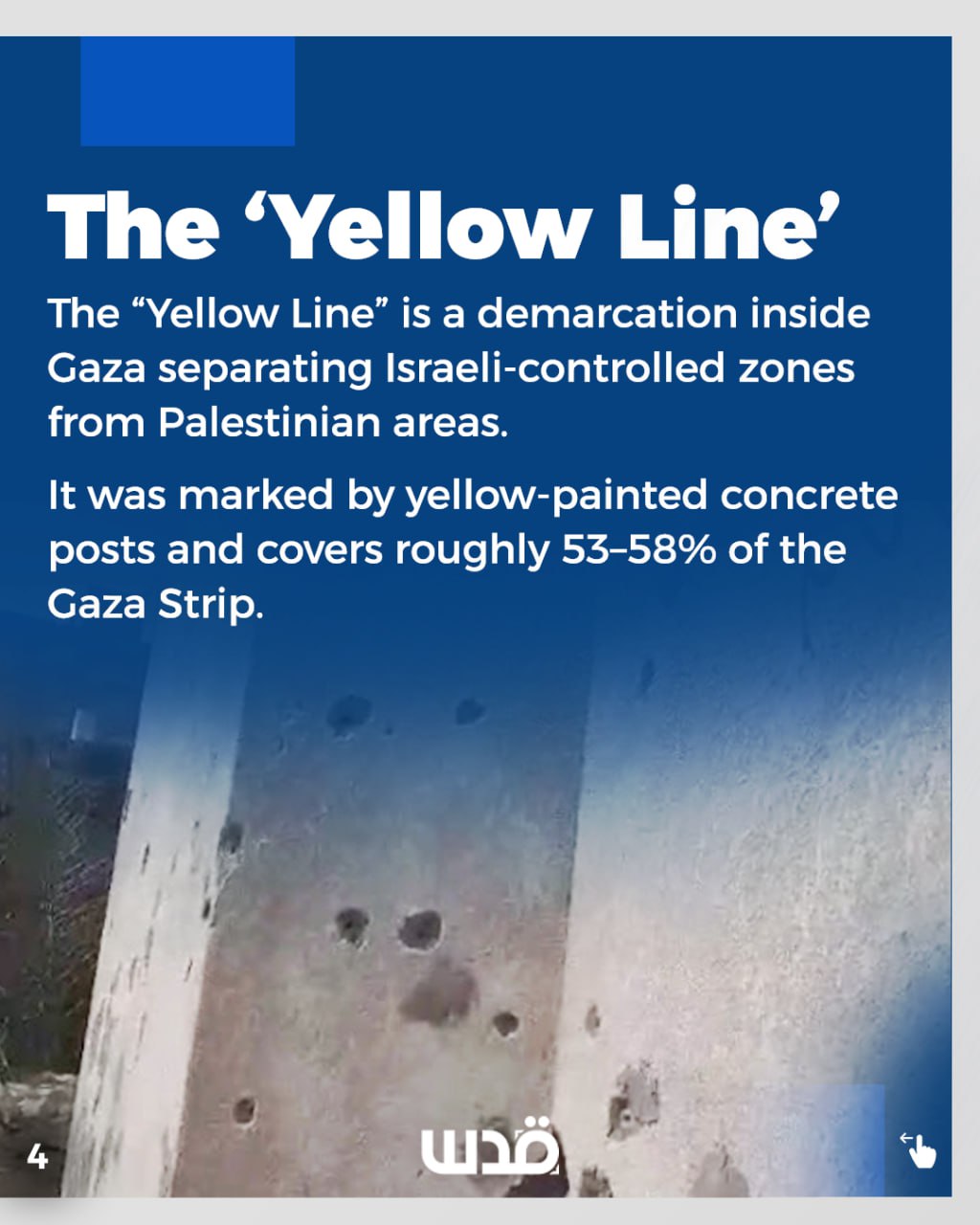
The “Yellow Line” refers to Israeli-designated military zones and buffer areas inside the Gaza Strip.
Israeli Defence Minister Israel Katz said anyone remaining beyond the yellow line would be targeted without warning.
According to an Israeli map presented under US President Donald Trump’s 20-point Gaza ceasefire plan, the yellow line extends from south of northern Gaza down to the outskirts of Rafah in the southern Gaza Strip.
Israeli forces remain deployed in the Shejaiya neighborhood, parts of the Tuffah and Zeitoun in Gaza City, as well as in Beit Hanoun and Beit Lahiya in the north, Rafah in the south, and along the Gaza coast.
So, the line divides Gaza into two zones: an eastern area under Israeli military control and a western area where Palestinians live, were forcibly displaced to, and are under constant Israeli threat of attacks.
The Israeli forces directly open fire on any Palestinians crossing this “Yellow Line” or even approaching, without prior warning.
Palestinians returning to their destroyed homes amid the ceasefire have been attacked by the Israeli forces near the line.
The Israeli military said it placed yellow concrete blocks to mark the imaginary boundary, a line, for Palestinians, that separates between life and death.
According to the Israeli military Spokesperson, “The marking is being carried out on concrete barriers topped with a yellow-painted post standing 3.5 meters (11.5 feet) above the ground,” adding that concrete barriers are “being placed every 200 meters.”
Israeli military maps indicate the line extends 1.5km and 6.5km (0.9 to 4 miles) inside Gaza from its eastern boundary with Israel and covers roughly 58 percent of the enclave.
During a visit to the Gaza Strip in December, the Israeli military’s chief of staff, Eyal Zamir, said unequivocally that the “Yellow Line” is “a new border line”.
This imaginary line decides which streets and areas are safe and when it’s time to run. According to UN agencies, humanitarian organizations operating in Gaza and satellite images, Israeli forces have been extending the “Yellow Line” into the areas under Palestinian control.
Israel has no plans to withdraw from the “Yellow Line” in the eastern Gaza Strip. This was announced on the “This Morning” program with Ilael Shahar, on Channel 2’s News, last month.
The Israeli Public Broadcasting Corporation, known as Kan, also reported that Israeli officials consider the so-called “Yellow Line” as a strategic area that will remain under Israeli control.
Meanwhile, major European Allies announced they plan to boycott Trump’s “Board of Peace”.
Dozens of delegations are set to attend the inaugural meeting of Donald Trump’s so-called Board of Peace in Washington, a body presented as a vehicle to rebuild Gaza following Israel’s genocide.
However, key European powers, including the UK, Germany and France, have declined to participate, while European Commission President Ursula von der Leyen also refused the invitation, citing concerns over its mandate and structure.
Trump claims member states pledged over $5 billion for Gaza’s reconstruction and promised personnel for an “International Stabilization Force.” Yet skepticism is mounting. Analysts warn the initiative lacks clarity on who will govern Gaza, who will provide security, and how urgent humanitarian needs will be addressed as aid continues to trickle in.
Cardinal Pietro Parolin of the Vatican stressed that crisis management should remain under the United Nations, not ad hoc political bodies.
