
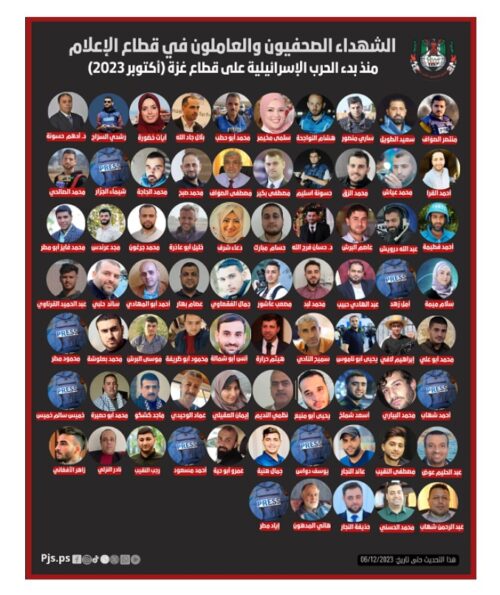
Verified journalistic summary | Based on Al Jazeera reporting | June 26, 2026: Gaza has become the deadliest conflict zone for journalists in recorded history. At least 260 Palestinian journalists have been killed since Israel launched its military offensive on October 7, 2023, according to the Committee to Protect Journalists (CPJ).
The Palestinian Journalists Syndicate (PJS) puts the toll for journalists and media workers above 270. Researchers at the Watson Institute at Brown University have found that more journalists have been killed in Gaza during this period than in both World Wars combined.
Al Jazeera has borne the heaviest institutional toll. The network has confirmed that 12 of its journalists have been killed by Israeli forces in Gaza since October 2023 — more than any other single news outlet.
Recent Cases Documented by Al Jazeera
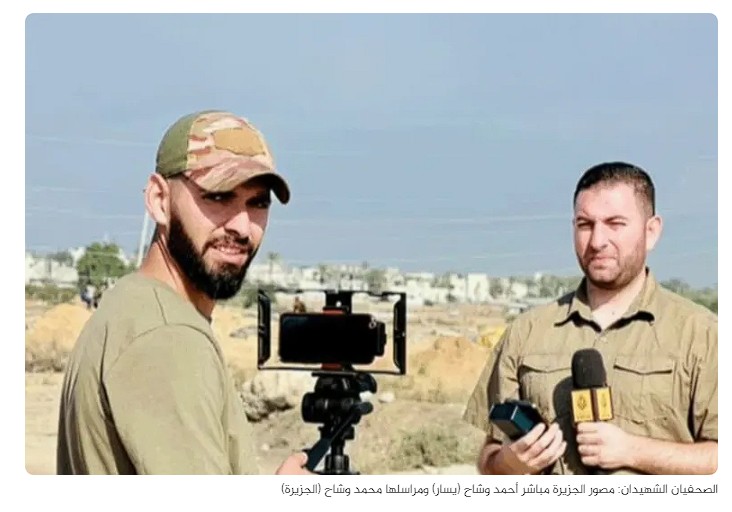
Ahmad and Mohammad Wishah: Ahmad Wishah, 25, a cameraman for Al Jazeera Mubasher from the Bureij refugee camp in central Gaza, was killed on June 20, 2026, when an Israeli airstrike struck a residential building in Bureij. Two other Palestinians were also killed in the strike.
Ahmad’s death came just weeks after the killing of his brother Mohammad Wishah, a correspondent for the same network, who was killed on April 8, 2026, when Israeli forces shelled his vehicle.
The brothers had worked as a reporting team throughout the war. After Mohammad’s killing, Ahmad appealed publicly — according to Al Jazeera’s account of his interview — “Let the martyrdom of Mohammed Wishah be the end to the killing of journalists.”
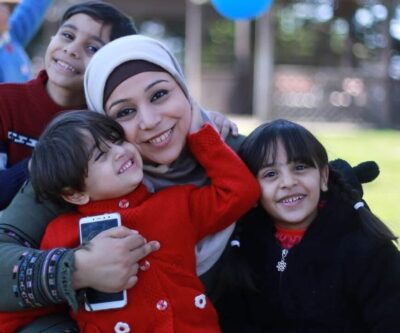
Amal Shamali: a correspondent for Qatar Radio who contributed to multiple Arab and Palestinian outlets.
She was killed on March 9, 2026, in an Israeli airstrike on the Nuseirat refugee camp in central Gaza. The Palestinian Journalists Syndicate confirmed her death and stated she had continued reporting from Gaza throughout the offensive.
Anas al-Sharif and Al Jazeera colleagues: Anas al-Sharif, a journalist who had received Amnesty International’s Human Rights Defender Award for his reporting from northern Gaza, was killed on August 12, 2025, along with four Al Jazeera colleagues: camera operators Ibrahim Zaher, Mohammad Nofal, and Mohammad Qreiqeh, and production assistant Momen Aliwa.
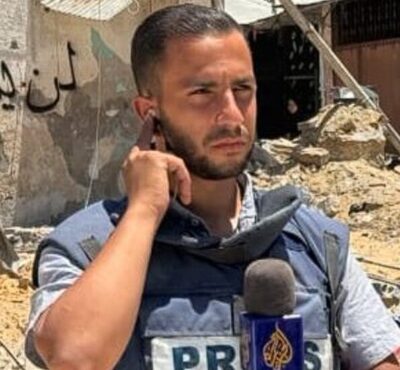
The five were killed in an Israeli strike on a media tent near Al-Shifa Hospital in Gaza City. The Israeli military admitted responsibility for the strike and claimed, without providing evidence, that al-Sharif was a member of Hamas. Press-freedom organizations have documented this pattern — posthumously labeling killed journalists as militants — as a recurring practice used by Israeli authorities to justify strikes on media workers.
Earlier Post-Ceasefire Killings Documented by Al Jazeera
Saleh al-Ja’farawi — October 12, 2025: Saleh al-Ja’farawi, 28, is documented by Al Jazeera as the first Gaza journalist killed after the ceasefire announcement. He was shot dead in the Sabra neighborhood in southern Gaza City. According to Al Jazeera’s investigation, Israel had placed al-Ja’farawi on a target list — a fact he had himself noted in a social media post — and had conducted public smear and incitement campaigns against him in response to his active coverage of the war.
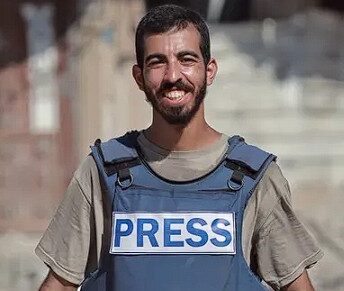
Ahmad Abu Mutair — October 19, 2025: Broadcast engineer Ahmad Abu Mutair was killed on October 19, 2025, when an Israeli airstrike struck the main headquarters of Palestine Media Production (PMP) in central Gaza. Israel stated on that day that it was targeting what it described as Hamas sites; no evidence was provided that PMP’s headquarters was a legitimate military target, according to Al Jazeera’s reporting.
Mohammad al-Munirawi — October 29, 2025: Mohammad al-Munirawi, an editor and journalist for Palestine newspaper, was killed when an Israeli strike hit the displaced persons’ tent where he had been sheltering in the Nuseirat camp in central Gaza, according to Al Jazeera’s investigation.
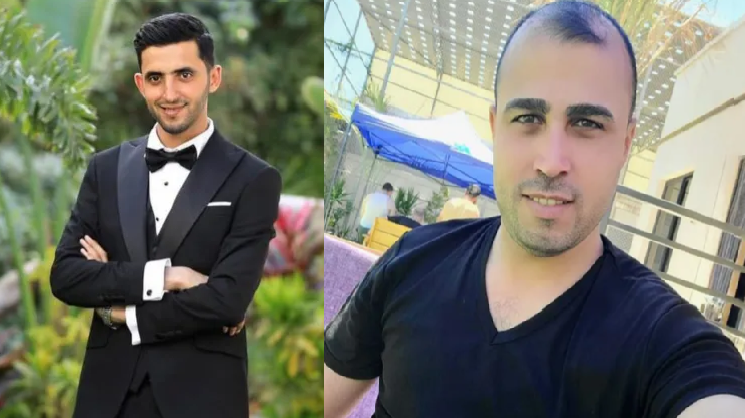
Mahmoud Wadi — December 2, 2025: Journalist Mahmoud Wadi was killed by an Israeli drone strike while working in central Khan Yunis in southern Gaza. Al Jazeera’s investigation notes that the strike occurred in an area described as far from the ceasefire line.
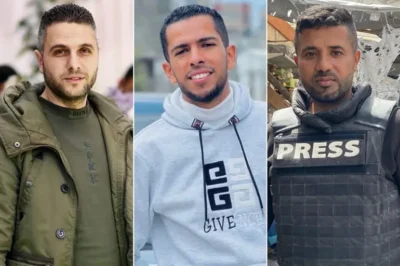 Anas Ghneim, Abdul-Raouf Shaath, and Salah Qashta — January 21, 2026: Three journalists were killed together on January 21, 2026, when Israeli aircraft struck their vehicle in central Gaza. According to Al Jazeera’s investigation, the three were on an official assignment at the time of the strike — filming the opening of a new displaced persons camp established by the Egyptian Committee for Gaza Relief. They were killed approximately two months after the ceasefire had been announced.
Detained, Tortured, and Left Fighting for His Life
Not all attacks on Palestinian journalists end in death. The case of Mujahid Bani Mufleh, documented by Al Jazeera on June 26, 2026, in a report by journalist Fatima Mahmoud, illustrates the severity of what detained journalists face.
Bani Mufleh, a journalist with 15 years of experience who had worked for the Ultra Palestine news website, was arrested and held in Israeli detention for six months, during which he was subjected to physical and psychological torture, deliberate starvation, and systematic medical neglect, according to Al Jazeera’s reporting.
VIDEO | “Every single detail of your day in [Israeli] detention is torture.”
Palestinian journalist Mujahid Bani Mufleh was subjected to systematic torture, starvation, and medical neglect while held under Israeli ‘administrative detention’ without charge. Following his release… pic.twitter.com/lsHkKbFuOB
— The Cradle (@TheCradleMedia) June 26, 2026
Just two days after his release in January 2026, he suffered a severe brain hemorrhage that required emergency surgery. His skull bone was partially removed during the procedure — a replacement surgery has not yet been scheduled. He spent two months in a coma. He lost more than 25 kilograms. He lost the use of the left side of his body and requires a wheelchair. For 136 days, he could not speak.
As of June 26, 2026, Bani Mufleh remains hospitalized and in ongoing recovery. His three children, including his youngest daughter Arab, age six, spend much of their time at his bedside, according to his wife Noha al-Sharfa, who has spoken to Al Jazeera throughout his recovery.
He communicates in writing when speech fails him. In one such written statement reported by Al Jazeera, he said: “The occupation deliberately tried to break my will through torture, starvation, and intimidation. But today I understand that I must hold on to this profession more, to convey what I witnessed to the world.”
A Press Ban Approaching 1,000 Days
Israel has barred independent foreign journalists from entering Gaza since the start of its military offensive on October 7, 2023. As of June 26, 2026 — the date of this article — that ban has been in effect for 992 days.
The 1,000th day falls on approximately July 4, 2026. Israeli authorities, when challenged in court, cited security concerns but declined to provide specifics, and on June 3, 2026, confirmed the ban would continue.
The ban means all reporting from Gaza has been carried out exclusively by Palestinian journalists working under fire, without the protection or verification mechanisms that accompany independent international press access.
The Palestinian Journalists Syndicate has described the ongoing toll as “one of the bloodiest periods for journalists in modern history, reflecting the scale of the deliberate targeting of Palestinian journalism.”
Sources
- Al Jazeera Arabic — “Video: What the occupation’s prisons did to Palestinian journalist Mujahid Bani Mufleh” — Reporter: Fatima Mahmoud, June 26, 2026
- Al Jazeera English — Ongoing coverage of journalists killed in Gaza (2023–2026)
- Committee to Protect Journalists (CPJ) — Journalist Casualty Database
- Palestinian Journalists Syndicate (PJS) — Official statements and casualty records
- Watson Institute, Brown University — Costs of War Project
- Reporters Without Borders (RSF) — Gaza press freedom tracker
