
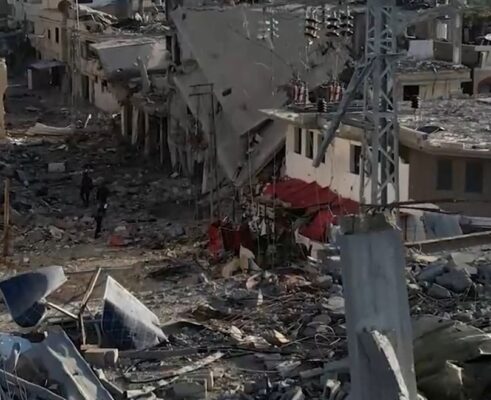
The International Court of Justice is expected to issue a pivotal advisory opinion today on Israel’s blockade of humanitarian aid to Gaza, intensifying global scrutiny of its conduct.
In a development of major international significance, the International Court of Justice (ICJ)—the United Nations’ highest judicial authority—is set to deliver a legal advisory opinion today, Wednesday, concerning Israel’s months-long blockade of humanitarian aid destined for the Gaza Strip.
The opinion will also assess Israeli military attacks on UN personnel and facilities operating in Gaza, including those affiliated with UNRWA, the UN agency for Palestinian refugees12.
While the ICJ’s advisory opinions are not legally enforceable, they possess significant influence both legally and morally.
This ruling is expected to amplify international pressure on Israel to comply with humanitarian obligations, facilitate unrestricted aid access, and cooperate with UN agencies amid the ongoing crisis in Gaza2.
This marks the third ICJ decision addressing Israeli conduct in Gaza since the war erupted on October 7, 2023. In July 2024, the Court declared Israel’s occupation of Palestinian territories illegal under international law. Earlier, it issued provisional measures ordering Israel to prevent acts of genocide in Gaza and ensure the protection of civilians2.
The current advisory opinion was requested by the UN General Assembly and will also examine whether Israel is legally obligated to cooperate with UNRWA.
This comes amid escalating concerns over Israel’s systematic obstruction of humanitarian operations and its militarized control over aid distribution through the so-called Gaza Humanitarian Foundation (GHF), which has been widely condemned for violating core humanitarian principles1.
According to UN data, at least 1,373 Palestinians have been killed while attempting to access food, including hundreds near GHF sites and along aid convoy routes1. The ICJ has warned that such tactics—combined with forced displacement, destruction of civilian infrastructure, and the weaponization of starvation—may constitute war crimes and crimes against humanity3.
The Court’s opinion is expected to reinforce the legal argument that Israel’s actions in Gaza, including its siege and obstruction of aid, violate international humanitarian law and the rights of Palestinians to self-determination. It may also clarify the responsibilities of third-party states and international organizations in confronting Israel’s unlawful conduct23.
This ruling arrives amid mounting calls from UN experts and human rights bodies for decisive global action to end what many have described as an unfolding genocide in Gaza and the West Bank, where armed illegal paramilitary Israeli colonizers continue to carry out mass displacement and attacks with state backing2.
References (3)
- Israel/Palestine: Immediately halt Gaza’s occupation plan | ICJ. https://www.icj.org/israel-palestine-immediately-halt-gazas-occupation-plan/
- One year after ICJ ruling, UN experts urge States to confront inaction over Israel’s unlawful occupation | OHCHR. https://www.ohchr.org/en/statements/2025/09/one-year-after-icj-ruling-un-experts-urge-states-confront-inaction-over-israels
- HRC60: International Commission of Jurists in the General Debate under Item 2 | ICJ. https://www.icj.org/hrc60-international-commission-of-jurists-in-the-general-debate-under-item-2/
