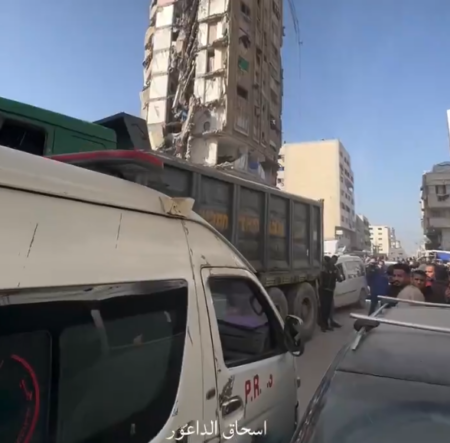
Despite the declared “ceasefire” that took effect on October 11, 2025, Israeli forces continued to carry out lethal attacks across the Gaza Strip on Sunday, killing several Palestinians and injuring others in multiple areas, including near hospitals and UN facilities.
In southern Gaza, Manar Sa’id al‑Madhoun, 41, was killed after being struck by Israeli gunfire south of the Mawasi area near Khan Younis. He was transferred to Nasser Medical Complex, where he was pronounced dead.
Residents said the area has seen repeated Israeli fire despite being designated as a civilian movement corridor.
In Gaza City, Atta Ghabayen was killed when Israeli occupation forces opened fire on residents in the Tuffah neighborhood.
Two additional Palestinians were killed in continuing Israeli attacks on the same neighborhood, which has been repeatedly targeted even after the ceasefire announcement.
In northern Gaza, a Palestinian father was seen mourning over the body of his only son, who was killed, along with his cousin, by an Israeli strike while the two were collecting firewood near Kamal Adwan Hospital.
The boys had gone out to gather wood due to the severe fuel shortage that had forced families to rely on open‑fire cooking. Residents said they believed the area near the hospital to be relatively safer before the strike hit.
Israeli fire also struck medical and UN facilities in Jabalia refugee camp, in northern Gaza. Local sources said Israeli artillery targeted an UNRWA‑run clinic, injuring a pregnant woman and a young man.
Later in the evening, an Israeli drone strike hit another UNRWA clinic in the refugee camp, wounding several civilians who were transported to nearby hospitals.
Health workers said repeated attacks near clinics and UN facilities have further disrupted already-strained medical services.
Earlier in the day, medical teams reported additional casualties from Israeli attacks on the Tuffah neighborhood, adding to Sunday’s toll.
Residents across Gaza described the situation as a “ceasefire in name only,” with intermittent shelling, drone strikes, and live fire continuing near displacement sites, agricultural land, and hospital surroundings.
Humanitarian agencies say that hundreds of thousands of Palestinians remain displaced, many sheltering in overcrowded schools, hospitals, and makeshift camps.
Repeated strikes near clinics and UN facilities have forced some medical centers to partially suspend operations or relocate services, while shortages of medicines, fuel, and equipment continue to undermine the health system’s ability to respond.
Families are increasingly forced to collect firewood and scrap materials for cooking and heating, exposing them to direct fire and unexploded ordnance.
Jana Mutawwaq, 13, from Jabalia, is the sole survivor after an Israeli strike erased her home. She mourns her parents and aches for her twin, Suja lost childhood if not an entire hope and passion for life. pic.twitter.com/dE44raDJq2
— Gaza Behind Scenes (@gazabehindscens) January 25, 2026
Sunday’s incidents, killings in Khan Younis and Gaza City, strikes on UNRWA clinics in Jabalia, and the deaths of two relatives collecting firewood near Kamal Adwan Hospital, fit into a broader pattern of ongoing Israeli military violations despite the declared ceasefire.
Residents and humanitarian officials warn that the continued attacks, combined with the collapse of basic services and the absence of meaningful reconstruction or safe return for displaced families, are entrenching a protracted humanitarian catastrophe across the Gaza Strip.
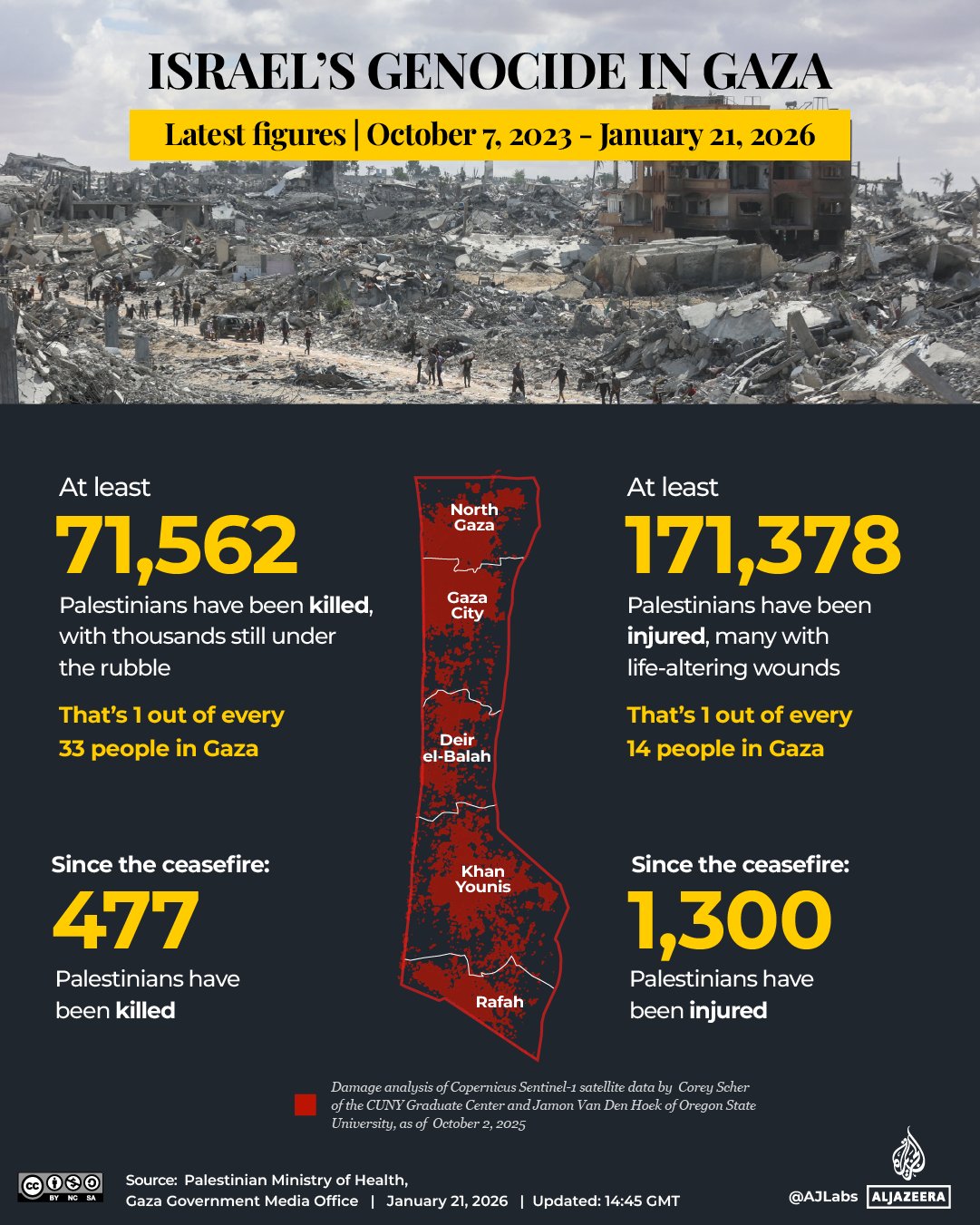
At least 477 Palestinians have been killed and 1,300 injured since the “ceasefire” took effect on October 11, 2025, while 710 bodies have been recovered from the rubble during this period.
These figures include casualties from Israeli gunfire, artillery strikes, drone attacks, and the discovery of bodies in previously inaccessible areas.
Since October 7, 2023, more than 71,562 Palestinians have been killed and 171,378 injured in the Gaza Strip. Health authorities report that the majority of the dead and wounded are women and children.