
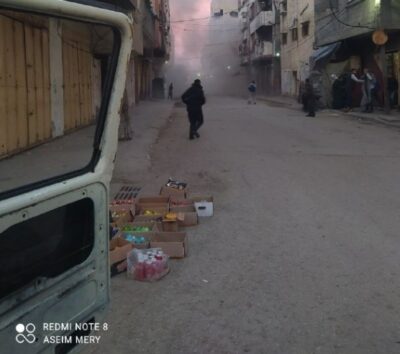
Palestinian medical sources reported on Thursday that three Palestinians were killed, and several others were injured as Israeli forces continued artillery bombardment, drone strikes, and demolition operations across multiple areas of the Gaza Strip.
Medical staff at Nasser Medical Complex in Khan Younis, in southern Gaza, confirmed the death of a 19‑year‑old who was shot in the chest by Israeli forces in the Sheikh Nasser neighborhood, east of the city, and a young man, 32.
They added that Mohammad Osama Omran, 19, and Ahmad Ramzi Barbakh, 32, were killed after Israeli forces opened fire on them while they were in the so-called safe zone in Khan Younis.
A medical source told Anadolu Agency that an Israeli drone strike on the Al‑Maghazi refugee camp in central Gaza killed one Palestinian and wounded five others in an area outside the army’s declared zones of control. The Israeli military claimed it had targeted a Hamas member allegedly planning an attack.
Local sources reported that Israeli forces detonated residential buildings in Rafah in the southmost part of the Gaza Strip and continued heavy gunfire from armored vehicles and aircraft north of the city.
Gunfire was also reported toward eastern Khan Younis, the eastern areas of Al‑Bureij refugee camp, in central Gaza, and the outskirts of Gaza City, as part of ongoing attacks across the devastated coastal enclave.
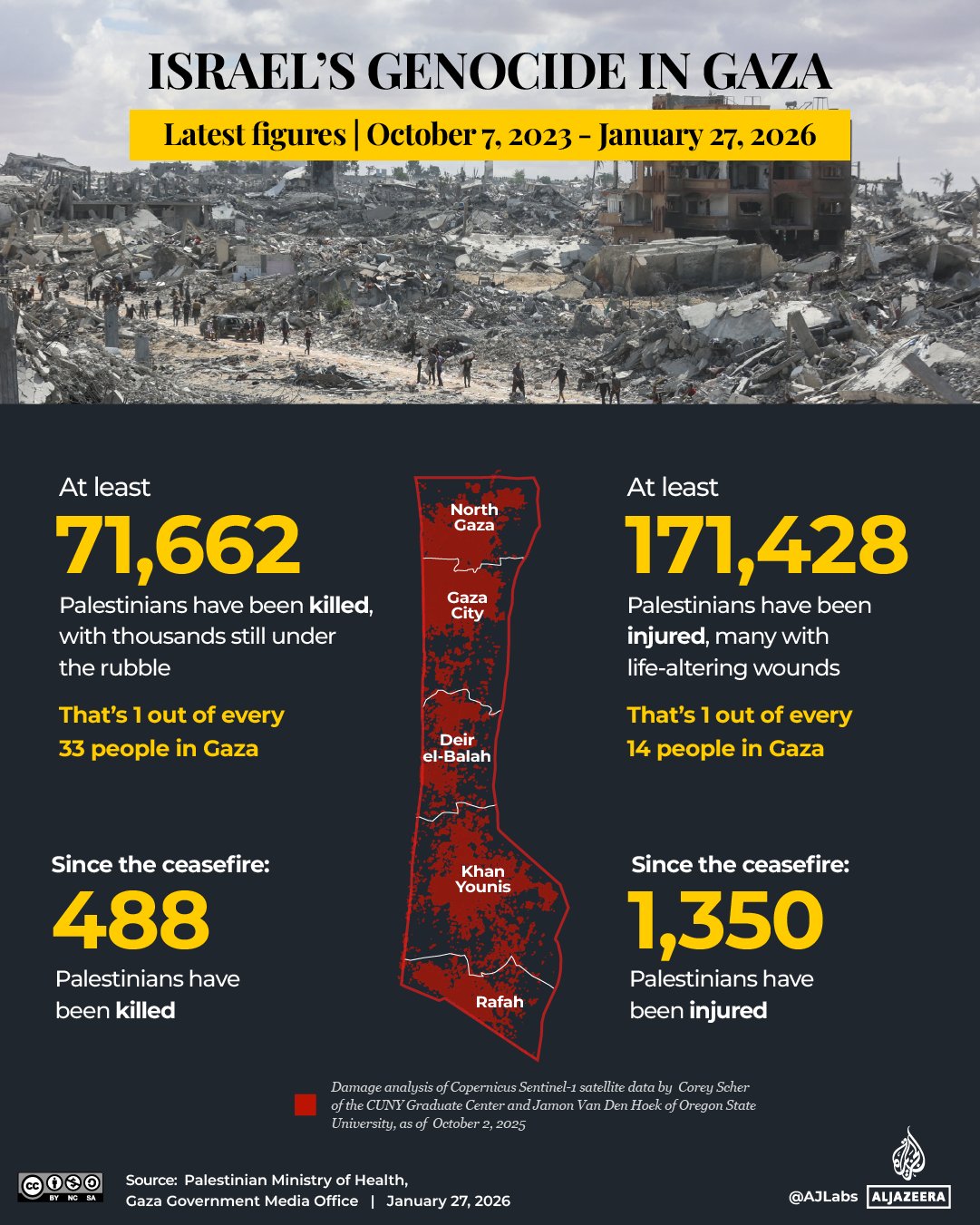
Medical sources have reported that Israeli occupation forces have killed 508 Palestinians and injured 1,356 others since the ceasefire agreement came into effect on October 11, 2025.
Humanitarian Conditions: Severe Shortages and Winter Hardship
Despite the “ceasefire,” Gaza’s humanitarian situation continues to deteriorate. More than 1.5 million displaced Palestinians remain in makeshift shelters, tents, or damaged homes, many without access to clean water, sanitation, or reliable food supplies.
Aid agencies warn that the health system is on the brink of collapse, with hospitals struggling to treat trauma cases, chronic illnesses, and winter‑related conditions.
Freezing temperatures have intensified the crisis. Families living in tents or partially destroyed buildings face severe shortages of blankets, heating, and winter clothing.
Humanitarian groups report rising cases of hypothermia among children and the elderly, while overcrowded shelters continue to spread respiratory illnesses.
Aid organizations say that Israeli restrictions on the entry of essential goods—including medical supplies, fuel, and construction materials—continue to hinder relief efforts.
The ongoing closure of the Rafah crossing has prevented patients from traveling for urgent medical treatment abroad, further straining Gaza’s overwhelmed health sector.
Red Cross: Ceasefire Must Hold
Adrian Zimmermann, head of the International Committee of the Red Cross (ICRC) mission in Gaza, emphasized the need for the ceasefire to hold and for humanitarian aid to enter the Strip without obstruction.
He said reopening the Rafah crossing would be a crucial step in addressing the urgent needs of the population.
The ICRC confirmed on Thursday that it facilitated the transfer of the bodies of 15 Palestinians to Gaza, following the return of the remains of Ran Gvili, the last Israeli captive in Gaza, earlier this week.
The organization said the operation concluded a lengthy process aimed at reuniting families and supporting the implementation of the ceasefire agreement.
Psychological Impact of Prolonged Violence
Palestinian psychiatrist Dr. Samah Jabr warned that systematic starvation, displacement, and mass violence inflicted on Gaza will leave psychological wounds that extend far beyond the immediate destruction.
She told Anadolu Agency that the trauma caused by deliberate deprivation and large‑scale killing could persist for three or four generations, becoming a deep scar in the collective memory of Palestinians.
She noted that chronic malnutrition has long affected Gaza’s population, stressing that enforced starvation is a deliberate policy aimed at breaking collective resilience.
Israeli Army Acknowledges Gaza Death Toll
For the first time, the Israeli army announced Thursday that it accepts the Gaza Ministry of Health’s casualty figures, which indicate that approximately 70,000 Palestinians have been killed since October 7, 2023.
Israeli daily Haaretz reported that the army noted the figure does not include those still missing and believed to be buried under the rubble.
The acknowledgment marks a reversal from earlier Israeli government statements that dismissed the ministry’s figures as unreliable, despite their verification by international organizations.
According to the latest update from Gaza’s Ministry of Health, 71,667 Palestinians have been killed and 171,343 injured since October 7, 2023.
Reconstruction and Political Uncertainty
UN assessments place the cost of reconstruction at around $7 billion, though humanitarian agencies warn that rebuilding cannot begin meaningfully without sustained access, security guarantees, and political stability.
Israeli officials told Haaretz that unresolved issues in the ceasefire agreement, including disarmament and the extent of Israel’s withdrawal, could lead to renewed military operations if no progress is made.
Meanwhile, 2.4 million Palestinians, including 1.5 million displaced, continue to endure catastrophic living conditions as the humanitarian crisis deepens.
