
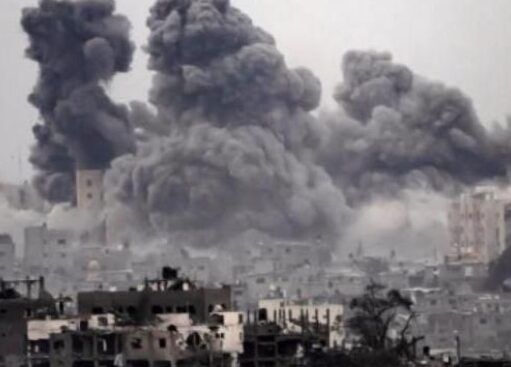
Twenty Palestinians, including four children and one medic, were killed and dozens were injured, Wednesday, when Israeli artillery shelled tents and homes east of Gaza City and south of Khan Younis, in the latest escalation of attacks across the devastated enclave.
 The Palestinian Health Ministry has confirmed that the ongoing Israeli strikes and bombings in the Gaza Strup have killed twenty Palestinians, and injured dozens more.
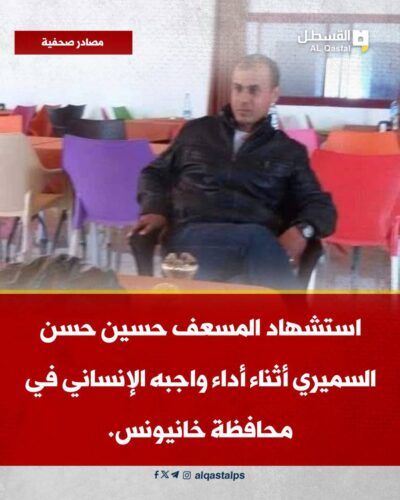
The Field Clinic of the Palestinian Red Crescent Society (PRCS) stated that among the slain Palestinians are a medic, children and women.
It added that its medic, Hussein Hasan Samiri was among two slain Palestinians killed, and twelve injured in an Israeli bombing of displacement tents in Masawi Khan Younis, in southern Gaza.
The PRCS also said it was only able to send one ambulance to another Israeli bombing near the Al-Bashir Mosque in Khan Younis, due to the lack of fuel.
Earlier, medical sources in Gaza have confirmed that the Israeli army killed eighteen Palestinians, including fourteen in the Tuffah and Zeitoun neighborhood of Gaza City.
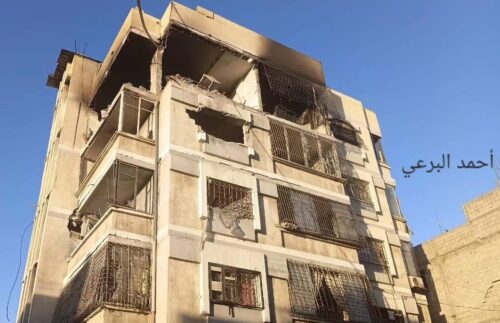 Emergency medical sources reported that six Palestinians, including two children, were killed when Israeli artillery struck the Zeitoun and Tuffah neighborhoods in eastern Gaza City at dawn.
The Israeli army also detonated many homes and buildings inside areas it occupies, east of Gaza City’s Tuffah neighborhood.
Also, Nasser Medical Complex in Khan Younis, in southern Gaza, confirmed that three Palestinians, including a child, were killed in a separate Israeli strike targeting the tents of displaced families outside areas of Israeli deployment south of the city.
Medical sources have officially identified ten of the slain Palestinians as:
- Rital Mahmoud Habboush, 13.
- Yousef Mohammad Habboush, 40.
- Ahmad Tal’at Habboush, 23.
- Bilal Ashraf Habboush, 13.
- Ali Ahmad Salmi, 60.
- Basina Mohammad Ayyad, 55.
- Saqer Baden Al‑Hatto, 5 months.
- Farid Abu Sitta, 12.
- Mahmoud Aymad Ar‑Ras, 21.
- Suleiman Abu Sitta, 28.
On its part, the Israeli army claimed that one of its officers was seriously wounded on Wednesday after Palestinian fighters opened fire at an Israeli force near the so‑called “yellow line” in northern Gaza. Israeli media outlets reported that Tel Aviv is preparing what they described as a “harsh response.”
In a brief statement, the army said it carried out artillery and air strikes on several areas in the Gaza Strip shortly after the incident, claiming the attack on its forces constituted “a violation of the ceasefire agreement.”
Yedioth Ahronoth quoted the commander of the army’s Southern Command as saying that the military is preparing to strike “military sites” in Gaza, while the Israeli outlet Walla reported that the political leadership is expected to approve a “severe military response.”
However, the army’s declared “response” followed the same pattern seen not only throughout the ceasefire period, but since October 7, 2023: Israeli forces consistently direct their fire toward civilian areas, killing and wounding children, women, and displaced families under the pretext of retaliation.
The shelling that killed twelve Palestinians at dawn, including four children, came within hours of the army’s announcement, underscoring the continued targeting of homes, tents, and shelters rather than military positions.
Since October 7, 2023, and continuing through the ceasefire that took effect on October 10, 2025, Israeli forces have repeatedly struck civilian neighborhoods, displacement camps, and shelters.
On Tuesday, Israeli forces detonated several buildings and structures inside areas under their control east of Gaza city’s Tuffah neighborhood.
Meanwhile, forty Palestinians managed to return to Gaza at dawn after an extended period of waiting at the crossing. Their entry was delayed by what were described as significant Israeli restrictions, including intensive searches, interrogations, and severe limitations on the movement of travelers.
The Rafah crossing between Egypt and Gaza reopened on February 2 under tight Israeli conditions, marking its first limited operation in nearly two years.
Under the agreement, 50 Palestinians were expected to enter Gaza on the first day, while 50 patients and their companions were scheduled to travel to Egypt for medical treatment. However, only 12 Palestinians were allowed into Gaza, and just 8 patients were permitted to leave.
🔴 Gaza returnee Sabah al-Raqab gave alarming testimony to Al-Resalah Net describing how the Abu Shebab militia seized her at the Rafah crossing and handed her over to Israeli forces:
“They took me by the arm and handed me over to the army. They told me, ‘We’re protecting the… https://t.co/zn4j53QfPa
— Drop Site (@DropSiteNews) February 3, 2026
UN Secretary‑General António Guterres urged the international community to ensure large‑scale humanitarian access to Gaza, including through the Rafah crossing.
Speaking at the annual session of the UN Committee on the Exercise of the Inalienable Rights of the Palestinian People, Guterres stressed that any sustainable solution in Gaza must align with international law and lead to unified, legitimate Palestinian governance recognized globally.
At the same time, the Palestinian Red Crescent Society said Tuesday that Israel refused to allow 29 patients and 50 companions to leave Gaza through Rafah, out of 45 patients and 90 companions who had been scheduled to travel for urgent medical treatment abroad.
Eyewitness testimony from Rafah Crossing: A Palestinian woman describes arbitrary arrest, blindfolding, intimidation, denial of food and water, confiscation of belongings, and humiliation while trying to return to Gaza. pic.twitter.com/G3qzZajE1R
— Gaza Behind Scenes (@gazabehindscens) February 3, 2026
The PRCS stated that it had previously received confirmation from “relevant authorities” that arrangements for their evacuation were in place.
Raed Al‑Nims, the PRCS media director, expressed hope that the number of patients evacuated for treatment would increase, noting that the Ministry of Health has identified around 20,000 patients who cannot receive the care they need inside Gaza and urgently require treatment abroad.
مراسل الجزيرة من خان يونس هاني الشاعر يرصد تشييع شهداء سقطوا بنيران الاحتلال في قطاع غزة#الأخبار pic.twitter.com/KLM6FlajPp
— قناة الجزيرة (@AJArabic) February 4, 2026
He added that the Red Crescent continues to coordinate with local and international bodies to secure the evacuation of the most critical cases, and stated that Israel, despite prior agreement, has cancelled the travel of patients
According to a report leaked by Drop Site News, the US, Israel and members of the Civil-Military Coordination Center (CMCC) are designing a mass detention camp, cynically called a “planned community” in Gaza. As Jews who know our history, we know the plan for a concentration camp… pic.twitter.com/QbMVFUu4gv
— Jewish Voice for Peace (@jvplive) February 3, 2026
Al-Nims told Quds News Network that the organization was informed that the third group of patients scheduled to leave Gaza through the Rafah border crossing has been cancelled by Israel.
“We were informed that the coordination for the patient’s departure has been cancelled for today,” he said.
The World Health Organization also reported that more than 18,500 patients in Gaza require specialized medical care that is currently unavailable in the Strip.
WHO Director‑General Tedros Adhanom Ghebreyesus emphasized the urgent need for rehabilitation and reconstruction of Gaza’s health system to reduce dependence on medical evacuations after more than two years of continuous Israeli attacks.
Since the “ceasefire” agreement took effect on October 10, 2025, Israeli forces have killed 526 Palestinians and wounded 1,447 others in ongoing violations.
On paper, the agreement ended a two‑year genocide that left more than 72,000 Palestinians dead, more than 171,000 wounded, most of them children, women, and the elderly, and caused catastrophic destruction to 90% of Gaza’s infrastructure.
Humanitarian agencies warn that without unrestricted access, medical evacuations, and large‑scale reconstruction, Gaza’s civilian population will remain trapped in life‑threatening conditions despite the nominal ceasefire.
