
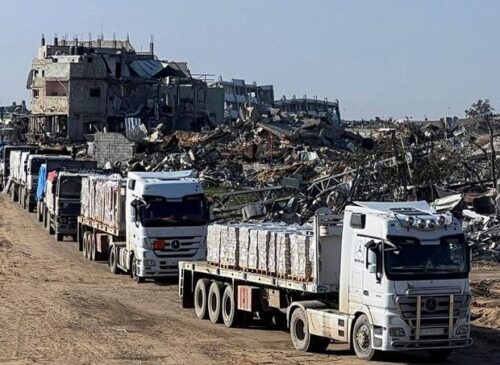
The United Nations Office for the Coordination of Humanitarian Affairs (OCHA) said on Tuesday that humanitarian needs in the Gaza Strip remain far beyond what relief agencies can provide, due to severe Israeli restrictions and multiple operational obstacles that continue to hinder aid delivery.
In an official statement published on its website, OCHA reported that UNICEF and its partners succeeded in restoring access to clean water in parts of southern Gaza after an Israeli airstrike on March 25 severely damaged the southern seawater desalination plant, reducing its output to less than 20 percent of its normal capacity.
According to the statement, more than 500,000 people in Deir al‑Balah and the al‑Mawasi area of Khan Younis were unable to access sufficient drinking water following the strike, despite ongoing UN‑supported efforts to truck clean water into the affected areas.
OCHA stressed that the situation highlights the urgent need to facilitate the work of humanitarian partners and allow a broader range of essential goods into Gaza through all available crossings.
The office warned that without meaningful access and the removal of restrictions, humanitarian operations will remain unable to meet even the most basic needs of Gaza’s population.
The UN office reiterated that the current level of aid entering Gaza is far below what is required to sustain civilians, particularly as water, sanitation, health, and food systems continue to collapse under the impact of ongoing Israeli military operations and the near‑total blockade.
