

The first phase of the Gaza ceasefire, brokered jointly by Egypt, Qatar, and the United States, has begun, with prisoner exchanges underway and humanitarian conditions still catastrophic. A source directly involved in the process told Reuters that all 1,966 Palestinian detainees slated for release today, Monday, have boarded buses within Israeli prisons.
The ceasefire, which took effect at noon on Friday, October 10, follows two years of relentless Israeli bombardment that killed more than 67,806 Palestinians and injured over 170,000 others, most of them women and children.
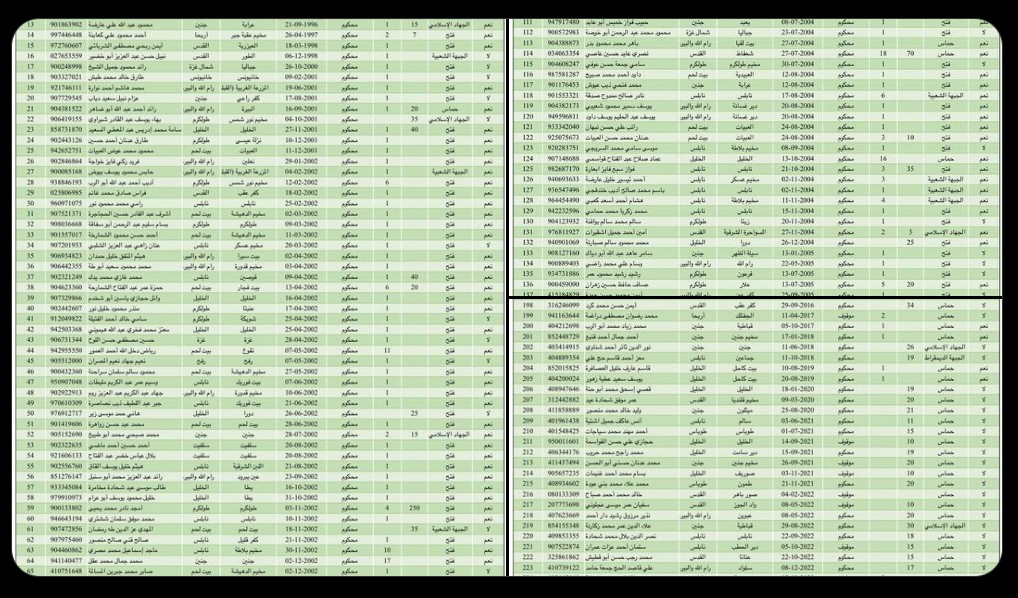
Under the terms of the deal, Hamas will release 20 living Israeli hostages in two waves, along with 28 bodies of deceased hostages to be recovered gradually from beneath the rubble. In exchange, Israel is freeing 250 Palestinian prisoners serving life sentences and 1,718 detainees from Gaza who were detained after the war began on October 7, 2023.
Israeli authorities have transferred the Palestinian detainees from five central prisons. According to Al Jazeera, 107 detainees were moved from Ofer Prison near Ramallah, while 143 others were relocated to Ketziot Prison in the Negev, in preparation for transfer to Gaza and onward to Egypt.
#شاهد| لحظة وصول عناصر القسام لتأمين الأسرى pic.twitter.com/LBeSyEHAVD
— المركز الفلسطيني للإعلام (@PalinfoAr) October 13, 2025
The exchange is being supervised by a joint committee of Egyptian, Qatari, and American officials, who are also overseeing the ceasefire’s implementation.
This morning, the Israeli army confirmed that seven living hostages were handed over to the International Committee of the Red Cross by Hamas’s military wing, Ezzeddin al-Qassam Brigades, as part of the first phase of the exchange.
The handover began near the Netzarim corridor at 8:00 a.m., followed by a second wave expected from Khan Younis and central refugee camps around 10:00 a.m.
⭕️ LIVE: Hamas hands over 7 Israeli captives to Red Cross in Gaza
LIVE coverage: https://t.co/chDCCDI0Dd https://t.co/MNH2BKjM3r
— Al Jazeera English (@AJEnglish) October 13, 2025
In addition, the Palestinian Red Crescent Society (PRCS) announced that its medical teams have just entered Ofer Prison, located west of Beitunia near Ramallah in the central West Bank, to transfer a sick Palestinian detainee slated for release.
This comes as the prisoner exchange between Palestinian detainees and Israeli captives in Gaza has officially begun
Red Cross vehicles transported the hostages to Israeli military custody for medical evaluation and reunification with their families.
The ICRC stated it had received the hostages safely and was coordinating the operation with all parties involved.
On Sunday, Israeli forces barred roughly 100 relatives of Palestinian detainees, scheduled for release today, from traveling. Many of those released will be forcibly deported from Palestine, a move condemned by rights groups as a violation of international law.
The International Red Cross reportedly received seven Israeli captives in Gaza pic.twitter.com/t3DzFCrRym
— Ounka (@OunkaOnX) October 13, 2025
U.S. President Donald Trump announced the agreement on October 9, describing it as the first step in a broader plan unveiled on September 29 to end the war, withdraw Israeli forces from Gaza, allow humanitarian aid, and facilitate prisoner exchanges. The Israeli government formally approved the ceasefire and the framework for the exchange the following day.
According to Palestinian prisoner advocacy groups, over 11,000 Palestinians remain in Israeli detention.
Many are held under catastrophic conditions involving systematic torture, starvation, and medical neglect—abuses that have led to multiple deaths in custody.
Among those detained are hundreds of women and children, many of whom were taken from the West Bank and East Jerusalem during widespread arrest campaigns.
A significant portion of these detainees—over 3,600—are held under administrative detention, a policy that allows Israeli authorities to imprison individuals without charge or trial, often based on secret evidence.
This practice has drawn international criticism for its lack of transparency and legal safeguards. Some detainees have been held for months or even years without knowing the accusations against them.
In addition to administrative detainees, Israel is holding nearly 1,900 Palestinians from Gaza under the designation of “unlawful combatants.” These individuals are denied prisoner-of-war protections and are often held incommunicado, with no access to lawyers or family. Human rights groups have described their detention conditions as amounting to enforced disappearance.
The detainee population also includes journalists, elderly individuals, and people with serious medical conditions. Legal advocates and humanitarian organizations continue to call for international oversight and accountability, citing violations of international law and the Geneva Conventions.
Among the imprisoned are 350 serving life sentences, 40 facing pending life-term indictments, 53 women (including three from Gaza and two minors), and approximately 400 children, most held in Ofer and Megiddo prisons. As of October 2025, around 3,380 Palestinians are detained without trial.
Despite the ceasefire, the situation on the ground remains volatile. The prisoner exchange may offer a symbolic breakthrough, but without enforceable guarantees, sustained aid, and legal accountability, Gaza’s recovery remains uncertain.
