
Qatari Prime Minister Sheikh Mohammed bin Abdulrahman Al Thani has confirmed that mediators have deliberately postponed negotiations on the most contentious issues in the Gaza ceasefire talks, citing a lack of readiness among the parties involved.
In an interview with The New York Times, he explained that pushing for a comprehensive agreement too early would have jeopardized the progress already achieved, including a temporary ceasefire and the release of hostages.
Among the unresolved issues, Sheikh Mohammed identified the future of Hamas’s weapons as a central obstacle. He noted the critical distinction between Hamas surrendering its arms to a Palestinian authority versus another entity, underscoring the political and security implications of any disarmament arrangement.
He also emphasized the need to establish an international stabilization force, adding that Hamas has expressed willingness to discuss how it could avoid posing a threat to Israel.
According to recent reports, the broader deal remains stalled over several key challenges. Hamas is demanding binding guarantees from the United States and other mediators that the war will end permanently.
Without such assurances, negotiators fear any agreement could collapse under renewed hostilities. Israel, meanwhile, has not agreed to a full withdrawal from Gaza or a clear postwar governance plan.
The question of who will administer the territory after a comprehensive ceasefire agreement is reached remains unresolved. Proposals for a transitional Palestinian authority backed by Arab states are under discussion but lack consensus.
The disarmament of Hamas is particularly fraught. While the proposed plan envisions Hamas stepping down and its members receiving amnesty, the modalities of disarmament—and the identity of the entity receiving the weapons—remain deeply contested.
Sheikh Mohammed stressed that this issue cannot be rushed without risking the entire process.
He also reiterated the importance of deploying an international stabilization force to oversee security and train local police. Such a force, he said, would help prevent a security vacuum and could provide the neutral oversight needed to reassure all parties.
Hamas, for its part, has shown openness to discussing how it can avoid being perceived as a threat to Israel, though no formal commitments have been made.
Humanitarian access and reconstruction are also central to the proposed deal. The ceasefire framework includes provisions for aid delivery and infrastructure rehabilitation, but implementation is hindered by ongoing hostilities, access restrictions, and the absence of a unified governing authority in Gaza.
Meanwhile, the human toll continues to mount. According to the latest figures, over 67,160 Palestinians have been killed in Gaza since October 7, 2023, most of them women and children.
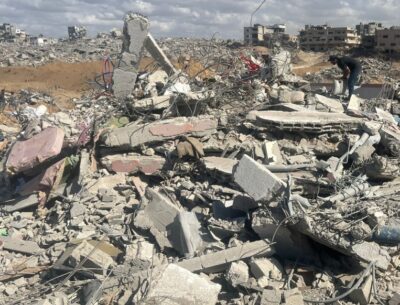
More than 155,886 have been injured, and thousands remain trapped under rubble. At least 258 people, including 110 children, have died from starvation and malnutrition.
An additional 1,938 Palestinians have been killed and over 14,420 injured while attempting to access humanitarian aid. In the occupied West Bank, Israeli forces and colonists have killed 994 Palestinians, including 201 children and 21 women.
Despite these staggering figures and the urgency of the humanitarian crisis, political and legal obstacles continue to block a comprehensive resolution.
Sheikh Mohammed defended the phased approach, arguing that gradual diplomacy has produced tangible results and remains the most viable path forward.
However, without enforceable guarantees, a clear governance transition, and international oversight, the road to a lasting ceasefire remains uncertain.
