
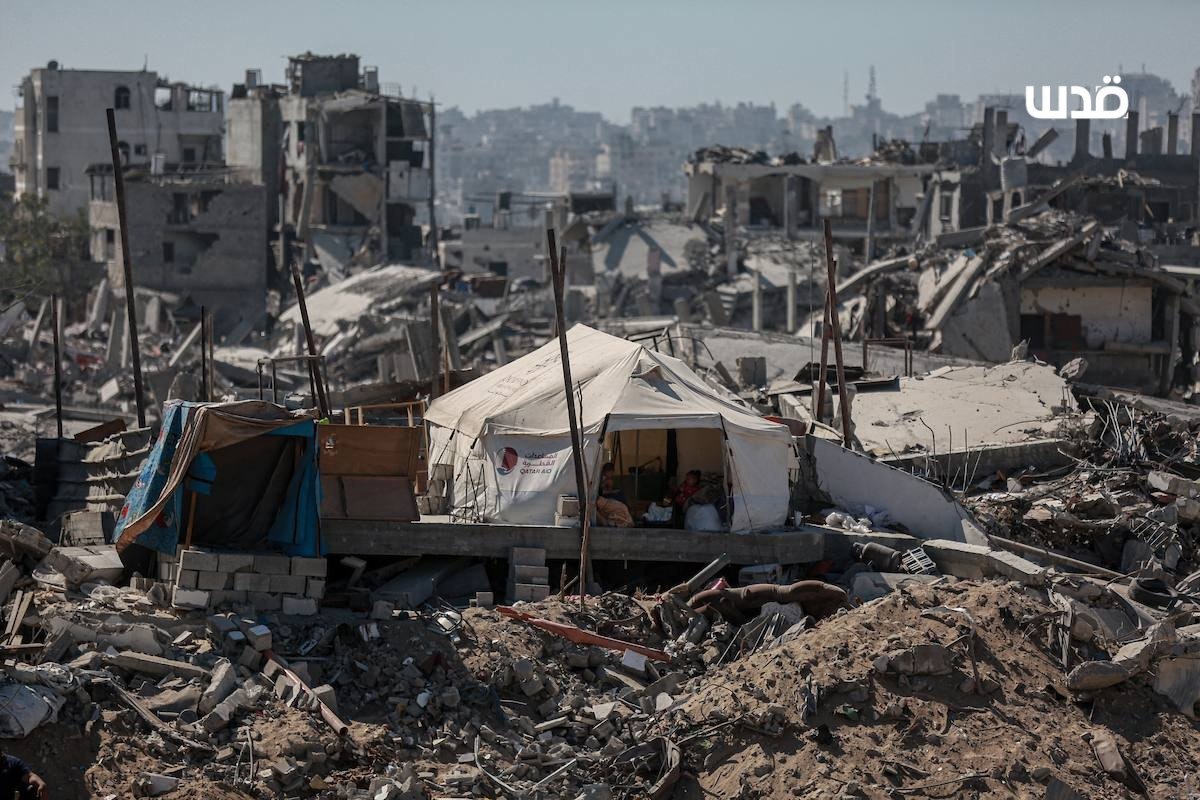
The head of the Palestinian Red Crescent Society, Younis Al-Khatib, stressed that the humanitarian need in the Gaza Strip is no less urgent and desperate now than it was before the ceasefire, and that citizens in the Strip are suffering from psychological shock and extreme despair, stressing that “rebuilding people is more difficult than rebuilding homes.”
Al-Khatib’s statements came during a series of high-level meetings he held in the Norwegian capital, Oslo, hosted by the Norwegian Red Cross (NoRC)In the presence of Norwegian Prime Minister Jonas Gahr Støre, Foreign Minister Espen Barth Eide, and members of the Foreign Affairs Committee of the Norwegian Parliament, in addition to a special meeting with the royal family.
Al-Khatib said that the needs for assistance in Gaza are “huge,” noting that the population is “psychologically traumatized and will need psychological support for a long time,” noting that “the situation in the West Bank is also becoming more critical, with increasing Israeli attacks and insecurity.”
Amid the blockade and the ban on medical supplies, a Palestinian woman helps her injured husband walk, as the collapse of Gaza’s healthcare system leaves thousands without access to treatment or mobility aids.
For her part, the Secretary-General of the Norwegian Red Cross, Grete Herlovsson, expressed her deep sorrow over what Al-Khatib reported, stressing that “the needs are enormous.”
Herlovson stressed that the most important message from these meetings is to emphasize that the humanitarian situation in Gaza is “critical and desperate”, as a result of deliberate and systematic violations of international humanitarian law.
She stressed the need for any future reconstruction process to focus primarily on rebuilding populations psychologically affected by the war, and not just on buildings and infrastructure.
The Palestine Red Crescent Society, the largest provider of ambulance services in the Strip, is still operating under extremely difficult conditions, with four of its hospitals severely damaged and 21 of its 58 ambulances still operating despite severe fuel shortages
