
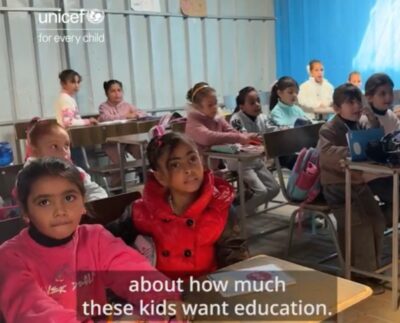
UNICEF says the situation for children in Gaza remains perilous, with conditions continuing to deteriorate despite the declared ceasefire. The agency reports that children are being harmed not only by ongoing airstrikes but also by the collapse of essential services, including health care, clean water, and education. According to its latest figures, 37 children have been killed across the Strip since the start of the year.
The organization stressed that the ceasefire must be held if the suffering of Gaza’s children is to end. Last month, UNICEF confirmed that more than 100 children had been killed in airstrikes and other acts of violence since the “ceasefire” began three months earlier.
UNICEF spokesperson James Elder told reporters in Geneva that the toll means “a boy or girl has been killed almost every day during the ceasefire.”
In Gaza, @UNICEF is helping children regain a sense of hope and normalcy.
In learning spaces like this, students are not only reclaiming their right to education but also taking part in activities to play and heal from trauma.
pic.twitter.com/wFysgVBOod— United Nations (@UN) February 3, 2026
He said the victims—60 boys and 40 girls—were killed in airstrikes, drone attacks, tank fire, and live ammunition, adding that the true number is likely higher due to limited access to many affected areas.
Alongside its warnings, UNICEF has launched a major initiative to bring hundreds of thousands of children back into some form of schooling. Elder noted that nearly two and a half years of attacks on educational facilities have placed an entire generation at risk.
Since the start of the genocide in October 2023, around 90 percent of Gaza’s schools have been damaged or destroyed, leaving more than 700,000 school‑aged children without access to formal education.
Safe spaces to learn – this is what children in Gaza need again!
UNICEF and partners have launched a critical Back to Learning programme so children like 13-year-old Jana don’t lose access to learning anymore.
Share this video to echo UNICEF Spokesperson @1james_elder: “Let’s… pic.twitter.com/5GK802zEhL
— UNICEF (@UNICEF) January 27, 2026
The agency is now expanding its emergency education program, describing it as one of the largest of its kind worldwide.
UNICEF currently supports over 135,000 children studying in more than 110 learning centers, many of them operate in tents as the destruction of school buildings continues to limit safe learning spaces.
