
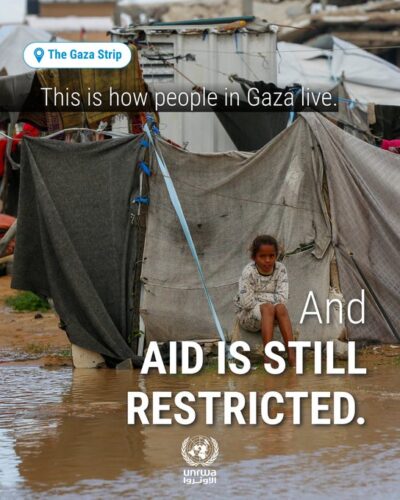
UNRWA says children in the Gaza Strip are living through conditions no child should ever have to endure, as Israeli restrictions continue to block the entry of essential humanitarian aid.
UNRWA said that children in Gaza “should feel warmth, proper nutrition, and safety,” yet remain deprived of all three while trucks carrying food, medicine, and winter supplies wait outside the Strip.
Aid workers describe families trying to survive winter in tents that leak when it rains and collapse under strong winds.
Children are sleeping without blankets, lining up for hours for a piece of bread, and falling ill in overcrowded shelters where clean water and heating are almost nonexistent.
Health teams report a rise in acute malnutrition among infants and young children, a direct result of inconsistent food deliveries and the collapse of basic services.
UNRWA says its staff continue to distribute whatever aid is allowed in and keep shelters running despite overwhelming numbers, but the agency cannot scale up without unrestricted access.
Other humanitarian organizations report the same pattern: convoys delayed for hours at military roadblocks, trucks turned back without explanation, and critical supplies stuck just beyond Gaza’s borders.
Winter has made an already harsh situation even more punishing. Heavy rain has flooded camps, forcing families to burn scraps of wood to stay warm.
Doctors warn that exposure to cold, combined with hunger and untreated illness, is putting children at even greater risk.
Aid groups stress that the suffering is not due to a shortage of supplies — the supplies exist — but because they are not being allowed in at the scale required.
UNRWA is calling for all restrictions on humanitarian aid to be lifted immediately, warning that every day of delay deepens the crisis for children who have already endured months of displacement, fear, and deprivation.
The agency emphasized that humanitarian access is a legal obligation, and that the survival of Gaza’s children depends on whether that obligation is upheld.
