

Former Knesset member Haneen Zoabi was released Sunday evening following hours of interrogation by Israeli police in Tiberias. Her detention earlier that morning, which involved a pre-dawn invasion of her home in Nazareth, drew sharp criticism from legal experts and political groups.
Attorney Hassan Jabareen of the Adalah Legal Center described the operation as legally disproportionate, arguing that Zoabi could have been summoned through standard procedures without the need for a dramatic police deployment.
The detention and interrogation, he said, raised serious concerns about the misuse of police authority in politically sensitive cases.
Zoabi’s detention was reportedly linked to statements she made during a recent public appearance abroad, which authorities claimed amounted to incitement and support for a proscribed organization.
However, her swift release has prompted renewed accusations that the arrest was politically motivated.
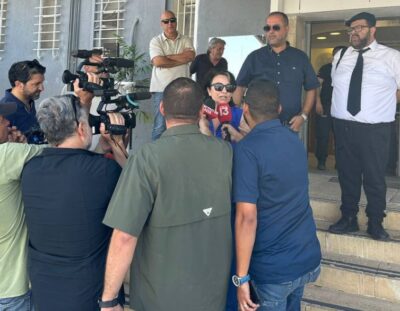 The National Democratic Assembly (Balad), of which Zoabi is a senior member, issued a statement condemning the move as a theatrical attempt to intimidate and silence national voices.
The party asserted that the lack of legal basis for the arrest and the rapid release exposed the weakness of the allegations and underscored the political nature of the detention.
Balad praised the broad solidarity shown by various national and progressive forces in response to Zoabi’s arrest, emphasizing that the attempt to criminalize political expression had failed to suppress the principled stance against genocide and Zionist fascism.
The party called for continued unity and collective resistance to systematic repression, reaffirming its commitment to defending the right to organize and express political views in the face of racist persecution.
Zoabi’s case has reignited debate over freedom of expression and political participation in Israel, particularly for Arab representatives and activists. Observers expect the legal proceedings to focus on the procedural validity of the arrest and its implications for political speech under Israeli law.
Updated From:
Israeli Police Arrest Former MK Haneen Zoabi
Sep 21, 2025 at 09:53
Israeli police arrested former Knesset member Haneen Zoabi, 59, early Sunday morning following a raid on her home in Nazareth.
According to legal sources, Zoabi was transferred to the city of Tiberias for interrogation. While police have not publicly disclosed the full scope of the allegations, reports suggest the investigation may be linked to statements she made during a recent public appearance abroad.
Authorities accuse her of “incitement to terrorism” and alleged “support for proscribed organizations.”
In a statement, police said that following “an evidence review and consultations with relevant authorities, her remarks were deemed potentially supportive of a terrorist organization and may constitute incitement.”
Attorney Hassan Jabareen, director of the Adalah Legal Center, criticized the detention as legally disproportionate.
He argued that Zoabi could have been summoned for questioning through standard legal channels without the need for a pre-dawn raid involving multiple officers.
“This type of arrest raises serious concerns about the misuse of police authority in politically sensitive cases,” Jabareen said.
The arrest has sparked condemnation from political and civil society groups, particularly among Arab parties and rights organizations.
A joint statement issued by the Democratic Front and the Communist Party described the move as part of a broader campaign to silence dissenting voices within the Arab community in Israel.
They accused the police of acting under political pressure and warned of escalating repression against elected Arab representatives and activists.
Zoabi, a prominent figure in Palestinian political discourse and a senior member of the Balad party—also known as the National Democratic Assembly—has long been known for her outspoken positions on civil rights and state policy.
Her detention comes amid growing scrutiny of political figures and renewed tensions over freedom of expression and political participation.
Legal observers expect the case to focus heavily on the procedural validity of the arrest, especially if authorities seek to extend her detention. The outcome may set a precedent for how political speech is treated under Israeli law, particularly in cases involving minority representatives.
