
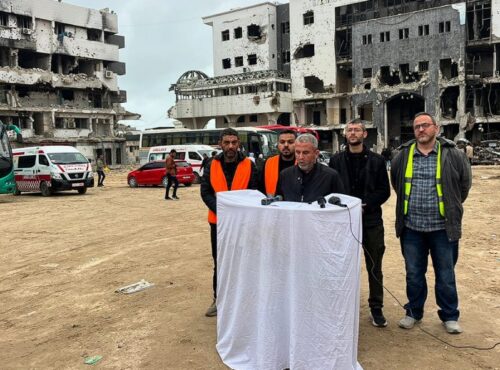
Hospitals in the devastated Gaza Strip are sounding the alarm over the possible shutdown of the only oxygen‑generation plant still operating in Gaza City and the northern governorates, a failure they say would put countless patients at immediate risk.
The plant has become the last lifeline for hospitals struggling to keep critically ill patients alive, especially those who depend on ventilators, oxygen therapy, or long‑term respiratory support.
Medical staff say the facility has been pushed far beyond its limits. It runs almost nonstop, often around the clock, and has begun to suffer repeated mechanical failures.
With no spare parts, no backup systems, and no way to bring in replacement equipment under the current restrictions, technicians are left trying to keep the plant running with whatever tools they have on hand. Doctors warn that a single major breakdown could halt oxygen production entirely.
Hospitals across Gaza are already operating under extreme pressure. Many wards are overcrowded, intensive care units are full, and surgical teams are working with limited anesthesia and damaged equipment.
Patients with chronic illnesses who rely on steady oxygen support are among the most vulnerable, and medical teams say they have no alternative source if the plant fails.
Several hospitals have reported that their oxygen reserves are dangerously low, forcing staff to ration supplies and prioritize the most critical cases.
Humanitarian organizations have been warning for weeks that the health system is on the verge of collapse.
The lack of fuel, spare parts, and medical supplies has left hospitals unable to maintain essential services.
Wastewater systems have broken down in several areas, and untreated sewage has begun to spread through crowded neighborhoods and displacement camps, raising fears of disease outbreaks that the health sector is no longer equipped to handle.
Doctors describe the situation as a race against time. Every day the plant continues operating is a temporary victory, but they say the margin for error has disappeared.
Without immediate access to technical support and replacement parts, the oxygen system could fail at any moment, leaving hospitals unable to treat patients who cannot survive without it.
Earlier Tuesday, Israeli occupation forces killed a nine‑year‑old Palestinian child in southern Gaza on Tuesday as repeated violations of the ceasefire continued across the Strip, with airstrikes, gunfire, and artillery bombardment targeting civilian areas since the ceasefire was announced in October 2025.
