
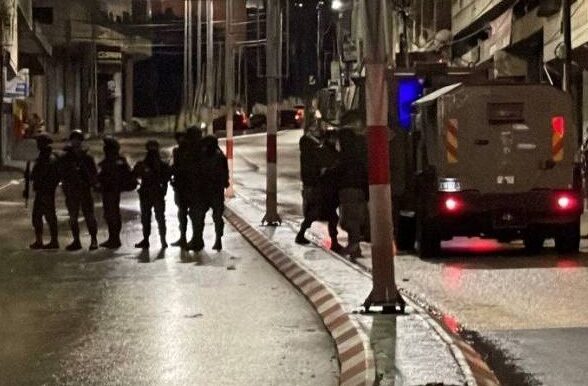
Israeli occupation forces carried out widespread invasions across the occupied West Bank on Thursday, breaking into homes, abducting residents, assaulting civilians, demolishing property, and imposing intensified restrictions in multiple cities, towns, and refugee camps.
In Qabatia, south of Jenin in the northern West Bank, soldiers invaded the town and abducted two young men, identified as Huthaifa Al‑Sa’id and Qais Al‑Basha.
Before dawn, Israeli forces also invaded Beita, south of Nablus in the northern West Bank, where military vehicles broke into several homes, searched them, and damaged their contents.
Two residents, Omar Dawoud and Zakaria Dawoud, were abducted. Local sources reported explosions inside the town, though the cause remained unclear.
Soldiers also fired illumination rounds and continued breaking into additional homes during the offensive.
In Balata refugee camp, east of Nablus, a Palestinian youth was injured when an Israeli military vehicle struck him during the army’s invasion of the area.
Separately, Israeli forces invaded Amman Street, east of Nablus, to secure the entry of illegal paramilitary Israeli colonizers to Joseph’s Tomb.
Journalists were expelled from the area, and several families were forced out of their homes during the invasion.
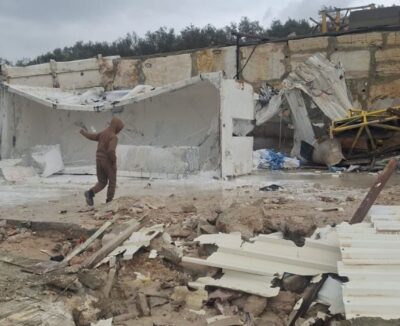
It is worth mentioning that the soldiers demolished a factory owned by Mohammad Ezzat Azem in the western areas of Sebastia town, northwest of Nablus.
In addition, Israeli forces invaded Kafr Thulth, south of Qalqilia in the northwestern West Bank, entering from the town’s northern side, breaking into the home of Ahmad Sa’eb Issa, damaging property, and abducting him. The army then expanded its operations to the nearby town of Azzun, east of Qalqilia.
Furthermore, the soldiers shot a Palestinian child with a live round to the arm after several Israeli military vehicles invaded the Kafr Saba neighborhood in Qalqilia.
 A large‑scale invasion took place in Atil and Deir Al‑Ghusoun, north of Tulkarem in the northwestern West Bank, where military vehicles and foot patrols spread through residential neighborhoods and main streets.
Soldiers broke into dozens of homes, conducted extensive searches, damaged property, and detained several young men for field interrogations. The invasion was ongoing at the time of reporting.
Local sources confirmed the abduction of several residents from Atil, including Yousef Shalabi, Shahir Rizqallah, and Mujahid Al‑Shafi’i, the latter still recovering from injuries sustained last month near Tulkarem refugee camp.
The invasion came amid the ongoing Israeli military offensive in the Tulkarem district, now in its 368th consecutive day, marked by daily invasions of the city, its two refugee camps — Tulkarem and Nur Shams, and surrounding towns.
In the Hebron district in the southern West Bank, Israeli forces carried out multiple invasions across several towns and neighborhoods, abducting residents, seizing property, and converting civilian structures into military posts.
In Sa’ir and Ash‑Shuyukh, northeast of Hebron, soldiers broke into the home of the family of slain Palestinian Qussai Halaiqa. They abducted two of his brothers, Bilal and Ismail Halaiqa.
Four additional residents were abducted after soldiers broke into and searched their homes: Abdul‑Jawad Ahmad Halaiqa, Yousef Ibrahim Halaiqa, Ali Issa Al‑Hroub, and Tamer Khaled Ayayda.
In the city of Hebron, Israeli forces seized a five‑story residential building belonging to the Rajabi family in the Jabal Johar area, south of the city. Soldiers forced all residents to evacuate the building before converting it into a military post.
Israeli forces also broke into several homes, a printing shop, and stores in the Bir Haram Al‑Rama area and near the northern entrance of Hebron, deliberately damaging property during the searches.
Furthermore, Israeli soldiers abducted a Palestinian man following an assault by illegal paramilitary Israeli colonizers, who also attempted to steal livestock belonging to residents in Masafer Yatta, south of Hebron.
Activist Osama Makhmara told WAFA News that a group of armed colonizers attacked Palestinian shepherds, assaulted them, and tried to seize a flock of sheep in the areas of Wadi Abu Shaban and Rujoum ‘Ali in Masafer Yatta.
Shortly afterward, he added, Israeli forces stormed the area, arrested Jabr Mohammad Awad, and detained several other residents while subjecting them to abuse.
Earlier at dawn, an Israeli military vehicle rammed a Palestinian car in Sa’ir, causing damage and injuring a woman.
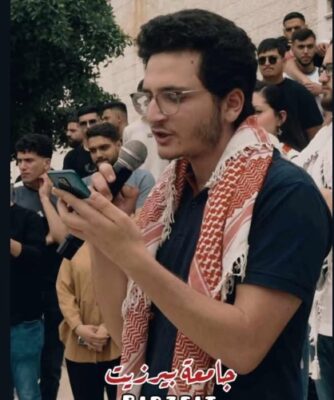 In Birzeit, north of Ramallah in the central West Bank, soldiers abducted Birzeit University student Khaldoun Bakr Abdul‑Haq from the student housing.
Israeli forces also invaded Al‑Jalazone refugee camp, north of Ramallah, conducting searches and interrogations.
In Bethlehem in the southern West Bank, Israeli forces intercepted a Palestinian vehicle in the At‑Tal area, assaulted its passengers, and invaded the nearby village of Dar Salah, east of the city.
In Battir, west of Bethlehem, Israeli forces demolished a wooden hut and two agricultural structures, owned by Ashraf Abu Mor, in the Khirbet Badr area, claiming it lacked a permit. The Israeli vehicles also bulldozed the land around the structure.
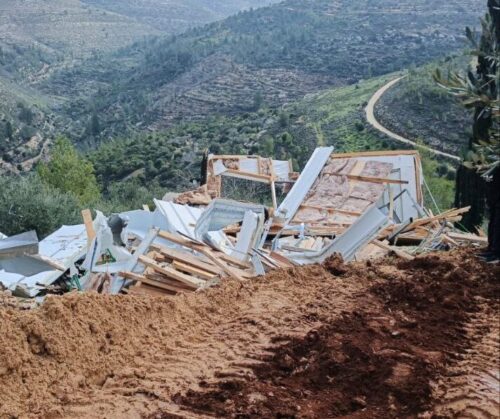
Soldiers also issued stop‑construction notices for two agricultural rooms in the same area, belonging to Bakr Najjar and Akram Halawa.
The most extensive offensive occurred in Hizma, northeast of occupied Jerusalem, where Israeli forces continued a full closure and military siege on the town for the third consecutive day. All entrances and exits remained sealed, severely restricting civilian movement.
The Israeli army also fired barrages of live rounds, concussion grenades, and rubber-coated steel bullets to force the Palestinians to leave the area.
During the ongoing invasion, soldiers carried out dozens of home and shop break‑ins, abducting 13 residents and conducting more than 100 field interrogations inside homes. Several civilians were beaten and subjected to harsh treatment.
Also, the soldiers seized more than 35 vehicles and motorcycles, took over three homes, and converted at least one into a field interrogation center, while others were turned into military posts.
The soldiers also invaded a few neighborhoods in the town of Al-‘Isawiya, closed streets, initiated searches, and fired several gas bombs and concussion grenades.
In addition, the soldiers fired barrages of gas bombs at Palestinians on the Al-Matar street near Qalandia refugee camp, north of Jerusalem, before several military vehicles invaded the area.
Overnight, soldiers intensified their invasions, causing extensive damage to numerous homes, deliberately destroying property, and searching mobile phones. Two families reported the theft of gold jewelry and cash during the home invasions.
Schools in Hizma suspended classes due to the heavy military presence inside its neighborhoods. Israeli forces also demolished a commercial storage facility in the town without prior notice.
