
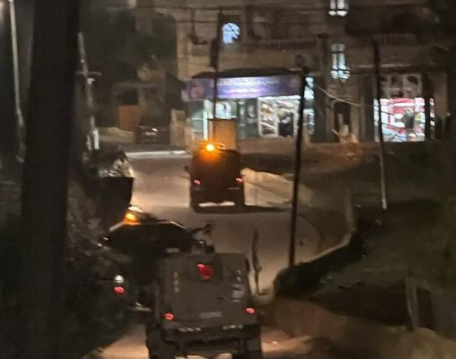
Israeli occupation forces launched a new wave of invasions and movement restrictions across the occupied West Bank early on Saturday, breaking into homes, abducting residents, and tightening control over key routes in a broad escalation affecting multiple Palestinian communities.
In Beit Ummar, north of Hebron in the southern West Bank, Israeli forces invaded the town and broke into the home of 60‑year‑old Jamal Mahmoud Hamdallah Abu Mariya.
Soldiers stormed the property, ransacked its contents, and abducted him along with his sons Asef (28), Mohammad (22), and Malek (19).
The four were transferred to an Israeli military facility inside the “Karmi Tsur” illegal colony, built on stolen Palestinian land north of Hebron.
Israeli forces simultaneously intensified restrictions across the Hebron area, installing multiple military roadblocks at the entrances to towns, villages, and refugee camps. Several main and secondary roads were closed with iron gates, concrete blocks, and earth mounds, severely disrupting civilian movement.
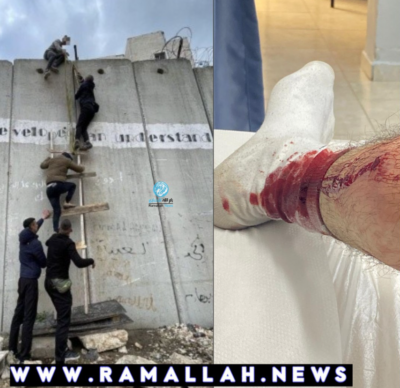 North of occupied Jerusalem, a Palestinian worker was shot and injured while attempting to climb over the illegal Annexation Wall in the al‑Ram area.
Eyewitnesses said Israeli soldiers have escalated their measures against Palestinian laborers, frequently firing at them, chasing them, and preventing them from crossing, leading in recent months to multiple fatalities and injuries among workers attempting to reach their workplaces.
In addition, several Israeli military jeeps invaded Qalandia, north of occupied Jerusalem, and initiated searches.
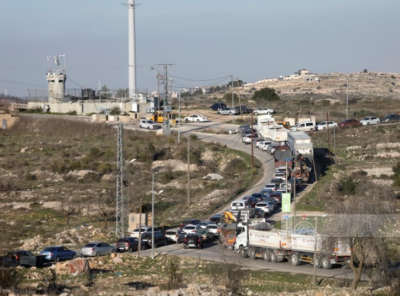
In Ramallah in the central West Bank, Israeli forces closed the Atara military roadblock early Saturday, causing significant delays for residents traveling to and from the northwestern and western Ramallah areas and from northern governorates.
Soldiers also installed another military roadblock at the entrance to the village of Yabrud, east of Ramallah, stopping vehicles, inspecting passengers’ identification cards, and creating a major traffic jam at the site known locally as the “Yabrud Bridge.”
These closures reflect a broader pattern of daily restrictions. According to the Wall & Colonization Resistance Commission, there are currently 916 military roadblocks and gates across the occupied Palestinian territory, including 243 installed after October 7, 2023.
In related news, illegal paramilitary Israeli colonizers grazed their sheep on privately owned Palestinian land in the town of Sinjel, north of Ramallah.
Sinjel Mayor Moataz Tawafsha stated that the colonizers were grazing their herds around residential areas in the town’s northern section—specifically in the Abu al‑Awf and Shu’ab an‑Nimr areas—causing extensive damage to crops.
Tawafsha noted that since October 07, 2023, Israeli forces have barred Palestinian residents from accessing these lands, which span roughly 8,000 dunams, after declaring them “military zones,” despite the area lying only about 200 meters from Palestinian homes.
According to documentation by the Wall & Colonization Resistance Commission, colonizers carried out 766 attacks across the occupied West Bank last month, with the highest concentrations recorded in the Ramallah and al‑Bireh governorate (195 attacks), followed by Nablus (179), and Hebron (126).
In Kafr Qaddum, east of Qalqilia in the northwestern West Bank, Israeli forces invaded the village at dawn, broke into several homes, violently searched them, and abducted five young men, identified as Mohammad Shtayyeh, Ashraf Shtayyeh, Wissam Shtayyeh, Atta Juma, and Majed Juma.
Soldiers had invaded the village from its northern side and deployed across several neighborhoods, including al‑Hara al‑Shamiya, al‑Hara at‑Tahta, and the al‑Maghayer area, before withdrawing after a three‑hour operation.
The incidents form part of a widening escalation of Israeli military activity across the occupied West Bank, marked by intensified invasions, home break‑ins, abductions, and movement restrictions affecting Palestinian communities in multiple regions.
