
On Wednesday, Israeli occupation forces continued to breach the “ceasefire” agreement in the Gaza Strip for the 335th consecutive day. The attacks included artillery shelling, naval fire, a drone strike, and gunfire across the devastated coastal enclave, amid a further deterioration in humanitarian conditions for civilians, including displaced families.
Local media sources reported that Israeli artillery shelled areas east of Jabalia and northern Beit Lahia, while the army launched illumination flares in the vicinity of Abu Sharkh Junction in the northern Gaza Strip.
Israeli forces also shot and wounded a woman in the Halawa refugee camp in northern Gaza, while an Israeli drone strike near al-Jalaa Street, west of Gaza City, wounded several Palestinians. Israeli naval vessels also fired toward areas northwest of the enclave.
In central Gaza, Israeli artillery struck areas northeast of the al-Bureij refugee camp and in the vicinity of the Wadi Gaza bridge.
Israeli strikes hit areas of southern and central Gaza, destroying homes in Khan Younis and sending thick smoke over Bureij camp. Gaza’s Health Ministry says Israeli attacks have killed at least 1,352 Palestinians and injured 4,511 since the ‘ceasefire’ began. pic.twitter.com/59cw65Ujzf
— Al Jazeera English (@AJEnglish) September 8, 2026
In the south, an Israeli military drone carried out at least one strike near the al-Bardawil family neighborhood west of Rafah.
Israeli artillery also shelled eastern Khan Younis, while naval vessels opened heavy fire off the coast of the city and Rafah. Israeli forces also launched illumination flares east of al-Qarara, north of Khan Younis.
Since the “ceasefire” entered into effect in October 2025, Israeli forces have continued to carry out air and artillery attacks near shelters housing displaced families, in addition to demolition operations and extensive destruction in areas under Israeli military control behind the so-called Yellow Line, the redeployment boundary established under the agreement.
Israeli authorities have likewise maintained restrictions on the movement of commercial goods, humanitarian assistance, and travelers.
The Ministry of Social Development in Gaza rejected Israeli allegations that the enclave is not experiencing hunger or widespread food insecurity, describing the claims as an attempt to misrepresent humanitarian conditions and obscure the extent of Palestinian suffering.
In a statement issued Wednesday, the ministry said Israeli policies, restrictions, and other measures had exacerbated the humanitarian crisis in the Gaza Strip.
The ministry accused Israel of failing to comply with the “ceasefire” terms, particularly the benchmark of allowing at least 600 trucks carrying humanitarian aid and commercial goods to enter Gaza each day.
It said documented conditions confronting residents contradict Israel’s account of the food situation, adding that public statements cannot conceal the scale of the humanitarian crisis in Gaza.
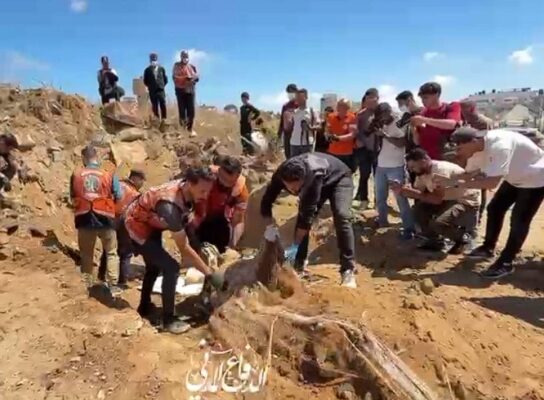
According to the Palestinian Health Ministry, Israeli forces have killed 1,352 Palestinians and wounded 4,511 others since the “ceasefire” entered into effect on October 10, 2025. During the same period, rescue crews recovered the bodies of 826 Palestinians.
The ministry further reported that, since October 7, 2023, Israel has killed 73,658 Palestinians and wounded 174,622 others in the devastated and besieged Gaza Strip. An undetermined number of victims remain beneath the rubble and in the streets, where ambulance and civil defense crews remain unable to reach them.
