
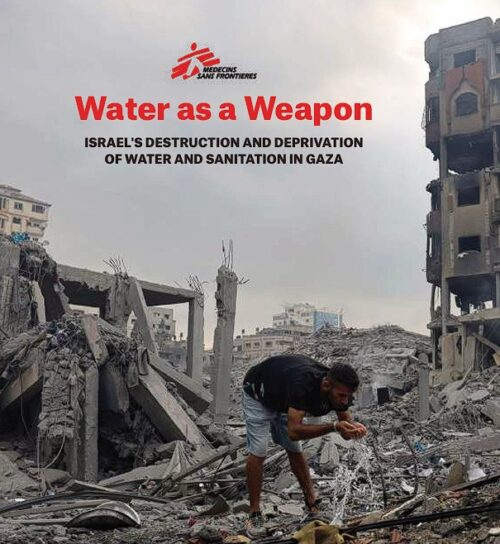
Médecins Sans Frontières (MSF) warns that Gaza’s water, sanitation, and hygiene systems have undergone a severe and deliberate collapse since October 2023, driven by Israeli policies that have deprived the population of essential services and created life‑threatening conditions for more than 2.1 million Palestinians.
In its latest report — based on operational data and medical evidence collected between January 2024 and December 2025, along with recent field testimonies — MSF concludes that the deprivation of water and basic hygiene is not incidental but the result of systematic measures that have forced civilians into increasingly dangerous living conditions.
According to the report, Gaza’s residents face an escalating shortage of water despite MSF being one of the largest providers in the Strip. The organization produced or distributed up to 4.7 million liters per day through early 2026, yet these quantities remain far below the population’s needs. Water points frequently ran dry, pushing families to rely on unsafe sources or drastically reduce consumption.
MSF also reports a dramatic spike in water prices supplied by private vendors, with increases reaching 500%, placing clean water far beyond the reach of most households already struggling with the loss of income and widespread economic collapse.
Sanitation systems, the report notes, have effectively collapsed, forcing families to dig makeshift latrines or share limited facilities with large numbers of people. These conditions have heightened the risks of contamination, disease outbreaks, and environmental hazards.
The organization further highlights the accumulation of waste across densely populated areas due to fuel shortages and the shutdown of collection systems. This buildup has contributed to the spread of bacteria and pollutants, particularly during periods of rainfall, compounding the public‑health crisis.
Basic hygiene supplies — including soap, disinfectants, and sanitary products — have become either unavailable or prohibitively expensive, leaving families unable to maintain minimum hygiene standards.
MSF stresses that the situation represents a rapidly worsening humanitarian emergency requiring immediate action to restore access to essential services. The organization warns that continued deterioration will carry severe and long‑lasting consequences for public health in Gaza.
