
Gaza’s Medical Infrastructure Collapses as West Bank Services Struggle Under Pressure
The Palestinian Central Bureau of Statistics (PCBS) marked World Health Day 2026 with a stark assessment of the health situation across Palestine. Under this year’s theme, “Together for Health: Standing with Science,” the bureau warned that the Palestinian health system—particularly in the Gaza Strip—has reached a level of collapse unprecedented in modern history.
A Health System Barely Standing
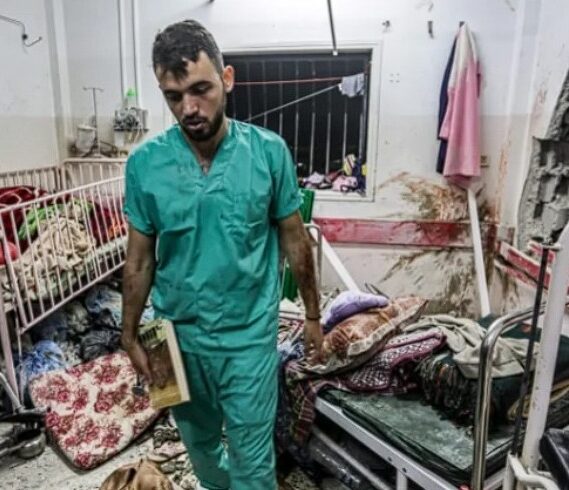
Updated figures through March 2026 show that nearly every hospital in Gaza has been damaged. A total of 94% of medical facilities have sustained destruction or severe impairment, leaving all 36 hospitals operating far below capacity. Only 18 hospitals remain partially functional, and even these face crippling shortages of staff, fuel, equipment, and essential supplies.
Primary healthcare has nearly vanished. Just 1.5% of clinics can operate at full capacity, while more than half of all essential medicines have completely run out.
Doctors report having to ration the last doses of antibiotics and painkillers, while thousands of patients with chronic illnesses go untreated.
PCBS noted that the gap between global health standards and the reality in Gaza has widened into a humanitarian emergency—one driven by siege, destruction, and the mass displacement of nearly the entire population.
Hunger and Malnutrition Deepen the Crisis
The Integrated Food Security Phase Classification (IPC) report for late 2025 and early 2026 highlights the scale of the crisis:
- 1.6 million people—77% of those assessed—faced severe food insecurity.
- 96% of agricultural land has been destroyed.
- Unemployment has reached 80%.
- Nearly half the population lacks access to basic health services.
Even after a limited ceasefire, the situation remains extremely fragile. Aid agencies warn that any disruption in humanitarian access—or a renewed escalation—could push Gaza back toward famine within weeks.
By mid‑October 2026, IPC estimates showed:
- 101,000 children suffering from acute malnutrition.
- 31,000 children are at risk of severe, life‑threatening malnutrition.
- 37,000 pregnant and breastfeeding women are facing acute nutritional shortages.
Medical teams report a sharp rise in premature births, with one in five newborns now requiring intensive care. Miscarriages and complications linked to hunger have also increased dramatically.
Disease Spreads Through Overcrowded Shelters
With more than a million displaced people crowded into makeshift shelters, disease has spread rapidly. Data from the Early Warning, Alert and Response System (EWARS) show that communicable diseases accounted for 23.3% of all medical consultations in the first two months of 2026.
Key indicators include:
- 1.9 million cumulative cases of acute respiratory infections.
- 17 deaths in January alone due to cold, overcrowding, and lack of heating.
- 81,000 cases of acute watery diarrhea in January–February 2026, including 36,000 children.
- 496,000 diarrhea cases recorded in 2025, 20 times pre‑war levels.
- 97% of Gaza’s water is unsafe for human consumption.
- 75,000 cases of scabies, lice, and other skin diseases.
Patients with chronic illnesses face life‑threatening conditions:
- Of 1,100 kidney failure patients, only 600–700 can still receive dialysis.
- 10,000–12,000 cancer patients have been left without chemotherapy, diagnostics, or medical referrals.
A Mental‑Health Emergency for Gaza’s Children
More than one million children in Gaza are living with severe psychological distress—nightmares, anxiety, and trauma—while almost no specialized mental‑health services remain available.
A Devastating Human Toll
Since October 2023 and up to March 2026, the ongoing assaults and violations have:
- Killed 72,280 Palestinians,
- Wounded more than 172,000,
- Left a quarter of the injured with permanent disabilities.
UNICEF estimates that:
- 21,000 children are among the dead.
- 11,000 children now live with permanent disabilities.
More than 18,500 patients require immediate medical evacuation, including 3,800 children in need of advanced treatment unavailable inside Gaza.
West Bank: A System Under Constant Strain
While the West Bank has not experienced the same scale of destruction, its health system remains under heavy pressure. Israeli military roadblocks, movement restrictions, and repeated attacks on medical teams and ambulances continue to disrupt access to care.
Healthcare Landscape (2024)
- 608 primary healthcare centers
- 60 hospitals
- 13.4 beds per 10,000 people—less than half the global average
- 21.9 general practitioners and 43.6 nurses per 10,000 people
Maternal and Child Health: Signs of Progress
Despite the challenges, the West Bank has recorded improvements:
- Maternal mortality: 22.2 per 100,000 live births
- Infant mortality: 8.5 per 1,000
- Under‑five mortality: 10.1 per 1,000
- Institutional deliveries: 99.9%
Disease Patterns
Non‑communicable diseases remain the leading causes of death:
- Ischemic heart disease: 24.7%
- Cancer: 18.2%
- Diabetes complications: 14.5%
Cancer incidence stands at 130.8 per 100,000, among the higher rates in the region.
Communicable diseases remain largely controlled:
- Hepatitis A: 5.23 per 100,000
- Tuberculosis: 0.23 per 100,000
- No polio or measles cases recorded in 2024
Health Costs: A Heavy Burden on Families
Total health spending in Palestine reached $1.79 billion in 2024—11.2% of GDP—with per‑capita spending at $351.7.
Funding sources:
- Government: 41.7%
- Households: 44.9%, placing significant pressure on families already struggling to meet basic needs
A Call for Immediate International Action
PCBS stressed that the scale of humanitarian needs—especially in Gaza—requires urgent international intervention. This includes lifting restrictions on medical equipment, ensuring safe access for humanitarian teams, and enabling medical evacuations for thousands of critically ill patients.
