
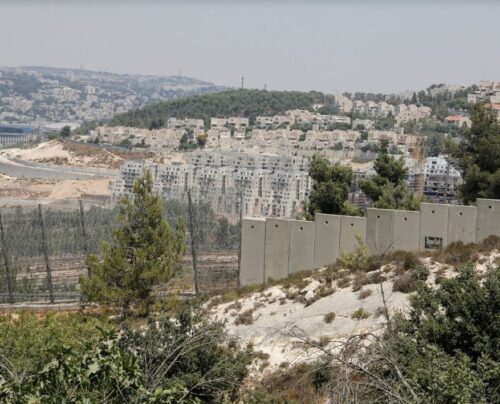
New Israeli report documents sweeping structural changes, expanded powers for Smotrich, and accelerated growth of illegal colonies.
A coalition of leading Israeli human‑rights organizations has concluded, in a newly issued joint statement, that the occupied West Bank has undergone a far‑reaching structural transformation since the beginning of the genocide in Gaza on October 07, 2023.
The statement, titled “Report on the State of the Occupation 2025: The 58th Year of Occupation and the Two‑Year War on Gaza,” was released by a consortium that includes: Bimkom – Planners for Planning Rights; Gisha – Legal Center for Freedom of Movement; the Association for Civil Rights in Israel; the Public Committee Against Torture in Israel; HaMoked – Center for the Defense of the Individual; Yesh Din; Combatants for Peace; Machsom Watch; Ir Amim; Emek Shaveh; Physicians for Human Rights – Israel; Breaking the Silence; and Torat Tzedek.
Shift From Military Rule to Civilian‑Led Annexation
According to the report, the current Israeli government (the 37th government) has—especially since the start of the genocide in Gaza—implemented a series of bureaucratic, legal, and administrative measures that transfer broad powers from the Israeli military to civilian bodies directly controlled by the government.
Watch | How Israel is planning to build an ‘apartheid road’ to bury the idea of a Palestinian state.”- The Guardian
Israel is set to begin construction next month on a bypass road designed to seal off the heart of the occupied West Bank from Palestinians, a move widely seen as… pic.twitter.com/4hDDChRnEv
— Quds News Network (@QudsNen) January 26, 2026
These steps, the organizations argue, have altered the governing framework in the occupied territory: shifting from a military occupation bound by international humanitarian law to a civilian system of de facto annexation aligned with the political objectives of the Israeli government.
In parallel, the report warns of the deepening entrenchment of an apartheid‑based system, one that grants sweeping privileges and legal protections to Israeli colonizers while systematically violating the rights of the protected Palestinian population.
The organizations stress that, regardless of whether the government proceeds with a formal declaration of sovereignty, Area C of the West Bank has already been effectively annexed in practice.
Smotrich’s Expanding Civilian Authority
The report highlights the role of Bezalel Smotrich, who, in his capacity as a minister within the Israeli Ministry of Defense, has been granted extensive authority over civilian affairs in the West Bank. These powers effectively position him as the minister responsible for advancing annexation.
Under his oversight, the government established a new “Settlement Administration”—a civilian body inside the Ministry of Defense that now controls most aspects of civilian life in the West Bank.
This shift has hollowed out the authority of the Civil Administration, the military body traditionally responsible for governing the occupied population.
A civilian was also appointed as deputy head of the Civil Administration, reporting directly to Smotrich rather than to the military commander. Human‑rights groups describe this as a transitional step toward dismantling the Civil Administration entirely.
In September 2024, Yesh Din and the Association for Civil Rights in Israel petitioned the High Court against the appointment and the transfer of powers.
Although the government announced in July 2025 that it would scale back some of Smotrich’s authorities, the petition remains active, and the organizations argue that the rollback is insufficient to halt the broader shift toward foreign civilian rule over occupied territory, which is prohibited under international law.
Weakening Military Legal Oversight
The government has also weakened the position of the Military Advocate General for the West Bank by transferring key responsibilities to the legal adviser of the Ministry of Defense—a civilian official outside the military chain of command.
This move, the report states, is part of a deliberate effort to replace the temporary legal framework of military occupation with a permanent civilian governance structure.
In July 2025, the Knesset overwhelmingly supported a declarative resolution calling for the imposition of Israeli sovereignty over the West Bank. While the vote carries no immediate legal effect, it signals strong political backing for annexation, with 71 members voting in favor and only 13 opposing.
Accelerated Expansion of Illegal Israeli Colonies
The report documents a dramatic escalation in colonial expansion, described as efforts to “expand and entrench Jewish presence in the West Bank.” Key developments include:
- Approval of 22 new illegal colonies, bringing the total established since the government took office to 49 by the end of 2025.
- Legalization and infrastructural integration of 63 previously unauthorized colonial outposts, enabling their expansion and institutionalization.
- New legislation facilitating the purchase of land in the occupied territory by Israeli colonizers.
- Removal of bureaucratic barriers to construction and fast‑tracking of building plans.
- Major investments in colonial infrastructure, particularly segregated road networks designed to serve colonizers.
- A May 2025 Cabinet decision to resume large‑scale land‑registration processes in the West Bank.
Violations of International Law and Harm to Palestinians
The coalition stresses that these structural changes, combined with additional government actions, constitute serious violations of international law, including prohibitions on annexation, population transfer, and discrimination against protected populations.
The organizations warn that the cumulative impact of these policies is deeply felt across the occupied West Bank, inflicting severe harm on Palestinians’ rights, daily lives, future prospects, and physical security.
All of Israel’s colonies in the occupied West Bank, including those in and around occupied East Jerusalem, are illegal under International Law, the Fourth Geneva Convention, in addition to various United Nations and Security Council resolutions. They also constitute war crimes under International Law.
Article 33 of the Fourth Geneva Convention prohibits collective punishment and acts of terror against civilian populations.
Article 49 of the Fourth Geneva Convention states: “The Occupying Power shall not deport or transfer parts of its own civilian population into the territory it occupies.” It also prohibits the “individual or mass forcible transfers, as well as deportations of protected persons from occupied territory”.
Articles 53 and 147, prohibit the destruction of civilian property and classify pillage as a war crime.
