
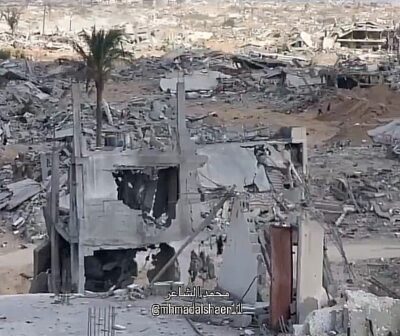
The United Nations has confirmed that nearly nine out of ten agricultural zones in Gaza have been damaged or destroyed due to sustained Israeli military operations throughout 2025. The destruction includes cropland, greenhouses, irrigation wells, and other vital infrastructure essential for food production and survival.
This assessment comes from a joint analysis by the UN Food and Agriculture Organization (FAO) and the UN Satellite Centre (UNOSAT), which used satellite imagery and field data to document the scale of devastation. Their findings show:
– 87% of Gaza’s farmland has been affected, with damage increasing steadily throughout the year.
– Irrigation wells—critical for crop and livestock survival—were 83% damaged in April, rising to nearly 87% by September.
– Only 37% of damaged farmland is currently accessible for rehabilitation, following the ceasefire.
– Within those accessible zones, about 600 hectares remain intact, offering a narrow window for restarting food production.
The report warns that Gaza’s agricultural base has been systematically dismantled, with repeated strikes targeting food-producing assets.
This has triggered a collapse in local food systems, compounded by livestock losses and the near-total halt of dairy production.
Despite the urgency, FAO’s $75 million emergency appeal for Gaza remains 90% unfunded, threatening broader recovery efforts across sectors.
The organization has pledged to support rehabilitation, but without adequate funding, the prospects for restoring Gaza’s food security remain bleak.
This level of destruction not only undermines livelihoods but also deepens the humanitarian crisis.
The UN’s findings reflect a pattern of deliberate targeting of civilian infrastructure, including farms, irrigation systems, and food storage facilities—raising serious concerns under international humanitarian law.
