
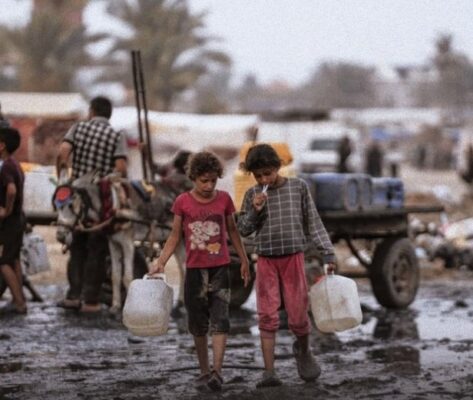
The World Health Organization (WHO) reports that more than 17,000 infections linked to rodents and external parasites have been recorded among displaced Palestinians in the Gaza Strip since the beginning of the year, as the collapse of living conditions and the destruction of the health system continue to accelerate the humanitarian crisis caused by the ongoing Israeli assault.
In a formal statement, WHO said that “the desperate and dangerous conditions in Gaza continue to hinder recovery efforts,” noting a sharp rise in communicable diseases among displaced families who lack access to clean water, sanitation, and basic medical care.
The organization warned that Gaza’s health sector is unable to respond effectively due to severe shortages of supplies, equipment, and laboratory capacity.
WHO estimated the damage to Gaza’s health system at $1.4 billion, confirming that more than 1,800 medical facilities have been partially or completely destroyed.
The destruction spans major hospitals such as Al‑Shifa in Gaza City, as well as primary‑care centers, clinics, pharmacies, and laboratories, leaving the population with almost no functioning medical infrastructure.
The organization’s new representative in the occupied Palestinian territory, Rienhelde Van de Weerdt, described the devastation she witnessed during her first visit to Gaza.
“Nothing prepares you for the scale of destruction,” she said, adding that reading reports “does not compare to standing in the streets surrounded by several‑meter‑high piles of rubble.”
Van de Weerdt confirmed that more than 17,000 rodent‑ and parasite‑related infections have been documented among displaced Palestinians since January. She added that over 80 percent of displacement sites have reported widespread skin diseases, driven by overcrowding, the absence of sanitation, and the collapse of basic services.
She stressed that WHO and its partners urgently need to bring in laboratory equipment and medical supplies to identify and track the diseases spreading across the Strip.
However, she said these materials are not being allowed into Gaza due to the ongoing Israeli blockade, which continues to restrict the entry of essential humanitarian items.
Van de Weerdt emphasized that the situation must change, calling for the protection of health workers, the entry of medicines and basic supplies, and the removal of restrictions preventing the health system from functioning.
She warned that without immediate action, preventable diseases will continue to spread among displaced families living in unsafe, overcrowded shelters.
