
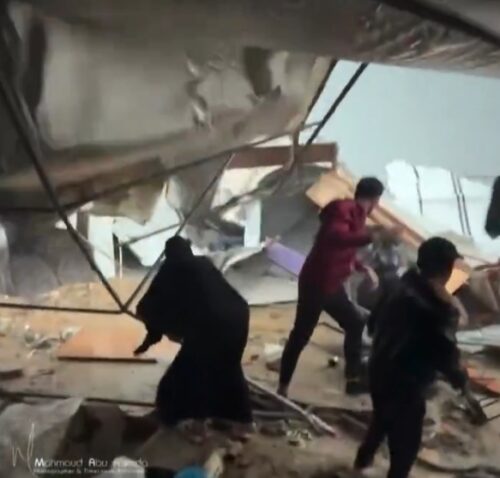
The Gaza Strip is facing a devastating humanitarian crisis as winter storms flood thousands of displacement tents, leaving families exposed to cold, disease, and despair. Heavy rains in mid-December have submerged entire camps from Khan Younis to Gaza City, forcing more than two million displaced Palestinians to endure the storm in flimsy shelters, without blankets, clothing, or medical supplies.
Deaths and Collapsing Homes
At least 13–14 Palestinians have died in recent days, including children who succumbed to hypothermia and families crushed when bomb-damaged homes collapsed under the weight of rain.
In Khan Younis, a baby girl, Rahaf Abu Jazar, drowned after her family’s tent filled with water overnight. Civil defense teams warn that dozens of structures weakened by Israeli bombardments are at imminent risk of collapse.
Camps Drowned in Mud and Sewage
Families across Gaza describe knee-deep sewage and mud, soaked mattresses, and children trembling through the night.
Parents report food supplies ruined by floodwater, leaving families without flour, rice, or clean drinking water. In Deir al-Balah and Maghazi, residents say “not a single tent escaped flooding.”
Aid Blockade and Restrictions
Despite international appeals, Israel continues to block essential shelter materials. Relief groups report that caravans, prefabricated shelters, timber, sandbags, and pumps are barred from entering Gaza.
UN agencies warn that 300,000 new tents and prefabricated units are urgently needed, but only a fraction has been delivered.
Instead of the 600 trucks of aid agreed upon daily, fewer than half are allowed in. This leaves families without blankets, winter clothing, or medicines. Aid workers stress that the suffering is not caused by weather alone but by deliberate restrictions that deny Palestinians the means to survive.
Humanitarian Warnings
- UNICEF warns of newborns dying from cold and malnutrition, with mothers unable to provide warmth or food.
- WHO reports hospitals are critically short of medicines and equipment, leaving patients untreated as respiratory infections and cholera risks rise.
- OCHA highlights that more than 850,000 people in 761 sites face the highest flood risk, with tents worn-out and unsuitable for winter.
Voices from Gaza
“The rain came from above, the flood from below,” said Mazen Abu Darabi in Maghazi camp, after losing food and blankets.
A mother in Khan Younis cried: “We have been drowned. We have clothes to wear, we have no mattresses left..”
Aid worker Moureen Kaki described the ceasefire as “a slower form of death,” with hospitals unchanged and families still targeted even amid the storm.
International Alarm
The United Nations General Assembly has demanded Israel allow full humanitarian access, but enforcement remains absent.
Humanitarian groups condemn the restrictions as collective punishment, urging accountability under international law.
The storm itself is natural, but the devastation is political. Bombed-out homes collapse under rain, flimsy tents fail against wind, and aid restrictions block shelter and supplies.
For Gaza’s displaced families, winter has become another weapon of war — a manufactured disaster combining siege, destruction, and extreme weather into a lethal humanitarian crisis.
