
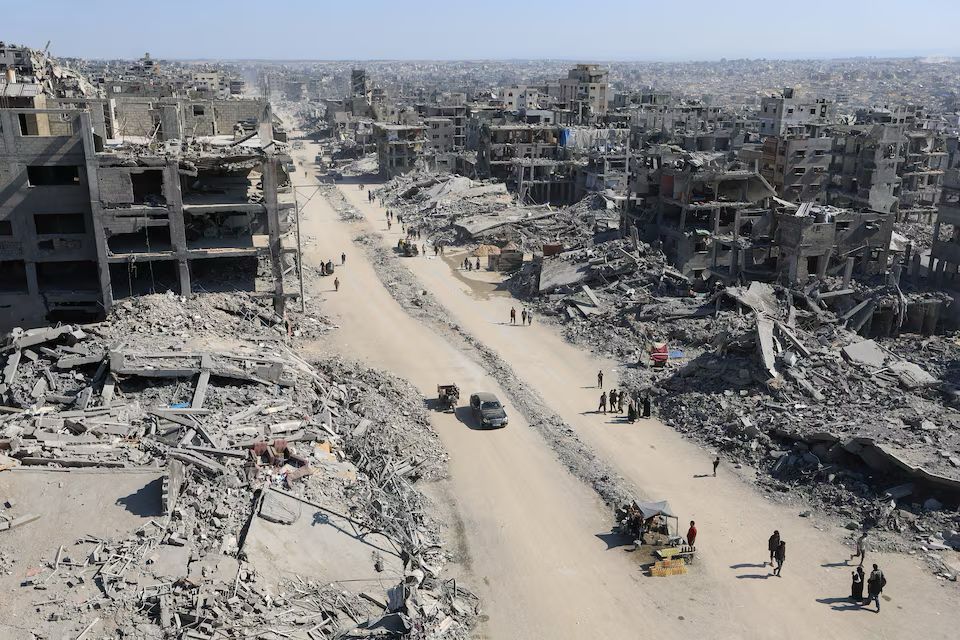
Prime Minister Muhammad Mustafa said Thursday that the cost of the recovery program that the Palestinian Authority has developed for the Gaza Strip will be $67 billion. Mustafa said that the executive program of the Arab Plan for Recovery and Reconstruction of the Gaza Strip, in cooperation with Arab brothers and international partners, includes 56 subprograms across 18 sectors, including housing, social services, infrastructure, economy and governance.
This announcement came during an expanded meeting held in his office in Ramallah on Thursday, which included about 100 representatives of international and UN institutions, members of the diplomatic corps accredited to the State of Palestine, and a number of relevant ministers, in order to enhance joint coordination and inform them of updates to the recovery and reconstruction plan for the Gaza Strip.
Mustafa added that the recovery and reconstruction process of the sector is estimated to require approximately $67 billion to implement projects and programs for various sectors, including infrastructure, governance, and public services. This program will be implemented through relevant Palestinian ministries and institutions in cooperation with international partners and in several phases.
The Prime Minister stressed that the first phase includes the early recovery process, and requires $3.5 billion for six months, while the second phase is concerned with the reconstruction and revitalization of vital sectors, and its duration is three years and requires $30 billion, while the third phase represents the phase of completing comprehensive reconstruction and extends for several years.
Mustafa called on the international community to support the reconstruction plan, ensuring not only reconstruction, but also restoring hope, dignity and stability to our people.
Mustafa sent his message to the international community that the reconstruction of Gaza must be under Palestinian leadership, Arab support, and international backing, ensuring not only the reconstruction of Gaza, but also the restoration of hope, dignity, and stability for our people.
“After more than two years of devastating war, the Gaza Strip has suffered widespread destruction, mass displacement, and profound human suffering, yet the Government of the State of Palestine remains steadfast in its determination to lead a fully Palestinian-owned national recovery and reconstruction process that restores dignity and hope to our steadfast people,” the Prime Minister said.
Mustafa explained that the Palestinian vision is to rebuild Gaza as a non-besieged, connected and prosperous part of the State of Palestine in line with relevant United Nations resolutions and the New York Declaration.
The Prime Minister pointed out that the first phase will begin after the ceasefire arrangements are confirmed and the necessary security and financial supplies are provided, as the government will launch an early recovery plan for a period of six months, focusing on: removing rubble and rehabilitating basic infrastructure, providing temporary housing, providing cash assistance and “cash for work” programs, supporting small projects and agriculture to revive livelihoods, reactivating the banking system, providing psychological and social support, education and health services, and supporting people with disabilities Including rehabilitation programs and the provision of auxiliary tools.
He explained: “A reconstruction conference for the Gaza Strip will be held in the Republic of Egypt, and the conference will be a major platform for mobilizing resources and building partnerships.”.
Mustafa pointed out that “the main sectors such as health, education, water and sanitation, land and civil registry, public finance, taxes, and others are based on a unified system in the West Bank and Gaza Strip. These systems, which are recognized by international partners, must be enabled and strengthened, and not replaced by parallel or temporary structures that will not be able to maintain the provision of effective and real services on the ground.”
He continued: “The reconstruction process will be implemented in a manner consistent with the ongoing institutional reform and development program, which focuses on transparency, accountability, and enhancing institutional performance, with the support of international partners. These efforts will also contribute to strengthening the political and geographical unity between Gaza and the West Bank.””.
Mustafa stressed that security and governance in Gaza must be a national reference and leadership, closely linked to national institutions, and consistent with international law. At the same time, the State of Palestine remains open to support and assistance from Arab and international partners, in support of stability and the protection of civilians, including, when necessary, through a temporary and clearly defined international or regional presence, mandated by the Security Council, and implemented in coordination with the State of Palestine. These arrangements must be time-bound It is fully subject to Palestinian sovereignty and legitimate authority.
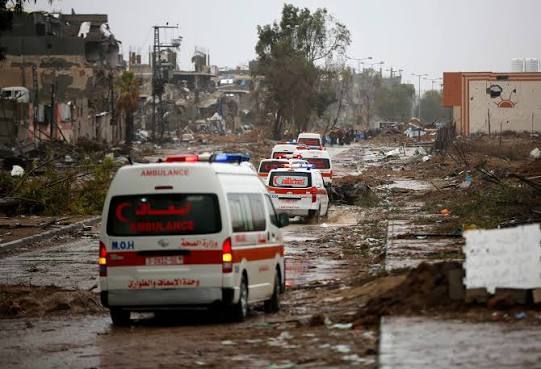 Doctors Without Borders announced today, Thursday, that the health situation in the Gaza Strip is very critical, and that the ceasefire was not accompanied by the opening of crossings and the entry of aid.
Doctors Without Borders added, in a statement, that it had not noticed any improvement in its capabilities to bring in aid, noting that it was facing the same obstacles.
The organization stressed that it needs aid to arrive before talking about rebuilding hospitals in Gaza.
The statement explained that the health sector in Gaza is facing the largest construction and humanitarian disaster in modern history, noting the presence of 70 million tons of rubble and about 20 thousand unexploded explosive objects.
