
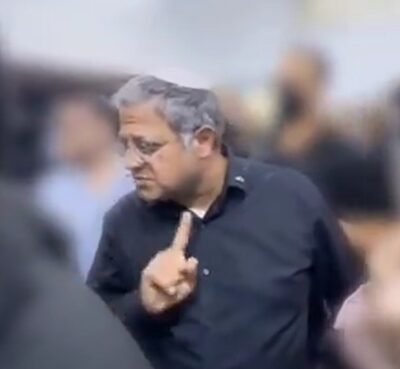
Footage published on Sunday by Israeli National Security Minister Itamar Ben Gvir shows him entering a section holding Palestinian women at Damon Prison and defending the restrictions imposed on them.
In the footage, one Palestinian woman says prison staff repeatedly raid the section and that the women are denied basic rights and necessities, including usable water, showers, and medical care.
The women’s faces were blurred in the published footage. Israeli media reports identified the facility as Damon Prison in northern Israel.
According to the English translation published with the footage, she said: “This is our third day without showering. We are not receiving medical treatment, and our clothes are not clean.”
Ben Gvir responded by saying that what he called the previous “good conditions” in Israeli prisons had ended. He said he was responsible for the policy and defended reducing detention conditions to what he described as the bare minimum.
Ben-Gvir tells Palestinian women detainees that harsh prison conditions are their “punishment” for kidnapping Israelis. Yet most Palestinian women held by Israel are political detainees,not military offenders. They describe unhuman conditions. Ben-Gvir says he is “happy” with it. pic.twitter.com/PFwO0TfiZE
— Settlers From Within (@SettlersFW) August 30, 2026
The Palestinian Prisoners’ Society (PPS) condemned Ben Gvir’s appearance in the women’s section and the filming and publication of the detainees, describing it as an assault on their human dignity.
The PPS said his repeated publication of footage documenting the repression of Palestinian prisoners demonstrates his central role in incitement against them and in promoting increasingly punitive conditions inside Israeli prisons.
The PPS added that hundreds of testimonies collected from Palestinian prisoners in Israeli prisons and military detention camps document serious abuses, systematic mistreatment, and violations of detainees’ basic rights.
The incident was not the first time Ben Gvir had entered a section holding Palestinian prisoners. Earlier in August, he published separate footage in which he dismissed a Palestinian woman’s complaints about poor food, unclean water, inadequate medical care, and limited access to fresh air.
Since taking office in late 2022, Ben Gvir has promoted policies that reduce food and other basic provisions, restrict family visits, increase isolation, and limit medical care for Palestinian prisoners.
The Palestinian Commission of Detainees and Ex-Detainees Affairs has accused Israeli prison authorities of depriving detainees of basic necessities and adequate medical care, imposing isolation and restricting family visits.
|Knesset Approves Law Mandating Execution of Palestinian Detainees|
In its August 2026 reporting, Commission stated that approximately 9,400 Palestinians were being held in Israeli prisons, including 94 women and 350 children.
Palestinian prisoners’ organizations say torture, starvation, physical abuse, and denial of medical care have contributed to detainee deaths during and after imprisonment.
|PODCAST: What happens to Palestinians in Israeli prisons? +972 Magazine|
In August, the Palestinian Commission of Detainees and Ex-Detainees Affairs reported that Israeli authorities had acknowledged the death in custody of Ehab Mohammad Abdul-Qader Diab, 36, from Gaza. The Commission said his death brought the number of known Palestinian detainees who have died in Israeli custody since 1967 to 328, including 91 since October 7, 2023.
In a separate July case, the Palestinian Prisoners’ Society said Ahmad Samir Odeh, 23, died months after his release from health consequences it attributed to torture, physical and psychological abuse, and denial of medical care during detention.
