
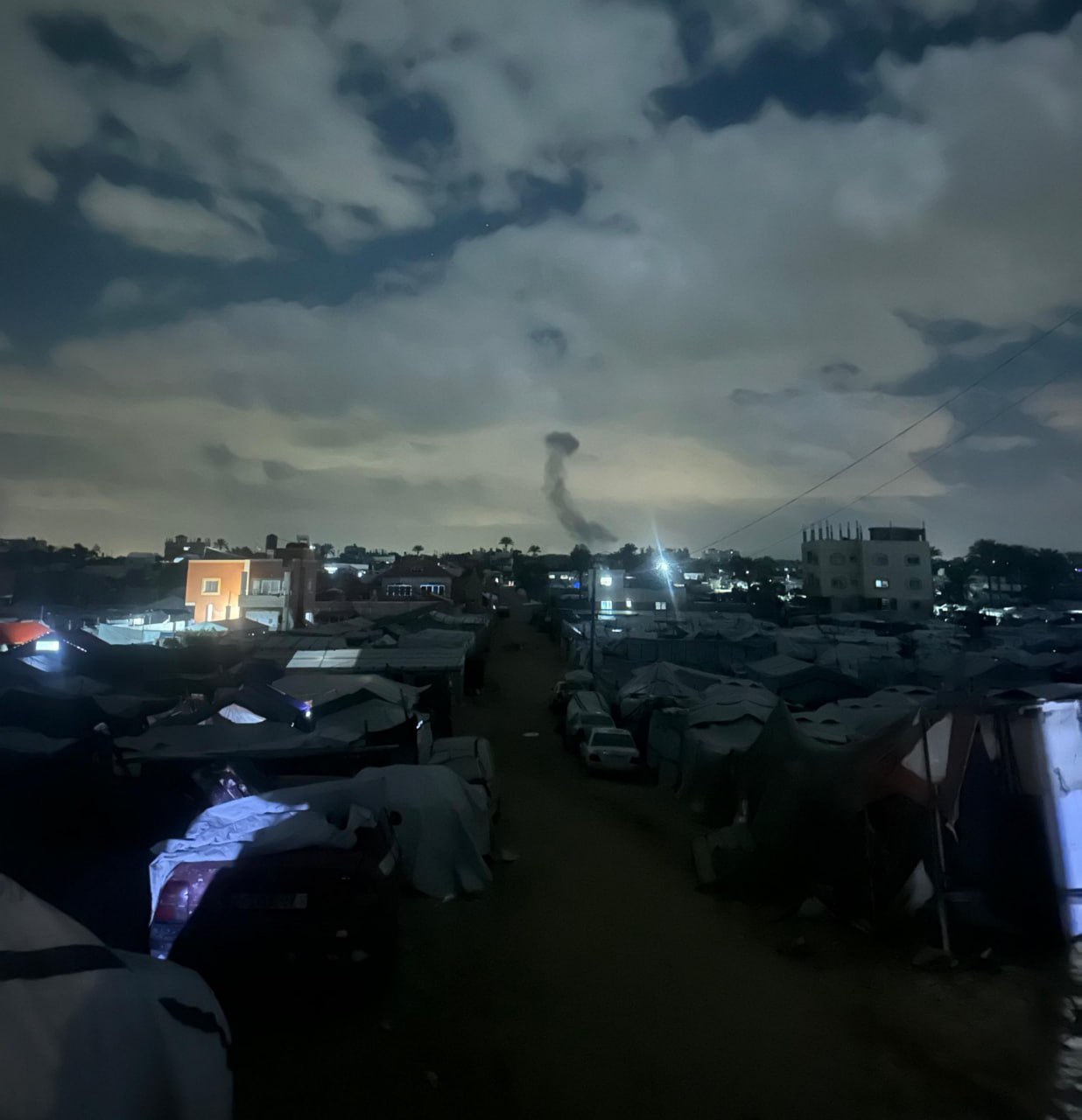
On Friday, in ongoing violations of the ceasefire established in October 2025, Israeli forces killed 7 Palestinians and wounded several by drone bombings and gunfire.
Israeli forces killed one and injured three as a result of targeting a tent housing displaced people at the Mustafa Hafez Shelter School next to Nasser Hospital, west of Khan Yunis, in the southern Gaza Strip. An Israeli occupation army drone dropped the bomb.
A killed Palestinian arrived at Al-Shifa Hospital by Israeli occupation army fire in the Aslan area of Beit Lahia, north of the Gaza Strip.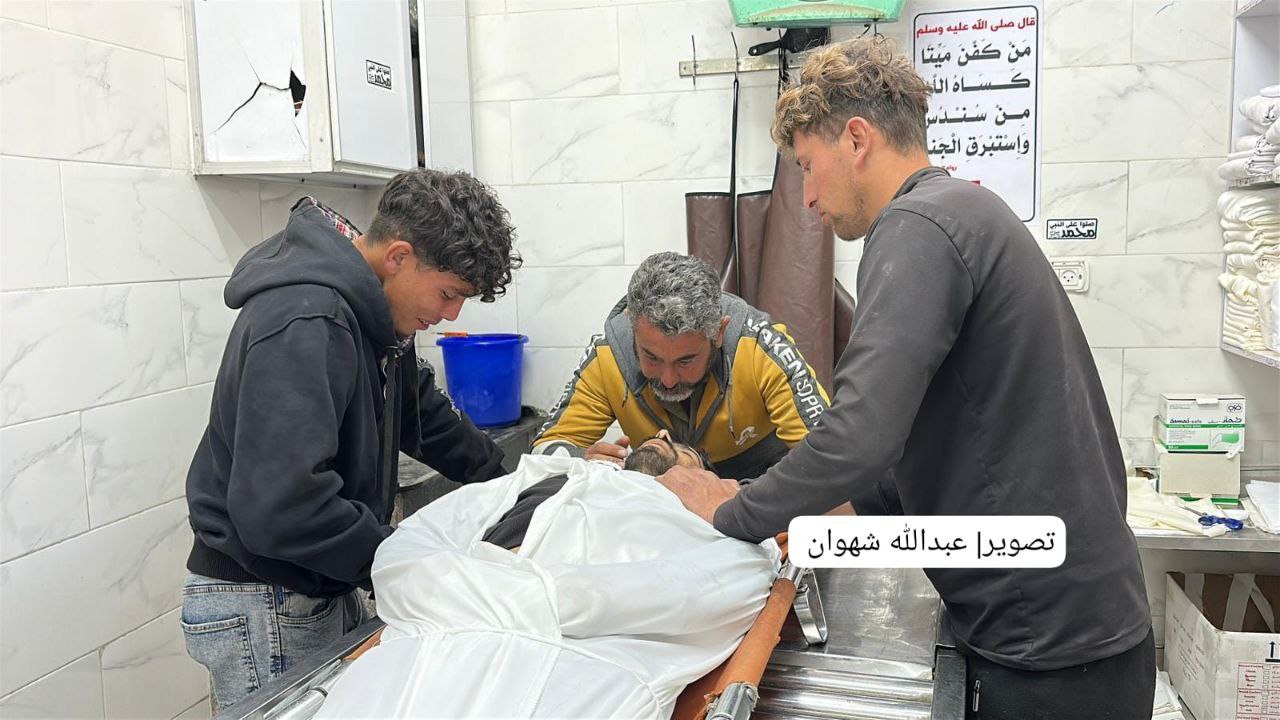
Citizen Hussam Hassan Abu Khousa (43 years old) was killed by the Israeli occupation forces’ bullets in the Al-Atatra area in Beit Lahia, north of the Gaza Strip.
In Gaza City, a woman was injured in the head by a gunshot near a country in the Al-Zaytoun neighborhood, southeast of the city.
A Palestinian citizen was killed by Israeli occupation forces’ fire on Friday in the town of Beit Lahia, north of the Gaza Strip, while a citizen was killed and three others were injured in the bombing of a displaced persons tent in Khan Yunis, south of the Strip.
The drone buzzing and bombings are constant, as documented in this video taken tonight by a displaced Palestinian in a tent camp in the eastern area of Jabalia camp, near Beit Lahia city in the northern Gaza Strip:
In the evening, Israeli aircraft launched an airstrike on the eastern areas of Khan Younis city in the southern Gaza Strip. Casualties are unknown at this time.
Israeli tanks opened fire east of Khan Younis, shelling tents of displaced Palestinians in Al-Namsawi Cemetery area, west of the city in the southern Gaza Strip.
The Israeli military released footage it said documents the moment it bombed armed resistance fighters exiting a tunnel in Rafah, in the southern Gaza Strip.
In a statement, the army claimed it had identified fighters exiting a tunnel and published the video as evidence of its account. However, the footage instead appears to show the bombing of a police station, contradicting the army’s narrative.
Displaced Palestinians in Al-Nuseirat Camp, in central Gaza strip, struggle to continue their lives amid harsh living conditions and severe shortages of basic necessities.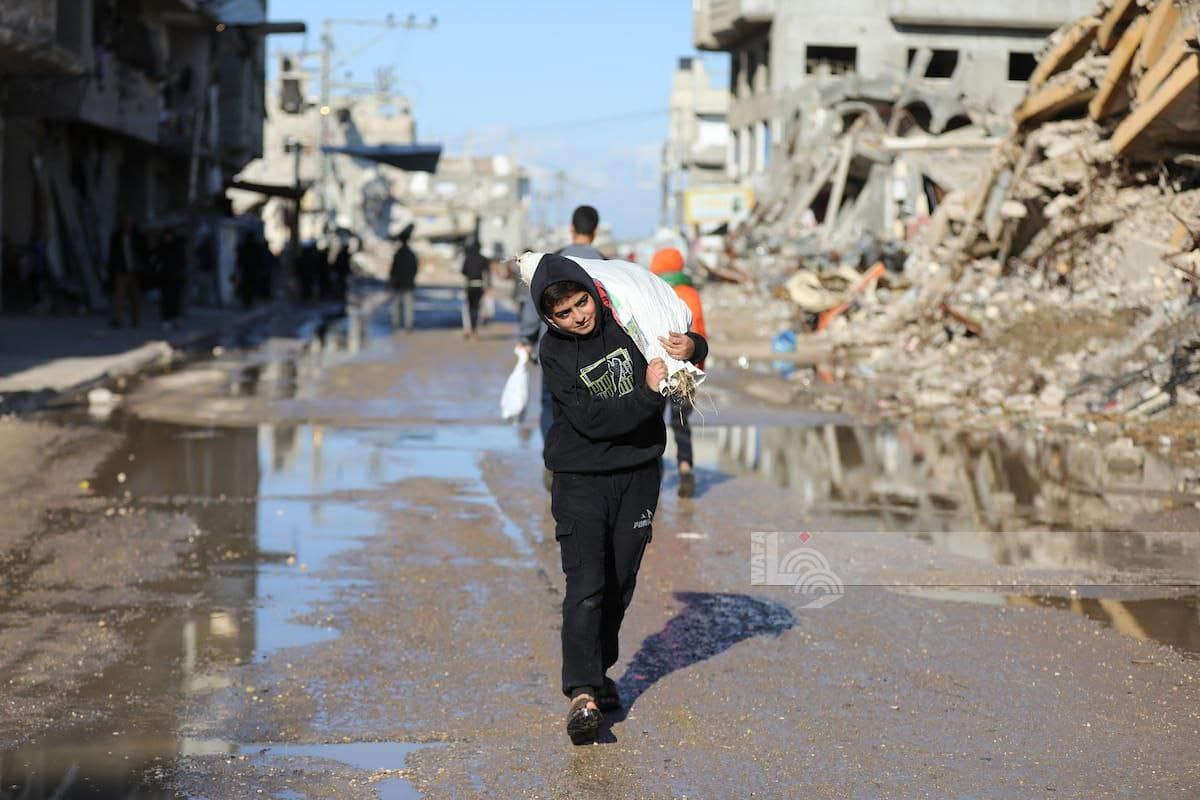
Palestinian volunteers salvage books and manuscripts from the Great Omari Mosque library in Gaza City, largely destroyed by Israeli bombardment; the collection has shrunk from around 20,000 to fewer than 4,000 volumes.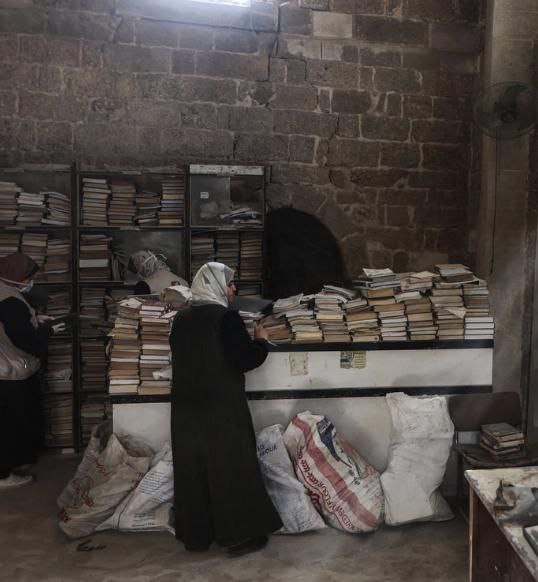
Meanwhile, Wafa news reported today on the ways that community is coming together to share meals during Ramadan this month: Adnan Abu Labda (30 years old) did not imagine that his years of hard work in Rafah, as he established his small popular restaurants and grew them one by one, would turn in an instant into a distant memory hanging on closed doors and equipment that he left behind in the hope of returning soon.
The young man in his thirties, a resident of Rafah Governorate, owned several restaurants serving popular dishes such as falafel, hummus, and fava beans. He would get up early to inspect the workers and supervise the details of the work himself, and save his sweat to build a new house in which he had only lived for a few months, keeping in mind that it would be the marriage house he had always dreamed of.
But the war was heavy, and it reaped Rafah as it reaped other governorates of the Gaza Strip, wiping out with it the fatigue of the years and their savings. Adnan was forced to flee towards the outskirts of Khan Yunis, leaving his new home and shops with all their equipment, hoping that the days would not be long and that he would return. However, the days went on, and the war expanded, until Rafah became, as he describes it, a “destroyed memory”.
In the displacement tents, where the sand extends to the sea, and the wind never stops fiddling with the worn and worn edges of the tents, Adnan finds himself faced with the question of survival. He no longer owns his restaurants, but he has his experience. He opened a modest kitchen in the Al-Mawasi area on the coast of Khan Yunis Governorate, to cook for displaced people exhausted by war and hunger.
Adnan tells Wafa: “We started with very simple capabilities, with modest equipment and a kitchen, but the need was greater than all the capabilities”. We would cook whatever was available and distribute it to nearby tents. Over time, some things became easier, and contracts were signed with a number of institutions and individuals to prepare meals for the displaced, especially during the holy month of Ramadan.
In Al-Taher camp, which belongs to the family of Hajj Yaqoub Al-Agha, and which includes more than 250 families from different parts of the Gaza Strip, group Iftar meals are organized every year with the advent of Ramadan. Through these meals, Adnan was able, in cooperation with the supporting authorities, to secure several Iftar tables that brought together dozens of families under one tent.
