
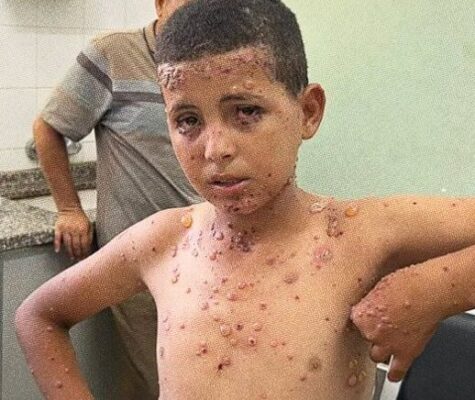
Health authorities in Gaza have documented approximately 9,300 cases of contagious skin diseases over the past two weeks, in what medical officials describe as a rapidly escalating public‑health emergency driven by overcrowding, deteriorating sanitation, and a critical shortage of medicines amid the ongoing siege and constant Israeli attacks.
Mohammed Abu Afesh, Director of the Palestinian Medical Relief Society in northern Gaza, said the infections include chickenpox, scabies, and lice infestations, all recorded across 130 health centers throughout the enclave. He warned that the continued absence of essential treatments risks pushing the situation “out of control,” particularly inside overcrowded shelters and displacement camps where conditions have sharply deteriorated.
Abu Afesh noted that the spread of water‑ and food‑borne intestinal diseases is further complicating the crisis, as contaminated supplies remain widespread and access to clean water is severely limited.
He added that Gaza’s health sector is suffering from an acute shortage of basic medications and medical consumables due to the ongoing blockade. Medicines for chronic illnesses — including diabetes, cardiovascular disease, and hypertension — have become nearly unavailable, even in private pharmacies. Kidney‑failure patients are also facing increasing danger due to shortages in dialysis fluids and materials required for life‑sustaining treatment.
The official further warned of rising malnutrition rates as humanitarian aid continues to decline, stressing that weakened immunity among children and pregnant women is accelerating the spread of infectious diseases.
Aid Restrictions Deepen Humanitarian Crisis
In parallel, Adnan Hammouda, Coordinator of the Ministry of State for Relief Affairs in Gaza, said the humanitarian situation is worsening due to restrictions on aid entry. He explained that only 150–200 trucks are currently entering Gaza each day — far below the 600 to 1,000 trucks needed to meet minimum daily requirements.
Hammouda emphasized that a significant portion of incoming trucks serves the private sector rather than humanitarian needs, while aid delivered through international partners covers only a small fraction of the population’s requirements.
He reported that more than 750 shelters are hosting displaced families living in deteriorating tents plagued by insects and rodents, with rising temperatures contributing to the surge in skin infections.
Hammouda also accused Israeli authorities of blocking several international and local organizations from delivering aid in recent weeks, leading to the shutdown of multiple relief kitchens that previously provided meals to thousands of families.
Stalled Humanitarian Arrangements After Ceasefire Agreement
These developments come as Gaza’s humanitarian and health conditions continue to deteriorate, while key files — including aid entry, reconstruction, and implementation of ceasefire arrangements — remain disputed between Israel and Hamas.
The ceasefire agreement, which took effect on 11 October 2025, included an initial phase involving the exchange of detainees, the entry of humanitarian aid, and the withdrawal of Israeli forces from certain areas of Gaza. The United States later announced work on a second phase focused on reconstruction and administrative and security arrangements. Israel, however, continues to evade several obligations under the agreement, particularly those related to withdrawal and humanitarian protocols.
